
The story of Betty
Carolyn Wells
THE CLASSIC COLLECTION · 1906
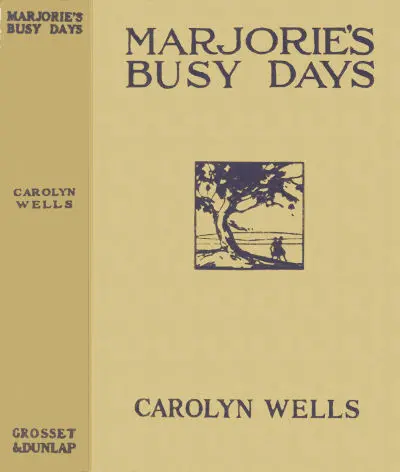
"Marjorie's Busy Days" by Carolyn Wells is a children's novel written in the early 20th century. The book centers around the lively adventures of Marjorie Maynard and her siblings, who engage in imaginative play, exploring their backyard and transforming it into a world full of creativity and fun. Through their antics and games, the story focuses on themes of friendship, family, and childhood joy. The opening of the book introduces us to Marjorie and her three siblings as they excitedly decide on their morning play. The children gather on the porch on a crisp September day, and after some playful banter, they settle on a shipwreck game, using their surroundings as the backdrop for an imaginative adventure. As they create their own rules and roles, the Maynard children embark on a series of playful misadventures, complete with make-believe emergencies and whimsical dialogue. This vibrant beginning sets the tone for a light-hearted, fun narrative that encapsulates the joys of childhood exploration and the bond of sibling companionship.
Introduction adapted from the source catalogue; source summaries may be automatically generated.
Free to read · English · 52,870 words · No account needed
MAKE TIME FOR A GOOD BOOK
On by default. Untick to stop anonymous reading totals. Each page counts after 10 seconds in view. How this works.
Anonymous counting is on unless you have switched it off.
"You can do it, if you try," said Marjorie, sagely; "but they aren't easy to make. Father does them so beautifully, because he is patient and careful. But you and I, Molly, are too slapdash. We'd never take pains to make them so neatly."
"Yes, I would," declared Molly, positively; "because I see how nice they look when they're done well! I don't want any broken-legged pigs, or tumble-to-pieces dolls."
"That's the way to talk," said Mr. Maynard, approvingly; "I foresee, Molly, we shall be great friends, and I'll teach you the noble art of what I call 'pantry sculpture.'"
After the turkey and other substantial dishes had been disposed of, dessert was brought, and, to the great delight of the children, it comprised many and various confections.
First, there was placed at each plate a dear little mince pie, hot, and covered with a drift of powdered sugar. In the middle of each pie stood a lighted candle.
"Oh, ho, it's somebody's birthday!" cried King, as he saw the candles.
"Somebody's only one year old, then," said Molly.
"These aren't birthday candles exactly," said Mr. Maynard. "They're just candles to keep the pies hot. But as I want to eat my pie, I'll just eat the candle first, and get it out of the way."
So saying, he calmly blew out the flame, and in a moment had eaten the
candle, wick and all!
"Oh, Father!" cried Marjorie. "How could you do that? Do you like wax
candles?"
"These candles aren't exactly wax," said her father, "and I must say
mine tasted very good."
Molly's bright black eyes snapped.
"If Mr. Maynard can eat candles, so can I!" she declared, and, blowing out the flame, she bit off the end of her own candle.
"It is good," she said, as she munched it. "I like candles, too."
So then they all tried eating candles. Marjorie tasted hers carefully, and then took a larger bite.
"Why, it's apple!" she cried. And so it was. The "candles" had been cut with an apple-corer, and the "wicks" were bits of almond cut the right shape and stuck in the top of the candle. The oil in the nut causes it to burn for a few moments, and the whole affair looks just like a real candle.
The mince pies were followed by ice-cream, and that by fruits and candies, and then the feast was over, but every one carried away the jolly little souvenirs to keep as mementoes of the occasion. Skating was the order of the afternoon.
Mr. Maynard went with the older children, while Mrs. Maynard and Rosy Posy amused themselves at home.
Your reading position is saved on this browser. Take it to another device with a library code. Reading pages adapt to text, rather than matching a printed edition.
Carolyn Wells

Carolyn Wells & Harry Persons Taber

Carolyn Wells

Carolyn Wells
BEHIND THE BOOK
This eBook is for the use of anyone anywhere in the United States and most other parts of the world at no cost and with almost no restrictions whatsoever. You may copy it, give it away or re-use it under the terms of the Project Gutenberg License included with this eBook or online at www.gutenberg.org. If you are not located in the United States, you will have to check the laws of the country where you are located before using this eBook. Read the source licence.
The original source file, including credits and licence, is retained by this library. Request an original-format copy at no charge. Please include the book title and Project Gutenberg identifier #23531.
KEEP YOUR CURIOSITY GOING
Coulson Kernahan

Maurice Baring
Frances Wright
Cécile Tormay

Frederic Jesup Stimson

W. H. P. (William Henry Pope) Jarvis