THE CLASSIC COLLECTION✦The Higher CourtCLASSIC FREE BOOKS
The Higher Court
Mary Stewart Daggett
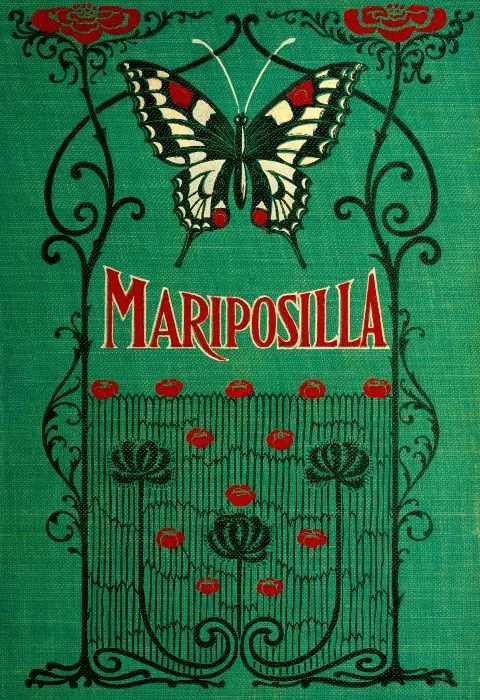
THE CLASSIC COLLECTION · 1895
"Mariposilla: A Novel" by Mary Stewart Daggett is a fiction piece set in the late 19th century. The story revolves around a young mother and her delicate daughter, Marjorie, who move to California in hopes of bettering her child's health. As they adjust to their new environment, they encounter various characters, including the charming yet manipulative Mrs. Sanderson, whose influence complicates their lives as Marjorie begins to flourish in the warm climate. The opening of the novel introduces the central characters, focusing on the mother's despair over her daughter's illnesses and her determination to seek a healthier life in California. The journey becomes a turning point for both, as Marjorie shows signs of recovery, fostering hope in her mother. As they settle in, the attention they receive from those around them, particularly Mrs. Sanderson and her son Sidney, begins to blur the lines of friendship and manipulation. The tale promises to explore themes of love, ambition, and the complexities of social relationships, particularly as Mariposilla, a Spanish girl, faces her own struggles with identity and cultural expectations amidst a world intent on entertaining and exploiting her beauty.
Introduction adapted from the source catalogue; source summaries may be automatically generated.
Free to read · English · 45,419 words · No account needed
MAKE TIME FOR A GOOD BOOK
On by default. Untick to stop anonymous reading totals. Each page counts after 10 seconds in view. How this works.
Anonymous counting is on unless you have switched it off.
The sun had departed for the day, the evening had flushed and died in
the cool arms of night.
In the chamber of death there was now the breathless calm which follows
when all has been done.
Before the little Virgin, and about the spotless bed, where in purest linen slept the mother of the Dona Maria, holy candles had been lighted. Still unmolested stood the small stand covered with a fine drawn linen cover, upon which had rested for weeks the tumblers and bottles needed now no longer.
"See," the Dona Maria said tenderly, "see the spoon in the potion I had prepared but a moment before the poor suffering body found peace."
When I offered to remove the medicines, the devoted daughter was not
willing.
"Touch not the table yet, kind Senora," she pleaded. "Wait until the dear body has been taken away; then will I find courage to disturb the tumblers that the dear hands once held."
As the Dona Maria spoke, Mariposilla entered the room, bearing a little cross of white roses. She laid it timidly upon the breast of her grandmother; then, frightened and hysterical, she fled from the bed.
"Poor child," said the Dona Maria, "she fears death greatly. She thinks only of the fire that must at first purify the soul, not of the joys of eternity.
"Go now, Senora, retire at once for the night. You are weary and in need
of rest.
"I care not for company. I will remain alone with my mother and our blessed Lady. I desire to entreat that the sufferings of the dear one may be short.
"Surely the dear Lord will have mercy upon the aged one who has already endured so much upon earth."
"Good Dona Maria," I plead, "you will surely be ill if you kneel all night in prayer. To-morrow will be a sad, hard day, and without rest you will be unfit for its strain."
"No, Senora," she replied firmly; "I shall not be ill. After midnight I shall sleep; until then I shall pray."
I saw that my persuasions were in vain, and left her alone with her
dead.
As I passed through the living-room to reach my own, I was startled by a white-robed figure in front of the Virgin's picture.
The full July moon, streaming through the open door, discovered touchingly the hopeless misery of Mariposilla. She was in her nightgown, gazing piteously into the illuminated face of the unsympathetic doll above the chimney shelf.
As I approached her, she turned sadly from the picture.
In the moonlight, I saw great tears shining in her eyes.
Your reading position is saved on this browser. Take it to another device with a library code. Reading pages adapt to text, rather than matching a printed edition.
BEHIND THE BOOK
This eBook is for the use of anyone anywhere in the United States and most other parts of the world at no cost and with almost no restrictions whatsoever. You may copy it, give it away or re-use it under the terms of the Project Gutenberg License included with this eBook or online at www.gutenberg.org. If you are not located in the United States, you will have to check the laws of the country where you are located before using this eBook. Read the source licence.
The original source file, including credits and licence, is retained by this library. Request an original-format copy at no charge. Please include the book title and Project Gutenberg identifier #39709.
KEEP YOUR CURIOSITY GOING
Coulson Kernahan

Maurice Baring
Frances Wright
Cécile Tormay

Frederic Jesup Stimson

W. H. P. (William Henry Pope) Jarvis