The Christmas Holly
Marion Harland
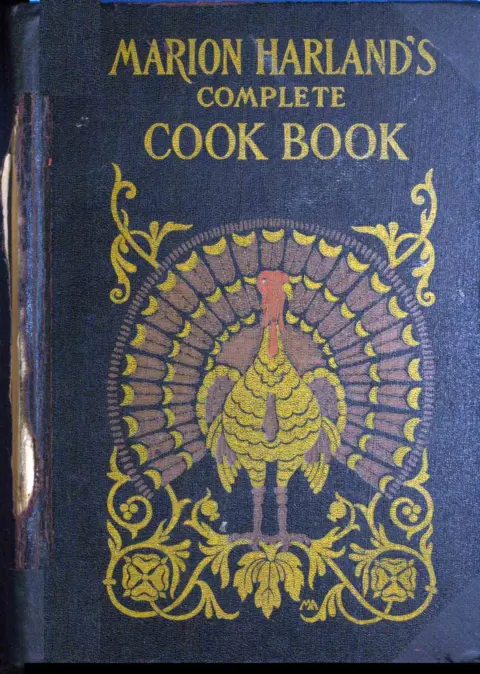
THE CLASSIC COLLECTION · 1903
"Marion Harland's Complete Cook Book" by Marion Harland is a comprehensive cookbook written in the late 19th century. This practical guide focuses on cookery and housekeeping, aiming to empower everyday housewives with a wealth of recipes and advice on managing a home. With meticulous attention to detail, Harland shares her extensive culinary knowledge, making it accessible to readers who may not be professional chefs. The opening of this work features a dedicatory preface in which the author reflects on her years of experience and previously published works, establishing her authority and deep understanding of domestic management. She emphasizes her commitment to serving the needs of housewives, signifying a shift towards dignifying housewifery as a profession. Following this, the beginning chapters delve into essential aspects of household management, including the importance of proper marketing for ingredients and effective methods of storing various food items to ensure freshness. The text promises a blend of detailed recipes and practical advice aimed at making the art of cooking an enjoyable and fulfilling experience for the reader.
Introduction adapted from the source catalogue; source summaries may be automatically generated.
Free to read · English · 235,614 words · No account needed
MAKE TIME FOR A GOOD BOOK
On by default. Untick to stop anonymous reading totals. Each page counts after 10 seconds in view. How this works.
Anonymous counting is on unless you have switched it off.
In view of the frail constitution of our well-beloved china, we ought not to set our hearts upon it any more than we ought to love our babies, whose tenure upon life is more slight than spider’s silk. One and all, we do set our affections, and feast our eyes, and pamper our souls’ desires upon the adornments of buffet and china-closet. Tea, coffee and chocolate are more delicious when sipped from Sevres and Limoges; our sensitive finger-tips recoil from the blunt edges of pressed glass. To set stone china and thick tumblers before tired and hungry John would insult one who deserves the best of everything.
Since, then, we must, in justice to him and to ourselves, have fine china and glass, and our waitress’s tumultuous voyagings among them will strew back yards and vacant lots with the worthless flotsam and jetsam of what was dear and precious, what shall be done? To the housekeeper whose time has not a prohibitive monetary value, my advice is simple and direct: Have choice china—the choicest you can afford—and take care of it yourself.
“Aspic”—Meat jelly.
“Au Gratin”—Dishes covered with crumbs and browned.
“Au Naturel”—Plain, simple. Potatoes cooked in their jackets are “au
naturel.”
“Barbecue”—To roast any animal whole, usually in the open air.
“Bisque”—Soups made thick with mince and crumbs.
“Blanch”—To parboil, to scald vegetables, nuts, etc., in order to
remove the skin.
“Blanquette”—Any white meat warmed in a white sauce, thickened with
eggs.
“Bouillon”—A clear broth.
“Bouquet”—A sprig of each of the herbs used in seasoning, rolled up in a spray of parsley and tied securely.
“Café au lait”—Coffee boiled with milk.
“Café noir”—Black coffee.
“Camembert”—A brand of fancy cheese.
“Canapé”—Usually toast with cheese or potted meat spread upon it. Sometimes made of pastry.
“Cannelon”—Meat stuffed, rolled up and roasted or braised.
“Capers”—Unopened buds of a low trailing shrub grown in southern Europe. Pickled and used in sauces.
“Capon”—A chicken castrated for the sake of improving the quality of
the flesh.
“Caramel”—A syrup of burnt sugar, used for flavoring custards, etc., and for coloring soups.
“Casserole”—A covered dish in which meat is cooked; sometimes applied to forms of pastry, rice or macaroni filled with meat.
“Champignons”—French mushrooms.
“Charlotte”—A preparation of cream or fruit, formed in a mold, lined
with fruit or cake.
“Chervil”—The leaf of a European plant used as a salad.
“Chillies”—Red peppers.
“Chives”—An herb allied to the onion family.
“Chutney”—A hot acid sauce made from apples, raisins, tomatoes, cayenne, ginger, garlic, shalots, lemons, vinegar, salt and sugar.
Your reading position is saved on this browser. Take it to another device with a library code. Reading pages adapt to text, rather than matching a printed edition.
Marion Harland
Marion Harland
Marion Harland

Marion Harland & Virginia Terhune Van de Water
BEHIND THE BOOK
This eBook is for the use of anyone anywhere in the United States and most other parts of the world at no cost and with almost no restrictions whatsoever. You may copy it, give it away or re-use it under the terms of the Project Gutenberg License included with this eBook or online at www.gutenberg.org. If you are not located in the United States, you will have to check the laws of the country where you are located before using this eBook. Read the source licence.
The original source file, including credits and licence, is retained by this library. Request an original-format copy at no charge. Please include the book title and Project Gutenberg identifier #64459.
KEEP YOUR CURIOSITY GOING

Charles G. (Charles Griffith) Ross
Hannah Webster Foster

Emily Lawless
Edwin Hamlin Carr

Charles De Lano Hine
Andrew Ure