THE CLASSIC COLLECTION✦A dead man’s diaryCLASSIC FREE BOOKS
A dead man’s diary
Coulson Kernahan
THE CLASSIC COLLECTION · 1870
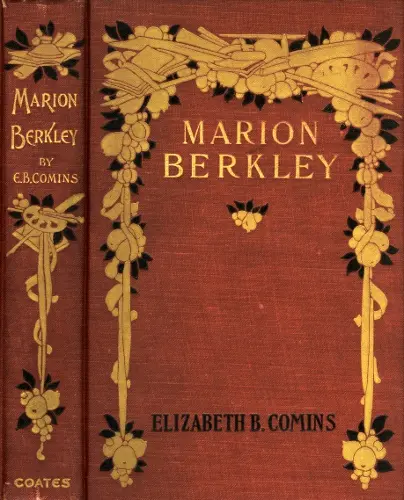
"Marion Berkley: A Story for Girls" by Elizabeth B. Comins is a novel written in the late 19th century. The narrative revolves around the life of Marion Berkley, a schoolgirl navigating the complexities of friendship, rivalry, and young womanhood as she prepares to leave for boarding school. Through her journey, we meet various characters, including her mother, brother, and close friend Florence, setting the stage for coming-of-age experiences filled with personal growth and social dynamics. At the start of the book, we find Marion rushing to catch a train to her New England boarding school, emphasizing the challenges of time management in a busy household. The opening chapters paint a vivid portrait of schoolgirl life, as Marion interacts with her friend Florence during their train ride, revealing their shared history and contrasting personalities. As Marion arrives at school, she faces strict authority figures, such as Miss Stiefbach, and experiences the social dynamics among her peers. The narrative highlights Marion's artistic nature and her struggles against her pride, alongside the budding rivalry with a new student, Rachel, setting a tone that explores themes of rivalry, growth, and the quest for self-identity in a formative environment.
Introduction adapted from the source catalogue; source summaries may be automatically generated.
Free to read · English · 74,434 words · No account needed
MAKE TIME FOR A GOOD BOOK
On by default. Untick to stop anonymous reading totals. Each page counts after 10 seconds in view. How this works.
Anonymous counting is on unless you have switched it off.
"Me!" replied Jabe, turning round slowly and looking at Marion out of the corner of his eye, "'twant none o' my doin's, 'twas father's; he allus liked something different from anybody else, and that time I think he hit it."
"Yes, I think he did," replied Marion, smiling in spite of herself; then in a soberer tone she asked, "Do you remember your father, Jabe?"
"No, he died 'fore I was two years old."
"Don't you wish he could have lived?"
"Well now, that depends on circumstances," replied Jabe in a deliberating tone; "if he was such a fellow for work as the marm, I can't say as I should be very particular 'bout havin' him round."
"Why, Jabe Dobbs!" exclaimed Marion, striving to conceal her laughter, "aren't you ashamed of yourself? I dare say it would be better for you, if your mother made you work a great deal harder than she does."
"O Lord! Miss Marion!" cried Jabe, in the most horrified tone, but with a twinkle in his eyes which Marion fully appreciated; "if she did I couldn't live nohow. You see, work and I don't hitch hosses; we weren't meant to go 'longside the same pole; and if one of us has got to stan' still, I think it might's well be me, and let work go."
At this Marion laughed outright, but not a muscle of his face did Jabe move, and if it had not been for that sly twinkle in his eye when he lifted it to Marion's face one would have thought he was solving some weighty problem.
He sat round sideways, one leg on the seat, and the reins now hanging loosely in his hands, as Shadrack jogged lazily on, while he was evidently highly pleased and flattered by Marion's attention.
"Well, Jabe," continued Marion, "perhaps, if you don't like to work, you like to study. Do you ever go to school?"
"I went last winter by spells, an' I s'pose I shall go this winter too."
"Do you like it?" asked Marion; "what do you like best,--spelling?"
"Spelling," repeated Jabe, in a ruminating tone,--"spelling, no, I don't like it much, that is, I don't like it the way they larn you down there. I think p'r'aps if they'd let a feller follow his own fashion I might like it; but they put in so many letters that there aint no kind o' sense in havin', that it jest confuses me, an' so I ginerally spells accordin' to fancy."
"O Jabe!" replied Marion, "that will never do in the world; but perhaps you like arithmetic better."
Your reading position is saved on this browser. Take it to another device with a library code. Reading pages adapt to text, rather than matching a printed edition.
BEHIND THE BOOK
This eBook is for the use of anyone anywhere in the United States and most other parts of the world at no cost and with almost no restrictions whatsoever. You may copy it, give it away or re-use it under the terms of the Project Gutenberg License included with this eBook or online at www.gutenberg.org. If you are not located in the United States, you will have to check the laws of the country where you are located before using this eBook. Read the source licence.
The original source file, including credits and licence, is retained by this library. Request an original-format copy at no charge. Please include the book title and Project Gutenberg identifier #41524.
KEEP YOUR CURIOSITY GOING
Coulson Kernahan

Maurice Baring
Frances Wright
Cécile Tormay

Frederic Jesup Stimson

W. H. P. (William Henry Pope) Jarvis