THE CLASSIC COLLECTION✦A dead man’s diaryCLASSIC FREE BOOKS
A dead man’s diary
Coulson Kernahan
THE CLASSIC COLLECTION · 1870
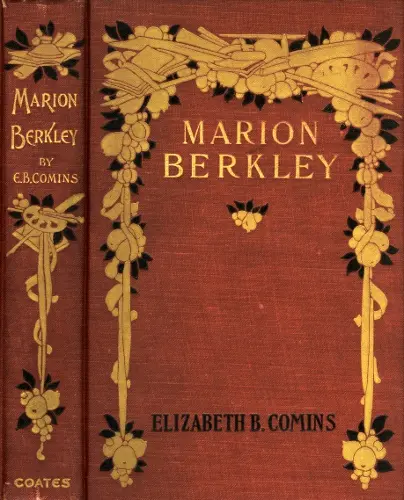
"Marion Berkley: A Story for Girls" by Elizabeth B. Comins is a novel written in the late 19th century. The narrative revolves around the life of Marion Berkley, a schoolgirl navigating the complexities of friendship, rivalry, and young womanhood as she prepares to leave for boarding school. Through her journey, we meet various characters, including her mother, brother, and close friend Florence, setting the stage for coming-of-age experiences filled with personal growth and social dynamics. At the start of the book, we find Marion rushing to catch a train to her New England boarding school, emphasizing the challenges of time management in a busy household. The opening chapters paint a vivid portrait of schoolgirl life, as Marion interacts with her friend Florence during their train ride, revealing their shared history and contrasting personalities. As Marion arrives at school, she faces strict authority figures, such as Miss Stiefbach, and experiences the social dynamics among her peers. The narrative highlights Marion's artistic nature and her struggles against her pride, alongside the budding rivalry with a new student, Rachel, setting a tone that explores themes of rivalry, growth, and the quest for self-identity in a formative environment.
Introduction adapted from the source catalogue; source summaries may be automatically generated.
Free to read · English · 74,434 words · No account needed
MAKE TIME FOR A GOOD BOOK
On by default. Untick to stop anonymous reading totals. Each page counts after 10 seconds in view. How this works.
Anonymous counting is on unless you have switched it off.
"O girls, the new scholar has come!" shouted little Fannie Thayer, as she bounced into the library one afternoon, where some of the older girls were studying.
"Do hush, Fannie!" exclaimed her sister Julia; "you do make such an awful noise! Of course you've left the door open, and it's cold enough to freeze one. Run away, child."
"But, Julia," remonstrated Fannie, as her sister went on reading without taking any notice of her communication, "you didn't hear what I said,--the new scholar has come."
"What new scholar?" inquired Florence Stevenson, looking up from her book. "This is the first I have heard of any."
"Why, don't you know?" answered little Fannie, glad to have a listener. "Her name is--is--Well, I can't remember what it is,--something odd; but she comes from ever so far off, and she's real pretty, kind of sad-looking, you know."
"What in the world is the child talking about?" broke in Marion. "Who
ever heard of Miss Stiefbach's taking a scholar after the term had
begun?"
"I remember hearing something about it, now," said Julia. "The girl was to have come at the beginning of the quarter; but she has been sick, or something or other happened to prevent. I believe she comes from St. Louis."
"I wonder who she'll room with; she can't come in with us, that's certain," said Marion, with a very decided air.
"Why, of course she won't," replied Florence; "we never have but two girls in a room. Oh! I know, she will go in with little Rose May; see if she doesn't!"
"Well, I tell you, I am sorry she's come!" ejaculated Marion. "I hate new scholars; they always put on airs, and consider themselves sort of privileged characters. I for one shall not take much notice of her."
"Why, Marion," exclaimed Grace Minton, "I should think you would be ashamed to talk so! She may be a very nice girl indeed. You don't know anything about her."
"I don't care if she is a nice girl. She ought to have come before. It will just upset all our plans; the classes are all arranged, and everything is going on nicely. There are just enough of us, and I say it is a perfect bother!"
"I really don't see why you need trouble yourself so much," broke in Georgie Graham, who was always jealous of Marion, and never lost an opportunity of differing with her, though in a quiet way that was terribly aggravating. "I don't believe you will be called upon to make any arrangements, and I don't see how one, more or less, can make much difference any way."
Your reading position is saved on this browser. Take it to another device with a library code. Reading pages adapt to text, rather than matching a printed edition.
BEHIND THE BOOK
This eBook is for the use of anyone anywhere in the United States and most other parts of the world at no cost and with almost no restrictions whatsoever. You may copy it, give it away or re-use it under the terms of the Project Gutenberg License included with this eBook or online at www.gutenberg.org. If you are not located in the United States, you will have to check the laws of the country where you are located before using this eBook. Read the source licence.
The original source file, including credits and licence, is retained by this library. Request an original-format copy at no charge. Please include the book title and Project Gutenberg identifier #41524.
KEEP YOUR CURIOSITY GOING
Coulson Kernahan

Maurice Baring
Frances Wright
Cécile Tormay

Frederic Jesup Stimson

W. H. P. (William Henry Pope) Jarvis