THE CLASSIC COLLECTION✦A dead man’s diaryCLASSIC FREE BOOKS
A dead man’s diary
Coulson Kernahan
THE CLASSIC COLLECTION · 1870
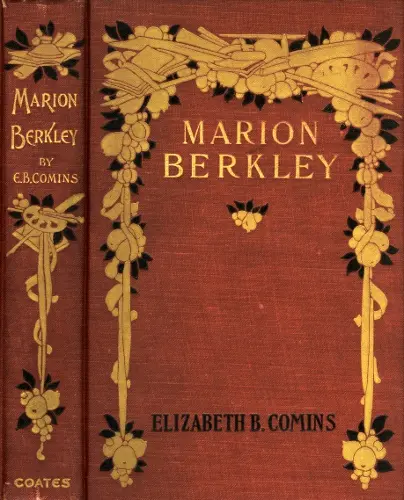
"Marion Berkley: A Story for Girls" by Elizabeth B. Comins is a novel written in the late 19th century. The narrative revolves around the life of Marion Berkley, a schoolgirl navigating the complexities of friendship, rivalry, and young womanhood as she prepares to leave for boarding school. Through her journey, we meet various characters, including her mother, brother, and close friend Florence, setting the stage for coming-of-age experiences filled with personal growth and social dynamics. At the start of the book, we find Marion rushing to catch a train to her New England boarding school, emphasizing the challenges of time management in a busy household. The opening chapters paint a vivid portrait of schoolgirl life, as Marion interacts with her friend Florence during their train ride, revealing their shared history and contrasting personalities. As Marion arrives at school, she faces strict authority figures, such as Miss Stiefbach, and experiences the social dynamics among her peers. The narrative highlights Marion's artistic nature and her struggles against her pride, alongside the budding rivalry with a new student, Rachel, setting a tone that explores themes of rivalry, growth, and the quest for self-identity in a formative environment.
Introduction adapted from the source catalogue; source summaries may be automatically generated.
Free to read · English · 74,434 words · No account needed
MAKE TIME FOR A GOOD BOOK
On by default. Untick to stop anonymous reading totals. Each page counts after 10 seconds in view. How this works.
Anonymous counting is on unless you have switched it off.
"I don't pretend to," quietly replied the doctor; "but I suppose she is very much like all other young ladies."
"Indeed she is not," replied Rachel, energetically. "I don't know of a girl that has as much strength of character as Marion."
"Not even excepting Miss Florence?"
"No, not even excepting her. I love Florence dearly; she is a lovely girl, but there is something about Marion which she has not got."
"I should say so, decidedly," replied Dr. Drayton, with provoking
coolness.
"Why, Uncle Robert, I never dreamed you didn't like Marion!"
"Did I say I did not?" asked her uncle, as he unfolded the newspaper, and glanced down its columns.
"No, you didn't say exactly those words, but you implied it."
"I was not aware of the fact," said the doctor, as he lighted his cigar. "You said there was something about her different from Florence, and I agreed with you. I suppose, with feminine perversity, you would have preferred that I should have disagreed, thus giving you an opportunity to make an argument in favor of your side of the question; next time I'll remember."
"Uncle Robert, you are perfectly provoking!" exclaimed Rachel, jumping up, and taking the paper away from him; "there!--you shan't have it until you've said something in Marion's favor."
"Very well," replied her uncle, slightly raising his eyebrows; "you
enumerate the catalogue of her virtues, and I'll subscribe to all I
can."
"In the first place, she's very handsome," commenced Rachel.
"Well, no, not exactly what I call handsome," said the doctor in a deliberating tone; "she's not large enough for that."
"Beautiful then; that's better still."
"Well, yes,--I suppose you think so."
"But it isn't to be what I think," impatiently replied Rachel. "You certainly must acknowledge she has beautiful eyes; true as steel; the kind of eyes you could trust!"
"I'll examine them the next time I see her," replied Dr. Drayton, as he laid back in his chair, and puffed a cloud of smoke into the air. "Excellence No. 3, if you please, Rachel."
"She's very intelligent, and an excellent scholar," replied Rachel, tapping the floor with her foot, and trying not to get provoked.
"As yet I have never had any conversation with her of any deeper import than the shade of your window-curtains; but I've no doubt she's at home with any subject, and is a perfect walking 'Encyclopædia Americana.'"
"Uncle Robert, you are incorrigible! you are determined not to see any
good in her."
Your reading position is saved on this browser. Take it to another device with a library code. Reading pages adapt to text, rather than matching a printed edition.
BEHIND THE BOOK
This eBook is for the use of anyone anywhere in the United States and most other parts of the world at no cost and with almost no restrictions whatsoever. You may copy it, give it away or re-use it under the terms of the Project Gutenberg License included with this eBook or online at www.gutenberg.org. If you are not located in the United States, you will have to check the laws of the country where you are located before using this eBook. Read the source licence.
The original source file, including credits and licence, is retained by this library. Request an original-format copy at no charge. Please include the book title and Project Gutenberg identifier #41524.
KEEP YOUR CURIOSITY GOING
Coulson Kernahan

Maurice Baring
Frances Wright
Cécile Tormay

Frederic Jesup Stimson

W. H. P. (William Henry Pope) Jarvis