THE CLASSIC COLLECTION✦A dead man’s diaryCLASSIC FREE BOOKS
A dead man’s diary
Coulson Kernahan
THE CLASSIC COLLECTION · 1870
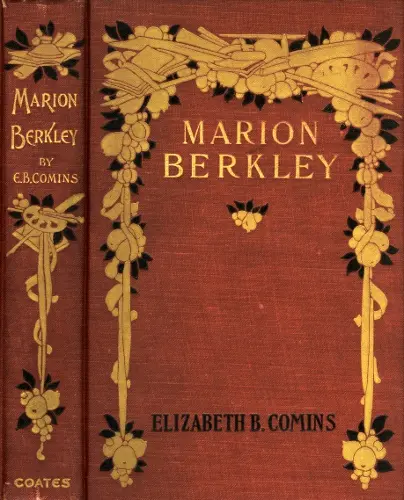
"Marion Berkley: A Story for Girls" by Elizabeth B. Comins is a novel written in the late 19th century. The narrative revolves around the life of Marion Berkley, a schoolgirl navigating the complexities of friendship, rivalry, and young womanhood as she prepares to leave for boarding school. Through her journey, we meet various characters, including her mother, brother, and close friend Florence, setting the stage for coming-of-age experiences filled with personal growth and social dynamics. At the start of the book, we find Marion rushing to catch a train to her New England boarding school, emphasizing the challenges of time management in a busy household. The opening chapters paint a vivid portrait of schoolgirl life, as Marion interacts with her friend Florence during their train ride, revealing their shared history and contrasting personalities. As Marion arrives at school, she faces strict authority figures, such as Miss Stiefbach, and experiences the social dynamics among her peers. The narrative highlights Marion's artistic nature and her struggles against her pride, alongside the budding rivalry with a new student, Rachel, setting a tone that explores themes of rivalry, growth, and the quest for self-identity in a formative environment.
Introduction adapted from the source catalogue; source summaries may be automatically generated.
Free to read · English · 74,434 words · No account needed
MAKE TIME FOR A GOOD BOOK
On by default. Untick to stop anonymous reading totals. Each page counts after 10 seconds in view. How this works.
Anonymous counting is on unless you have switched it off.
"It ought to be from the whole school," suggested Florence.
"Yes, so I think; but don't you think it would be nice if we six girls, who have been here four years together, should all work her something? My idea is to make an ottoman: one work the middle, four the corners, and the other fill it up; what do you say?"
"A capital idea!" said Mattie; "and I choose the filling up, for that's the only part I like to do."
"You're welcome to it," said Marion, "for we all hate it."
"Mab, couldn't you design it yourself?" asked Florence; "it would be so much handsomer, and Miss Christine would think all the more of it."
"Nothing I should like better, if you'll all trust me."
"Of course we will," said Mattie; "you designed your carpet-bag, didn't you? It is a perfect beauty!"
"Let me see it," said Sarah. "It's a new one, isn't it?"
"Oh, what handsome letters!" said Rachel. "There, now I see for the first time why the girls call you Mab. I always thought it was such a queer nickname for Marion."
"Why, didn't you know?" answered Marion. "M. A. B., Marion Ascott Berkley; but I never write my whole name; I like just the two, Marion Berkley, a great deal better."
"Do you know," said Sarah, in the most serious way, "I don't think 'Mab' seems to suit you so well as it used to? then you were sort of--well--but now you're kind of--I don't exactly know what, but different from the other."
"Sallie, you are a goose!" laughed Marion, as Sarah's lucid description of the change in her character produced a shout from the girls. "I shall have to muzzle you until you manage your tongue better;" and quick as a flash Marion seized her satchel, and clapped it over Sarah's head, who resisted violently; "will you be a good girl if I let you out?"
"Yes! yes!" cried Sallie, from the inside of the bag, her voice almost drowned by the laughter of the girls.
"Well now, behave yourself," said Marion, as she released her prisoner, "and next time don't talk of what you know nothing about."
"Well, you are, any way!" cried Sarah, brushing the hair out of her
eyes.
"Take care!" laughed Marion, shaking the satchel at Sarah; "you know
what you have to expect."
"Come, girls, let's go downstairs and tell the others," said Rachel.
"So we will," said Marion; "they ought to have known it as soon as we did;" and down they all went.
Your reading position is saved on this browser. Take it to another device with a library code. Reading pages adapt to text, rather than matching a printed edition.
BEHIND THE BOOK
This eBook is for the use of anyone anywhere in the United States and most other parts of the world at no cost and with almost no restrictions whatsoever. You may copy it, give it away or re-use it under the terms of the Project Gutenberg License included with this eBook or online at www.gutenberg.org. If you are not located in the United States, you will have to check the laws of the country where you are located before using this eBook. Read the source licence.
The original source file, including credits and licence, is retained by this library. Request an original-format copy at no charge. Please include the book title and Project Gutenberg identifier #41524.
KEEP YOUR CURIOSITY GOING
Coulson Kernahan

Maurice Baring
Frances Wright
Cécile Tormay

Frederic Jesup Stimson

W. H. P. (William Henry Pope) Jarvis