THE CLASSIC COLLECTION✦A dead man’s diaryCLASSIC FREE BOOKS
A dead man’s diary
Coulson Kernahan
THE CLASSIC COLLECTION · 1870
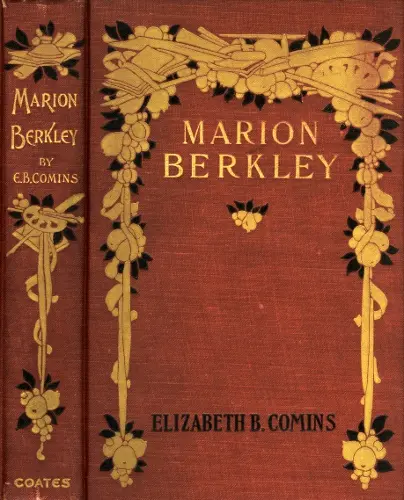
"Marion Berkley: A Story for Girls" by Elizabeth B. Comins is a novel written in the late 19th century. The narrative revolves around the life of Marion Berkley, a schoolgirl navigating the complexities of friendship, rivalry, and young womanhood as she prepares to leave for boarding school. Through her journey, we meet various characters, including her mother, brother, and close friend Florence, setting the stage for coming-of-age experiences filled with personal growth and social dynamics. At the start of the book, we find Marion rushing to catch a train to her New England boarding school, emphasizing the challenges of time management in a busy household. The opening chapters paint a vivid portrait of schoolgirl life, as Marion interacts with her friend Florence during their train ride, revealing their shared history and contrasting personalities. As Marion arrives at school, she faces strict authority figures, such as Miss Stiefbach, and experiences the social dynamics among her peers. The narrative highlights Marion's artistic nature and her struggles against her pride, alongside the budding rivalry with a new student, Rachel, setting a tone that explores themes of rivalry, growth, and the quest for self-identity in a formative environment.
Introduction adapted from the source catalogue; source summaries may be automatically generated.
Free to read · English · 74,434 words · No account needed
MAKE TIME FOR A GOOD BOOK
On by default. Untick to stop anonymous reading totals. Each page counts after 10 seconds in view. How this works.
Anonymous counting is on unless you have switched it off.
The girls were all met at the depot by their respective papas, mammas or "big brothers," and after great demonstrations of delight at meeting, and good-byes, and "Come round soon," etc., from the girls as they parted, they all separated on their way to their various homes.
"Marion," asked Mr. Berkley at the breakfast-table the next morning, as he helped his daughter to the best chop on the platter, "who was that young lady with Florence last night?"
"Miss Drayton," replied Marion, with the slightest possible change of
manner,--"Rachel Drayton."
"Rachel Drayton. That's rather an uncommon name. I don't think I ever heard of a real bona fide Rachel before; handsome, isn't she?"
"No, not exactly; perhaps she would be if she were well."
"She's uncommon-looking," continued Mr. Berkley, as he helped himself to another slice of toast; "didn't you notice her, Margaret?--tall, with jet-black hair and eyes. Rachel is just the name for her."
"I noticed her; in fact, Florence introduced her, but I was attracted towards her first by the unusually sad expression of her face. I never saw it so noticeable in one so young; and I suppose she is young, though she looks much older than you or Florence."
"She is only seventeen," replied Marion, busily engaged in giving
Charley sips of her coffee.
"Oh, well," said Mr. Berkley in his hearty way, "we'll soon get rid of that sad look; we'll have her in with Flo, and I guess after she's seen Warren once or twice she'll learn how to laugh. What do you think, Marion?"
"It won't be any use for you to invite her, papa. She wouldn't come; she's in deep mourning,--she lost her father just before she came to school."
"Poor child!" said Mrs. Berkley, whose heart always warmed towards any one in trouble; "poor child! Where does her mother live?"
"She has no mother either; she died when Rachel was a baby. In fact, she has no relations at all except an uncle, who has been abroad for ten years, and will not be at home until school closes next spring."
"Well, I do pity the poor thing!" said Mr. Berkley, who, although death had never robbed him of his own dear ones, felt the deepest sympathy for all those who had been so stricken. "I think it is one of the saddest cases I ever knew. I suppose Flo--bless her heart!--could sympathize with her even more than the rest of you, having lost her mother too."
"She and Rachel are great friends," replied Marion, wishing the subject
would ever be changed.
"Is she well provided for?" asked Mr. Berkley.
Your reading position is saved on this browser. Take it to another device with a library code. Reading pages adapt to text, rather than matching a printed edition.
BEHIND THE BOOK
This eBook is for the use of anyone anywhere in the United States and most other parts of the world at no cost and with almost no restrictions whatsoever. You may copy it, give it away or re-use it under the terms of the Project Gutenberg License included with this eBook or online at www.gutenberg.org. If you are not located in the United States, you will have to check the laws of the country where you are located before using this eBook. Read the source licence.
The original source file, including credits and licence, is retained by this library. Request an original-format copy at no charge. Please include the book title and Project Gutenberg identifier #41524.
KEEP YOUR CURIOSITY GOING
Coulson Kernahan

Maurice Baring
Frances Wright
Cécile Tormay

Frederic Jesup Stimson

W. H. P. (William Henry Pope) Jarvis