THE CLASSIC COLLECTION✦A dead man’s diaryCLASSIC FREE BOOKS
A dead man’s diary
Coulson Kernahan
THE CLASSIC COLLECTION · 1870
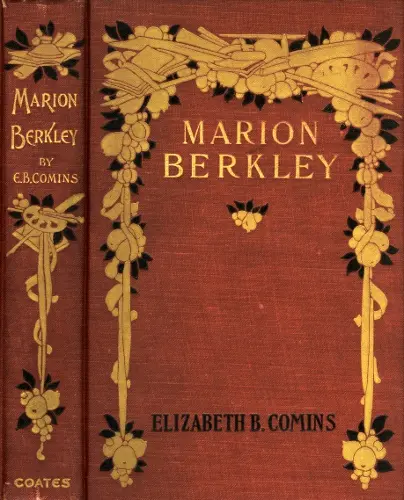
"Marion Berkley: A Story for Girls" by Elizabeth B. Comins is a novel written in the late 19th century. The narrative revolves around the life of Marion Berkley, a schoolgirl navigating the complexities of friendship, rivalry, and young womanhood as she prepares to leave for boarding school. Through her journey, we meet various characters, including her mother, brother, and close friend Florence, setting the stage for coming-of-age experiences filled with personal growth and social dynamics. At the start of the book, we find Marion rushing to catch a train to her New England boarding school, emphasizing the challenges of time management in a busy household. The opening chapters paint a vivid portrait of schoolgirl life, as Marion interacts with her friend Florence during their train ride, revealing their shared history and contrasting personalities. As Marion arrives at school, she faces strict authority figures, such as Miss Stiefbach, and experiences the social dynamics among her peers. The narrative highlights Marion's artistic nature and her struggles against her pride, alongside the budding rivalry with a new student, Rachel, setting a tone that explores themes of rivalry, growth, and the quest for self-identity in a formative environment.
Introduction adapted from the source catalogue; source summaries may be automatically generated.
Free to read · English · 74,434 words · No account needed
MAKE TIME FOR A GOOD BOOK
On by default. Untick to stop anonymous reading totals. Each page counts after 10 seconds in view. How this works.
Anonymous counting is on unless you have switched it off.
"No fear of that," replied Marion, as she rapidly undid the massive braids, and brushed them until they shone like burnished gold.
"There is some pleasure in doing such hair as yours," said Marion, with all the enthusiasm of an Auguste; "no need of rats or yarn here."
For a few moments she worked in silence, as her fingers flew in and out, until two long shining braids were made; these she twisted gracefully round at the back of Miss Christine's head, exclaiming as she put in the last hair-pin:--
"There! who would ever suppose she had as much hair as that? Just look at it, girls; isn't it lovely?"
"Perfectly lovely!" cried Florence. "Why, Miss Christine, you don't make
any show of it at all."
"I braid it up as tight as possible, and don't care for anything but to have it stay firm and smooth."
"Now, Miss Christine," said Marion, in a tone which seemed to imply that she expected opposition, but meant to conquer it, "I'm going to crimp the front."
"My dear child, are you crazy? Why, I should not think of doing such a
thing!"
"Of course you wouldn't, because you don't know how; but I'll do it now, and teach you some other time."
"Yes, yes," put in both Florence and Mattie; "your hair will be lovely crimped, and so becoming; do let her!"
"But I am afraid you'll make me look ridiculous, Marion," said Miss Christine, in a deprecating tone; "and perhaps you will burn it."
"Indeed I won't; your hair shan't suffer the way poor Meg's did in 'Little Women,' for I'll do it over a hot slate-pencil, and that never burnt mine."
"You don't mean to say you want to friz my hair up the way yours is!"
"No, indeed; I'll take more hair, and that will do it in large, soft waves. Now you'll see how lovely I'll make it look;" and Marion already had the pencil in the gas, and in a moment more was twisting over it a lock of Miss Christine's hair. "Now for the other side; then I'll comb it out, and it will be perfectly stunning!"
"Marion, what an expression!" said Miss Christine, as she sat in momentary expectation of having her hair singed off her head, or her forehead blistered. "I wish you would correct yourself of the habit of using slang words."
"Slang! why, that's not slang!"
"Yes, my dear; I think it is."
"Well, it is certainly a very mild form."
"Mild or not, it is extremely unladylike, and I hope you will get over the habit soon, or it will become fixed upon you."
Your reading position is saved on this browser. Take it to another device with a library code. Reading pages adapt to text, rather than matching a printed edition.
BEHIND THE BOOK
This eBook is for the use of anyone anywhere in the United States and most other parts of the world at no cost and with almost no restrictions whatsoever. You may copy it, give it away or re-use it under the terms of the Project Gutenberg License included with this eBook or online at www.gutenberg.org. If you are not located in the United States, you will have to check the laws of the country where you are located before using this eBook. Read the source licence.
The original source file, including credits and licence, is retained by this library. Request an original-format copy at no charge. Please include the book title and Project Gutenberg identifier #41524.
KEEP YOUR CURIOSITY GOING
Coulson Kernahan

Maurice Baring
Frances Wright
Cécile Tormay

Frederic Jesup Stimson

W. H. P. (William Henry Pope) Jarvis