THE CLASSIC COLLECTION✦Marsena, and Other Stories of the WartimeCLASSIC FREE BOOKS
Marsena, and Other Stories of the Wartime
Harold Frederic
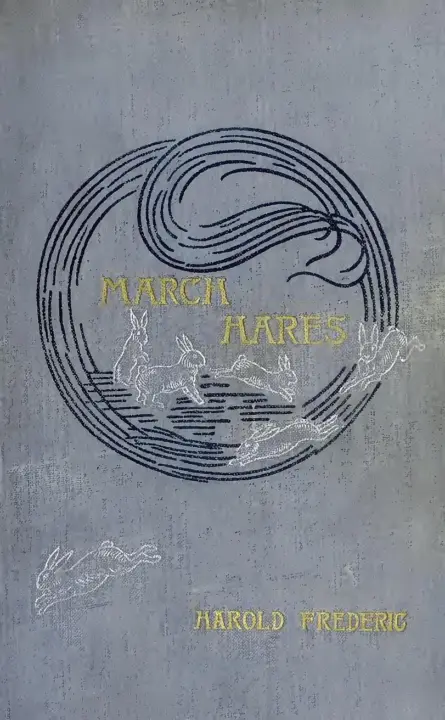
THE CLASSIC COLLECTION · 1896
"March Hares" by Harold Frederic is a novel written in the late 19th century. The story follows David Mosscrop as he navigates his thirtieth birthday with feelings of despair and self-reflection while encountering a young woman named Vestalia Peaussier on Westminster Bridge. Their meeting sparks a connection that challenges both of their perspectives on life, suggesting themes of hope, social class, and the complexity of human relationships. The opening of "March Hares" sets an introspective tone as David initially grapples with a sense of failure and existential dread on his birthday. He contemplates the meaning of his existence while people-watching on the bridge, feeling a connection to the lives of the passersby. When he spots Vestalia, a woman he recognizes from the British Museum, there is a moment of intrigue that soon blossoms into a light-hearted and flirtatious exchange. Their conversational chemistry reveals Vestalia's struggles, as she is temporarily without a home, and highlights David's emerging interest in her welfare. This dynamic sets the stage for an exploration of their respective challenges and the potential for change in their lives, all while lending a sense of warmth and optimism to their fateful encounter.
Introduction adapted from the source catalogue; source summaries may be automatically generated.
Free to read · English · 48,351 words · No account needed
MAKE TIME FOR A GOOD BOOK
On by default. Untick to stop anonymous reading totals. Each page counts after 10 seconds in view. How this works.
Anonymous counting is on unless you have switched it off.
As the balcony was too small for another chair, and Mr. Skinner did not come to the window, his daughter led her guest into the sitting-room.
“Papa,” she said, “you will recall the gentleman whom we met yesterday at the British Museum.”
Mr. Skinner lifted to its place the pince-nez which depended on a gold thread from the lapel of his carefully-buttoned frock-coat, and scrutinised the person indicated in a painstaking manner.
“Ah, yes, indeed,” he said, continuing his gaze, but with no salutation, and no offer of the hand.
“It’s so dark in here, I don’t believe you do,” she remarked, to cover the awkwardness of the moment. “The sun has gone now, any way,” and she moved back and put a hand upon the awning-cord.
“Permit me,” said David, hurrying to her side, and pulling at the shade.
“He’s out of sorts about something,” the girl murmured furtively. “Don’t mind it; just leave him to me.”
In the brightened light, Mr. Skinner’s demeanour seemed no more cordial. He regarded his visitor with a doubtful glance, and gave indications of a sense of embarrassment in his presence. The daughter, however, was in no respect dismayed by her responsibility.
“Papa,” she said with brisk decision, “it was all a joke yesterday. Our friend was so amused by your offer yesterday----”
“I beg your pardon, Adele,” the father interposed ceremoniously, “but it becomes immediately incumbent upon me to express my dissent. To obviate any possible misconception, it should be explicitly stated that, although it is true that the task of formulating the proposal to which you allude did undoubtedly devolve upon me, the proposition itself, both in spirit and suggestion, originated in your own consciousness.”
“All right,” she hurriedly went on, “have it anyway you like. The point is that this gentleman thought it was funny, and so he capped it with his own little joke by pretending to be some one else. He made up that name he gave you on the spur of the moment, just for sport. He came here this morning, just to explain. He was nervous about the deception, innocent though it was. Papa, let me introduce to you Mr. Linkhaw’s relation, of whom he spoke so often, you know--the Earl of Drumpipes.”
Mr. Skinner took in this intelligence with respectful deliberation. He bowed meanwhile, and, after a moment’s deferential hesitation, shook hands in a formal way with David, and motioned him to a seat.
Your reading position is saved on this browser. Take it to another device with a library code. Reading pages adapt to text, rather than matching a printed edition.
Harold Frederic
Harold Frederic
Harold Frederic
Harold Frederic
BEHIND THE BOOK
This eBook is for the use of anyone anywhere in the United States and most other parts of the world at no cost and with almost no restrictions whatsoever. You may copy it, give it away or re-use it under the terms of the Project Gutenberg License included with this eBook or online at www.gutenberg.org. If you are not located in the United States, you will have to check the laws of the country where you are located before using this eBook. Read the source licence.
The original source file, including credits and licence, is retained by this library. Request an original-format copy at no charge. Please include the book title and Project Gutenberg identifier #54986.
KEEP YOUR CURIOSITY GOING
Coulson Kernahan

Maurice Baring
Frances Wright
Cécile Tormay

Frederic Jesup Stimson

W. H. P. (William Henry Pope) Jarvis