THE CLASSIC COLLECTION✦Marsena, and Other Stories of the WartimeCLASSIC FREE BOOKS
Marsena, and Other Stories of the Wartime
Harold Frederic
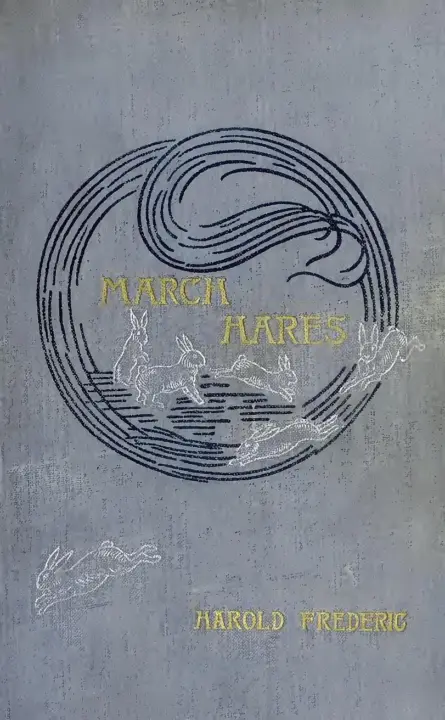
THE CLASSIC COLLECTION · 1896
"March Hares" by Harold Frederic is a novel written in the late 19th century. The story follows David Mosscrop as he navigates his thirtieth birthday with feelings of despair and self-reflection while encountering a young woman named Vestalia Peaussier on Westminster Bridge. Their meeting sparks a connection that challenges both of their perspectives on life, suggesting themes of hope, social class, and the complexity of human relationships. The opening of "March Hares" sets an introspective tone as David initially grapples with a sense of failure and existential dread on his birthday. He contemplates the meaning of his existence while people-watching on the bridge, feeling a connection to the lives of the passersby. When he spots Vestalia, a woman he recognizes from the British Museum, there is a moment of intrigue that soon blossoms into a light-hearted and flirtatious exchange. Their conversational chemistry reveals Vestalia's struggles, as she is temporarily without a home, and highlights David's emerging interest in her welfare. This dynamic sets the stage for an exploration of their respective challenges and the potential for change in their lives, all while lending a sense of warmth and optimism to their fateful encounter.
Introduction adapted from the source catalogue; source summaries may be automatically generated.
Free to read · English · 48,351 words · No account needed
MAKE TIME FOR A GOOD BOOK
On by default. Untick to stop anonymous reading totals. Each page counts after 10 seconds in view. How this works.
Anonymous counting is on unless you have switched it off.
He started at a brisk pace in pursuit, and Drumpipes strode eagerly beside him. They overtook their guests on the very threshold of the door, and the Earl called out a breathless, entreating “Adele!” The girl, upon reflection, turned, and surveyed the pair with an austere eye.
“Wait a moment, papa,” she said in her coldest tone; “one of these two gentlemen seems to feel authorised to address me by my Christian name, and apparently has also some communication to make to us.”
“Well,” stammered Drumpipes, hesitatingly, “there’s an awfully good luncheon been ordered, you know.”
Mosscrop emitted an abrupt, resonant note of laughter, and in the silence which ensued displayed violent muscular efforts to keep a grin from convulsing his face.
Adele preserved the severity of her aspect for a little. “I think it might occur to you, Lord Drumpipes,” she began, markedly addressing her remarks to the rightful bearer of the title, “that after what has happened--and on this point, I can assure you my father feels exactly as I do----”
She stopped here, with the effect of appealing to her father for immediate confirmation of their inflexible joint attitude.
“I need scarcely observe,” began Mr. Skinner, putting up his pince-nez and looking down upon the two young men with sternness from the vantage of the door-step, “that whatever course my daughter deems it consistent with her dignity to pursue, in the face of the extraordinary, and, I may confidently add, unprecedented circumstances which we are called upon to--to confront, has my most unswerving adhesion.”
A waiter opened the door inward at this instant, and overlaid Mr. Skinner’s peroration with a clear-cut message, Germanic in its nonessentials, but broadly human in import.
The old gentleman gasped, twiddled the string of his glasses in his fingers, and leant his head sidewise toward his daughter. “Yes, but what is it we’re going to do?” he inquired in a nervous whisper.
“Do?” cried Mosscrop, who had caught her glance in his own, and convicted it of latent merriment, “Do? Why we’re going to laugh at a harmless pleasantry happily ended, and pass in to luncheon.”
“Yes, papa,” said Adele, upon consideration, and with a dawning smile upon her lips, “I think that is what we’re going to do.” When they found themselves standing about the table in the private room, overlooking through open French windows the delightful sunlit garden from which they had come, Mosscrop seized the moment of hesitation about seats to hold up his hand. Though he had been bereft of his borrowed dignities, the air of natural command sat easily upon him.
Your reading position is saved on this browser. Take it to another device with a library code. Reading pages adapt to text, rather than matching a printed edition.
Harold Frederic
Harold Frederic
Harold Frederic
Harold Frederic
BEHIND THE BOOK
This eBook is for the use of anyone anywhere in the United States and most other parts of the world at no cost and with almost no restrictions whatsoever. You may copy it, give it away or re-use it under the terms of the Project Gutenberg License included with this eBook or online at www.gutenberg.org. If you are not located in the United States, you will have to check the laws of the country where you are located before using this eBook. Read the source licence.
The original source file, including credits and licence, is retained by this library. Request an original-format copy at no charge. Please include the book title and Project Gutenberg identifier #54986.
KEEP YOUR CURIOSITY GOING
Coulson Kernahan

Maurice Baring
Frances Wright
Cécile Tormay

Frederic Jesup Stimson

W. H. P. (William Henry Pope) Jarvis