
Last letters from the living dead man
David Patterson (Spirit) Hatch
THE CLASSIC COLLECTION · 1900
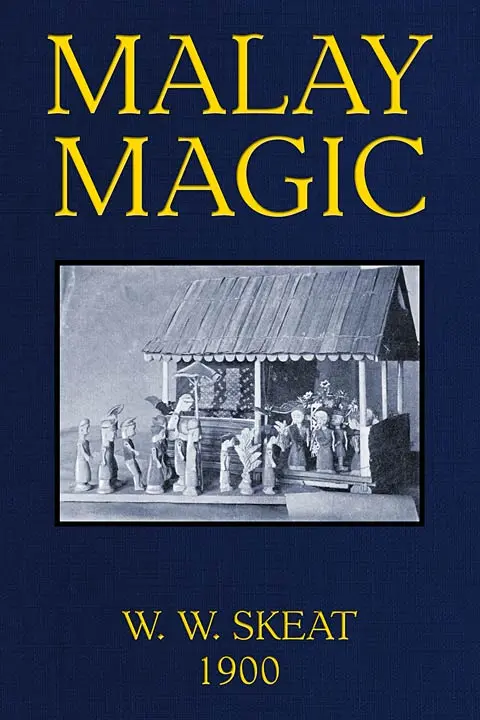
"Malay Magic" by Walter William Skeat is an introductory work on folklore and popular religion written in the late 19th century. It explores the rich tapestry of beliefs, customs, and magical practices of the Malays in the Malay Peninsula, drawing upon a variety of sources, including personal observations, native manuscripts, and published works. The book aims to document and analyze the traditional beliefs and practices that are integral to Malay culture, highlighting the complexity of their folklore intertwined with influences from Indian, Arab, and indigenous sources. The opening of the book sets the stage for a comprehensive exploration of Malay folklore, establishing the author's intent to create a representative account of Malay beliefs and magical practices. Skeat introduces the key themes such as creation myths, the understanding of nature, and the relationships between humans and the supernatural world. He reflects on the significance of various folkloric beliefs, such as the creation of the world and the role of magic in everyday life, and emphasizes the importance of these elements in understanding the Malay identity and culture. As he begins to unfold these narratives, the reader is invited into the intricate world of Malay magic, laying the foundation for the detailed studies that follow.
Introduction adapted from the source catalogue; source summaries may be automatically generated.
Free to read · English · 226,518 words · No account needed
MAKE TIME FOR A GOOD BOOK
On by default. Untick to stop anonymous reading totals. Each page counts after 10 seconds in view. How this works.
Anonymous counting is on unless you have switched it off.
When you are sounding the call (melaung), stand in the middle of the
enclosure and say:--
"Cluck, cluck! soul of Princess Puding, of Queen Kapor, and Queen Sarap, Enter ye into our Bundle, And perch upon the Ivory Railing. Come in procession, come in succession, The assembly-flower unfolds its petals. Come down in procession, come down in succession, King Solomon's self is come to call you. If you do not come down, the Bear-cat shall eat you, If you do not appear, wild beasts shall devour you, If you perch upon a twig, you shall fall headlong (All over) the seven valleys and seven knolls of rising ground. If ye go to the hills, ye shall get no food; If ye go to the forest-pools, ye shall get no drink."
Or else the following:--
"Cut the mengkudu [257] branch,
Cut it (through) and thrust it downwards.
Let those which are near be the first to arrive,
And those which are far off be sent for,
Let those which have eggs, leave their eggs,
And those which have young, desert their young,
Let those which are blind, come led by others,
And those which have broken limbs, come on crutches.
Come and assemble in King Solomon's audience-hall.
Cluck, cluck! souls of Queen Kapor, Princess Puding, Handmaid
Sarap,
Come down and assemble in King Solomon's audience-hall,
And put on King Solomon's necklace (breast-ornaments) and
armlets." [258]
When about to enter the hut say--
"[Hearken], O Hearts of Wild Doves,
Cut we the Rod of Invitation,
This hut is named the Magic Prince,
This tube is named Prince Distraction,
Distraught (be ye) by day, distraught by night,
Distraught (with longing) to assemble in King Solomon's Hall,
Cluck, cluck! souls of Queen Kapor," etc. (as before). [259]
When you have just entered, and before you seat yourself, say--
"Sift, sift the rice-ends,
Sift them over a rush-work rice-bag," etc. (as before).
Put your lips to the decoy-tube, and sound the call, saying--
"Cut the mengkudu stem;
Cut it (through) and thrust it downwards," etc. (as before).
(or else some longer version, such as one of those given in the Appendix). When the wild pigeon have arrived and have entered the enclosure or "Palace-yard," wait till they are in a good position, and then push out one of the rods with the fine noose at the end, slip the noose over the bird's neck, and drag it into the house, saying as you do so--
"Wak-wak [stands for] a heron on the kitchen shelf, Covered over with the top of a cocoa-nut shell, Do you move aside, Sir Bachelor, Master of the Ceremonies, I wish to ensnare the necks of the race of wild doves."
Your reading position is saved on this browser. Take it to another device with a library code. Reading pages adapt to text, rather than matching a printed edition.
BEHIND THE BOOK
This eBook is for the use of anyone anywhere in the United States and most other parts of the world at no cost and with almost no restrictions whatsoever. You may copy it, give it away or re-use it under the terms of the Project Gutenberg License included with this eBook or online at www.gutenberg.org. If you are not located in the United States, you will have to check the laws of the country where you are located before using this eBook. Read the source licence.
The original source file, including credits and licence, is retained by this library. Request an original-format copy at no charge. Please include the book title and Project Gutenberg identifier #47873.
KEEP YOUR CURIOSITY GOING
David Patterson (Spirit) Hatch

David Patterson (Spirit) Hatch

David Patterson (Spirit) Hatch

Maurice Baring
Francis Greenleaf Allinson & Anne C. E. (Anne Crosby Emery) Allinson

Edwin Abbott Abbott