
Last letters from the living dead man
David Patterson (Spirit) Hatch
THE CLASSIC COLLECTION · 1900
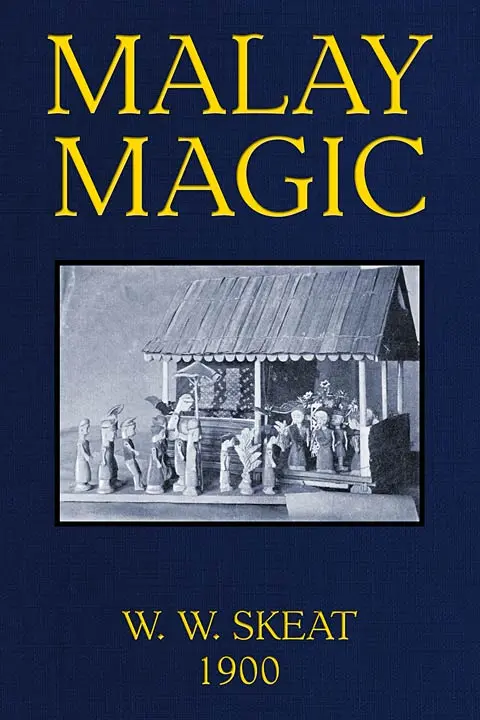
"Malay Magic" by Walter William Skeat is an introductory work on folklore and popular religion written in the late 19th century. It explores the rich tapestry of beliefs, customs, and magical practices of the Malays in the Malay Peninsula, drawing upon a variety of sources, including personal observations, native manuscripts, and published works. The book aims to document and analyze the traditional beliefs and practices that are integral to Malay culture, highlighting the complexity of their folklore intertwined with influences from Indian, Arab, and indigenous sources. The opening of the book sets the stage for a comprehensive exploration of Malay folklore, establishing the author's intent to create a representative account of Malay beliefs and magical practices. Skeat introduces the key themes such as creation myths, the understanding of nature, and the relationships between humans and the supernatural world. He reflects on the significance of various folkloric beliefs, such as the creation of the world and the role of magic in everyday life, and emphasizes the importance of these elements in understanding the Malay identity and culture. As he begins to unfold these narratives, the reader is invited into the intricate world of Malay magic, laying the foundation for the detailed studies that follow.
Introduction adapted from the source catalogue; source summaries may be automatically generated.
Free to read · English · 226,518 words · No account needed
MAKE TIME FOR A GOOD BOOK
On by default. Untick to stop anonymous reading totals. Each page counts after 10 seconds in view. How this works.
Anonymous counting is on unless you have switched it off.
[803] Newbold, op. cit. vol. ii. pp. 84 and 199.
[804] Em. Atoran.
[805] Isma.
[806] Qu. `ashikkan, and so infra throughout this section.
[807] i.e. Beringin.
[808] i.e. Bunting.
[809] Qu. dengan.
[810] Beralih rupa.
[811] Em. Meng`ashikkan and so infra.
[812] Em. Supaya.
[813] Em. Mikail.
[814] i.e. `Azrail: so infra in iv.
[815] Em. Kemalu-'l-hakim, i.e. Lukmanu-'l-hakim.
[816] Qu. Disitu.
[817] Em. Berusul.
[818] Hikayat Raja Budiman, Part ii. No. 3, p. 35, Publications of the Straits Branch of the Royal Asiatic Society. For other charms connected with the Soul vide infra Chap. VI. esp. secs, ccxiii, ccxiv, cclxv, cclxxv.
[819] Bunyi nafas yang masok "Allah," bunyi nafas yang kaluar "Hu,"
kata orang Malayu.
[820] Em. di hulu.
[821] Extracted from Crawfurd, Mal. Gram. p. cxcvii.
[822] i.q. usik.
[823] i.q. larang.
[824] i.q. kekal, pusaka.
[825] Golah, daun kayu sakatilima.
[826] Rempenai, nama akar.
[827] Rimpun, nama kayu.
[828] Betoto' (not Betutu), i.q. bersama-sama.
[829] Belunchau, i.q. ayer berjalan.
[830] Berkalentong, ta'tentu.
[831] Halunlintar, i.q. halilintar.
[832] N. and Q., No. 4 sec. 97, issued with No. 17 of the J.R.A.S.,
S.B.
[833] Kapas, i.e. Kapas hutan or Kapas hantu, Hibiscus abelmoschus,
L. (Malvaceæ).
[834] Lerik, probably Phrynium parviflorum, Roxb. (Scitamineæ) or
Phrynium Griffithii, Bak.
[835] Resam, Gleichenia linearis (Filiceæ), a common fern.
[836] Lenjuang merah, the common red Dracæna, Cordyline terminalis,
var. ferrea (Liliaceæ).
[837] Kedah is the name of the old Spectre Huntsman, and Kadim (or Gadeh = grandmother) that of his wife.
[838] Si Adunada and Si Aduan were explained as the names of his two children, but the names look as if they had been confused in some way.
[839] Tarantan, v.l. terantang, was explained as meaning senjata kabesaran (royal weapons or insignia) of the Hantu Rama.
[840] To these names may be added Si Lansat, Si Kumbang, and Si Desa, a lame old dog which the Spectre Huntsman is said to carry at his side in a wallet, until he comes up with his quarry, but whose bite is then the worst of them all.--Cp. Note to 1. 6 of sec. xxx.
[841] Si Tompang is said to be the jackal (srigala), the brother of
Si Sukum.
[842] Sangkil = sangka.
[843] Kinchah = benchah.
[844] Kunta = terkena (?).
[845] Juru-juru, sc. mulut, the corners of the mouth. Gagak: lit. a crow, but here said to mean the goat-sucker or nightjar, the steed of the Spectre Huntsman.
[846] Tertuntong, turned upside down, the phrase signifying the vomiting which accompanies the sickness caused by the Spectre Huntsman.
[847] Antara mani, explained as meaning between noon and the hour of prayer, called dlohor (early in the afternoon), that being the time of day when the Spectre Huntsman most commonly strikes people with sickness.
[848] Si Hantu Pemburu, here definitely explained to me as Batara Guru
(Shiva).
Your reading position is saved on this browser. Take it to another device with a library code. Reading pages adapt to text, rather than matching a printed edition.
BEHIND THE BOOK
This eBook is for the use of anyone anywhere in the United States and most other parts of the world at no cost and with almost no restrictions whatsoever. You may copy it, give it away or re-use it under the terms of the Project Gutenberg License included with this eBook or online at www.gutenberg.org. If you are not located in the United States, you will have to check the laws of the country where you are located before using this eBook. Read the source licence.
The original source file, including credits and licence, is retained by this library. Request an original-format copy at no charge. Please include the book title and Project Gutenberg identifier #47873.
KEEP YOUR CURIOSITY GOING
David Patterson (Spirit) Hatch

David Patterson (Spirit) Hatch

David Patterson (Spirit) Hatch

Maurice Baring
Francis Greenleaf Allinson & Anne C. E. (Anne Crosby Emery) Allinson

Edwin Abbott Abbott