
Last letters from the living dead man
David Patterson (Spirit) Hatch
THE CLASSIC COLLECTION · 1900
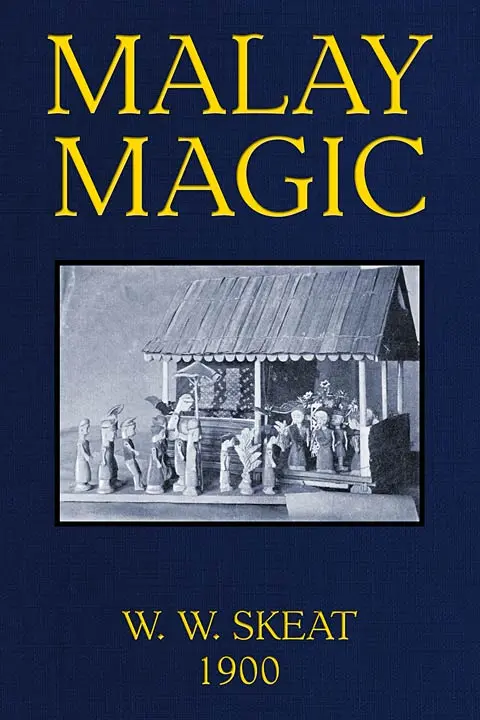
"Malay Magic" by Walter William Skeat is an introductory work on folklore and popular religion written in the late 19th century. It explores the rich tapestry of beliefs, customs, and magical practices of the Malays in the Malay Peninsula, drawing upon a variety of sources, including personal observations, native manuscripts, and published works. The book aims to document and analyze the traditional beliefs and practices that are integral to Malay culture, highlighting the complexity of their folklore intertwined with influences from Indian, Arab, and indigenous sources. The opening of the book sets the stage for a comprehensive exploration of Malay folklore, establishing the author's intent to create a representative account of Malay beliefs and magical practices. Skeat introduces the key themes such as creation myths, the understanding of nature, and the relationships between humans and the supernatural world. He reflects on the significance of various folkloric beliefs, such as the creation of the world and the role of magic in everyday life, and emphasizes the importance of these elements in understanding the Malay identity and culture. As he begins to unfold these narratives, the reader is invited into the intricate world of Malay magic, laying the foundation for the detailed studies that follow.
Introduction adapted from the source catalogue; source summaries may be automatically generated.
Free to read · English · 226,518 words · No account needed
MAKE TIME FOR A GOOD BOOK
On by default. Untick to stop anonymous reading totals. Each page counts after 10 seconds in view. How this works.
Anonymous counting is on unless you have switched it off.
"Natives maintain that they are an almost infallible medicine in cases of chest or bowel complaints, but their principal value is founded on their reputed virtue as a powerful aphrodisiac. To operate in this way one is worn on the navel tied up in a piece of cloth, or water in which one has been soaked is drunk."--F. Kehding on Siak (Sumatra) in J.R.A.S., S.B., No. 17, pp. 153-4.
[486] J.R.A.S., S.B., No. 9, p. 24 n. As to Paujangi (Pauh Janggi)
vide pp. 6-9, supra.
[487] Vide Chapter IV. supra.
[488] For the charm used at the insertion of the twigs, vide
App. cxxii.
[489] Vide App. cxxiv.
[490] J.R.A.S., S.B., No. 9, p. 26.
[491] This recalls the account in Northern mythology of the four rivers which are said to flow from the teats of the cow Audhumla.
In a great many Malay myths the colour white is an all-important feature. In this legend we have the white Semang and the white river. In others white animals and white birds are introduced.
[492] J.R.A.S., S.B., No. 9, p. 95.
[493] J.R.A.S., S.B., No. 7, pp. 24-26.
[494] The most usual name of the crocodile-spirit, as given in such charms as I have succeeded in collecting, is Sambu Agai, or, as it is also called, Jambu Rakai.
[495] Kira-kira means "accounts."
[496] Selangor Journal, vol. iii. No. 6, pp. 93, 94.
[497] The shortness of the crocodile's tongue, which is a mere stump of a tongue, has probably given rise to this idea.
[498] Also sometimes called "Apa daya," lit. "What device?" or "What resource?" The front teeth are also sometimes called kail seluang, or "seluang" hook, or hook for catching the seluang, a small fish resembling the sardine.--Vide H. C. C. in N. and Q. No. 4, sec. 95, issued with No. 17 of the J.R.A.S., S.B.
[499] The question of the mental attributes ascribed to the crocodile is one of great interest, as it is credited by Malays with a human origin. It is not alleged to shed tears over his victim; but, as the above account shows, it is far from insensible to the enormity of manslaughter. At the same time, it is credited with strong common sense (since it is known to "laugh" at those misguided mortals "who pole a boat down stream," no less than the tiger which "laughs" at those who "carry a torch on a moonlight night"), and also has a strict regard for honesty. (Vide infra.)
[500] Rewritten from Sel. Journ. vol. iii. No. 19, pp. 309-312.
[501] A native-built canoe hollowed out of a tree-trunk is no doubt
referred to.
[502] Mangrove, of various species, chiefly Rhizophoreæ.
[503] Sel. Journ. vol. i. No. 22, pp. 350-351.
Your reading position is saved on this browser. Take it to another device with a library code. Reading pages adapt to text, rather than matching a printed edition.
BEHIND THE BOOK
This eBook is for the use of anyone anywhere in the United States and most other parts of the world at no cost and with almost no restrictions whatsoever. You may copy it, give it away or re-use it under the terms of the Project Gutenberg License included with this eBook or online at www.gutenberg.org. If you are not located in the United States, you will have to check the laws of the country where you are located before using this eBook. Read the source licence.
The original source file, including credits and licence, is retained by this library. Request an original-format copy at no charge. Please include the book title and Project Gutenberg identifier #47873.
KEEP YOUR CURIOSITY GOING
David Patterson (Spirit) Hatch

David Patterson (Spirit) Hatch

David Patterson (Spirit) Hatch

Maurice Baring
Francis Greenleaf Allinson & Anne C. E. (Anne Crosby Emery) Allinson

Edwin Abbott Abbott