
Last letters from the living dead man
David Patterson (Spirit) Hatch
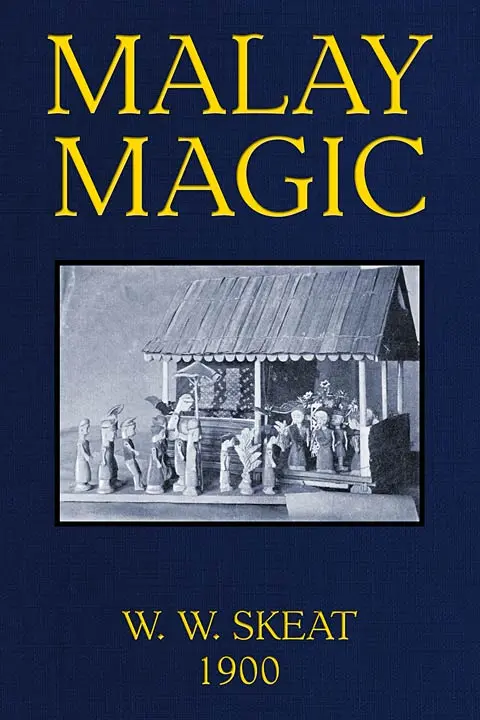
THE CLASSIC COLLECTION · 1900
"Malay Magic" by Walter William Skeat is an introductory work on folklore and popular religion written in the late 19th century. It explores the rich tapestry of beliefs, customs, and magical practices of the Malays in the Malay Peninsula, drawing upon a variety of sources, including personal observations, native manuscripts, and published works. The book aims to document and analyze the traditional beliefs and practices that are integral to Malay culture, highlighting the complexity of their folklore intertwined with influences from Indian, Arab, and indigenous sources. The opening of the book sets the stage for a comprehensive exploration of Malay folklore, establishing the author's intent to create a representative account of Malay beliefs and magical practices. Skeat introduces the key themes such as creation myths, the understanding of nature, and the relationships between humans and the supernatural world. He reflects on the significance of various folkloric beliefs, such as the creation of the world and the role of magic in everyday life, and emphasizes the importance of these elements in understanding the Malay identity and culture. As he begins to unfold these narratives, the reader is invited into the intricate world of Malay magic, laying the foundation for the detailed studies that follow.
Introduction adapted from the source catalogue; source summaries may be automatically generated.
Free to read · English · 226,518 words · No account needed
MAKE TIME FOR A GOOD BOOK
On by default. Untick to stop anonymous reading totals. Each page counts after 10 seconds in view. How this works.
Anonymous counting is on unless you have switched it off.
'O Mentala (i.e. Batara) Guru, and Teachers one and all (dengan Gurwuru-uru), and Sir Yellow Glow, Sir Yellow Glow knows all the ins and outs of it (?) These toils of ours are twofold, O let them not be staled. If they are staled, and we perform the penance for them, let our toils still kill the quarry. If they are staled by the dogs, let our toils still kill the quarry. If they are staled by men, let our toils still kill the quarry, by virtue of,' etc., etc."
[315] Probably a pun upon teng, which was explained to me as meaning kaki sa-b'lah ("one foot only"), as in berteng-teng, "to go on one foot," to hobble; tengkis, "with one foot shortened or shrunken," etc. The "satengteng flower" was explained as another name for the satawar.
[316] The corresponding charm for driving out the mischief, given by another deer Pawang ('Che Indut), appears to be more appropriate:--
O Mischief, Mother of Mischiefs,
Mischiefs One Hundred and Ninety (in number),
I know the origin from which you sprang.
The mischief of an Iguana was your origin.
The Heart of Timber was your origin,
The Yellow Glow of Sunset was your origin,
Return to the places from whence ye came,
Do me no harm or scathe.
If you do me harm or scathe, ye shall be consumed by the curse,
Eaten and enclosed in Disaster (bintongan), crushed to death by
the Thirty Divisions of the Koran,
Smitten by the sanctity of the Four Corners of the Earth,
By virtue of, etc., etc.
Bintongan was explained to me carefully as = benchana (calamity
or disaster).
[317] This and the four succeeding names are evidently corruptions of the names of the four archangels, "Michael, Israfel, Azrael, and Gabriel." Vide p. 98, supra.
[318] Vide pp. 94, 95, note, supra.
[319] In the Pelandok Jinaka, a Malay beast-fable, the Mouse-deer is styled "Sheikh `alam (or Shah `alam) di Rimba," "Chief (or King) of the Forest."
[320] Vide p. 117.
[321] Cp. our use of the phrase "an ugly customer," vide App. lxxxi.
[322] J.R.A.S., S.B., No. 7, p. 26.
[323] The wild dogs of the jungle are considered by Malays to be not natural dogs, but "ghost" dogs of the pack of the Spectre Huntsman. They are regarded as most dangerous to meet, for, according to a Malay informant, "if they bark at us, we shall assuredly die where we stand and shall not be able to return home; if, however, we see them and bark at them before they bark at us, we shall not be affected by them. Therefore do all Malays give tongue when they meet the wild dog in the forest."
[324] Or Sugar-palm (Arenga saccharifera).
Your reading position is saved on this browser. Take it to another device with a library code. Reading pages adapt to text, rather than matching a printed edition.
BEHIND THE BOOK
This eBook is for the use of anyone anywhere in the United States and most other parts of the world at no cost and with almost no restrictions whatsoever. You may copy it, give it away or re-use it under the terms of the Project Gutenberg License included with this eBook or online at www.gutenberg.org. If you are not located in the United States, you will have to check the laws of the country where you are located before using this eBook. Read the source licence.
The original source file, including credits and licence, is retained by this library. Request an original-format copy at no charge. Please include the book title and Project Gutenberg identifier #47873.
KEEP YOUR CURIOSITY GOING
David Patterson (Spirit) Hatch

David Patterson (Spirit) Hatch

David Patterson (Spirit) Hatch

Maurice Baring
Francis Greenleaf Allinson & Anne C. E. (Anne Crosby Emery) Allinson

Edwin Abbott Abbott