
Last letters from the living dead man
David Patterson (Spirit) Hatch
THE CLASSIC COLLECTION · 1900
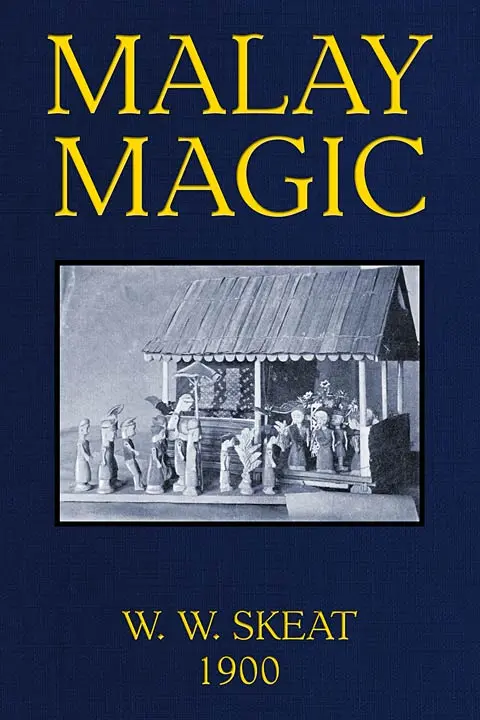
"Malay Magic" by Walter William Skeat is an introductory work on folklore and popular religion written in the late 19th century. It explores the rich tapestry of beliefs, customs, and magical practices of the Malays in the Malay Peninsula, drawing upon a variety of sources, including personal observations, native manuscripts, and published works. The book aims to document and analyze the traditional beliefs and practices that are integral to Malay culture, highlighting the complexity of their folklore intertwined with influences from Indian, Arab, and indigenous sources. The opening of the book sets the stage for a comprehensive exploration of Malay folklore, establishing the author's intent to create a representative account of Malay beliefs and magical practices. Skeat introduces the key themes such as creation myths, the understanding of nature, and the relationships between humans and the supernatural world. He reflects on the significance of various folkloric beliefs, such as the creation of the world and the role of magic in everyday life, and emphasizes the importance of these elements in understanding the Malay identity and culture. As he begins to unfold these narratives, the reader is invited into the intricate world of Malay magic, laying the foundation for the detailed studies that follow.
Introduction adapted from the source catalogue; source summaries may be automatically generated.
Free to read · English · 226,518 words · No account needed
MAKE TIME FOR A GOOD BOOK
On by default. Untick to stop anonymous reading totals. Each page counts after 10 seconds in view. How this works.
Anonymous counting is on unless you have switched it off.
[281] The skull of this elephant, riddled with bullets, was sent to the Government Museum at Kuala Lumpor, in Selangor. It had, so far as I remember, one stunted tusk. The present State surgeon (Dr. A. E. O. Travers) can speak to the facts.
[282] Sel. Journ. vol. iii. No. 6, p. 95 (quoted from Perak Museum
Notes by Mr. L. Wray).
[283] Sel. Journ. vol. i. No. 6, p. 83, where this note is given. Probably "armadillo" is a mistake for "pangolin."
[284] These leaves are such as are used by the medicine-man for his leaf-brush, i.e. leaves of the pulut-pulut, selaguri, gandarusa, and the red dracæna (lenjuang merah).
[285] "The Malays believe that the power to inform a spirit, a wild beast, or any natural object, such as iron rust, of the source from which it originates (usul asal ka-jadi-an-nya), renders it powerless." H. Clifford in No. 3 of the Publications of the R.A.S., S.B., Hikayat Raja Budiman, pt. ii. p. 8. This belief is found among all tribes of Malays in the Peninsula. Possibly the idea was that knowledge of another person's ancestry implied common tribal origin. For the explanation of "Badi," vide Chap. IV. p. 94, supra, and Chap. VI. p. 427, infra.
[286] "Rhinoceros" should be substituted for "elephant" passim, if it was the object of the hunter's pursuit. This particular line should probably come at the end of the charm instead of the middle.
[287] J.R.A.S., S.B., No. 7, p. 22.
[288] Marsden, Hist. of Sum. p. 292, ed. 1811.
[289] J.R.A.S., S.B., l.c.
"They (the Sumatran Malays) seem to think, indeed, that tigers in general are actuated with the spirits of departed men, and no consideration will prevail on a countryman to catch or to wound one, but in self-defence, or immediately after the act of destroying a friend or relation. They speak of them with a degree of awe, and hesitate to call them by their common name (rimau or machang), terming them respectfully satwa (the wild animals), or even nenek (ancestors), as really believing them such, or by way of soothing or coaxing them, as our ignorant country folk call the fairies 'the good people.'" [Dato' hutan, "elder of the jungle," is the common title of the tiger in Selangor. Various nicknames, however, are given, e.g. Si Pudong, "he of the hairy face" (Cliff., In Court and Kampong, p. 201), 'Pah Randau, "father shaggy-face," etc.] "When an European procures traps to be set ... the inhabitants of the neighbourhood have been known to go at night to the place and practise some forms in order to persuade the animal, when caught, or when he shall perceive the bait, that it was not laid by them or with their consent. They talk of a place in the country where the tigers have a court, and maintain a regular form of government, in towns, the houses of which are thatched with women's hair."--Marsden, l.c. (The italics are mine.) It is curious that the Fairy Princess' hall on Gunong Ledang is similarly described in the Sejarah Malayu (Malay Annals, p. 279) as being of bone and thatched with hair.
Your reading position is saved on this browser. Take it to another device with a library code. Reading pages adapt to text, rather than matching a printed edition.
BEHIND THE BOOK
This eBook is for the use of anyone anywhere in the United States and most other parts of the world at no cost and with almost no restrictions whatsoever. You may copy it, give it away or re-use it under the terms of the Project Gutenberg License included with this eBook or online at www.gutenberg.org. If you are not located in the United States, you will have to check the laws of the country where you are located before using this eBook. Read the source licence.
The original source file, including credits and licence, is retained by this library. Request an original-format copy at no charge. Please include the book title and Project Gutenberg identifier #47873.
KEEP YOUR CURIOSITY GOING
David Patterson (Spirit) Hatch

David Patterson (Spirit) Hatch

David Patterson (Spirit) Hatch

Maurice Baring
Francis Greenleaf Allinson & Anne C. E. (Anne Crosby Emery) Allinson

Edwin Abbott Abbott