
Last letters from the living dead man
David Patterson (Spirit) Hatch
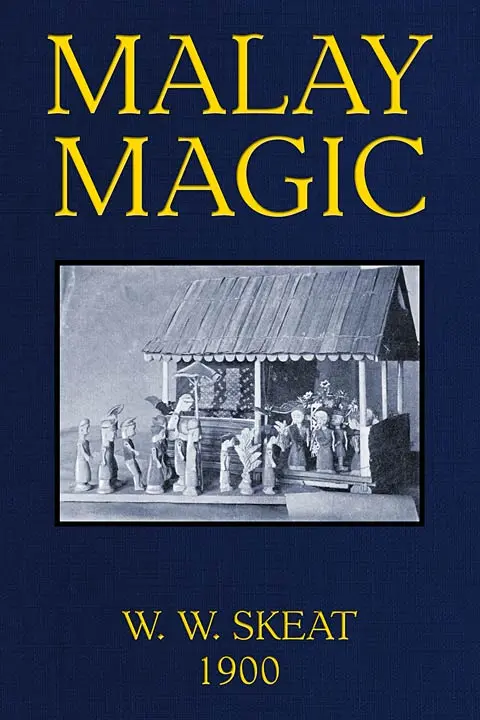
THE CLASSIC COLLECTION · 1900
"Malay Magic" by Walter William Skeat is an introductory work on folklore and popular religion written in the late 19th century. It explores the rich tapestry of beliefs, customs, and magical practices of the Malays in the Malay Peninsula, drawing upon a variety of sources, including personal observations, native manuscripts, and published works. The book aims to document and analyze the traditional beliefs and practices that are integral to Malay culture, highlighting the complexity of their folklore intertwined with influences from Indian, Arab, and indigenous sources. The opening of the book sets the stage for a comprehensive exploration of Malay folklore, establishing the author's intent to create a representative account of Malay beliefs and magical practices. Skeat introduces the key themes such as creation myths, the understanding of nature, and the relationships between humans and the supernatural world. He reflects on the significance of various folkloric beliefs, such as the creation of the world and the role of magic in everyday life, and emphasizes the importance of these elements in understanding the Malay identity and culture. As he begins to unfold these narratives, the reader is invited into the intricate world of Malay magic, laying the foundation for the detailed studies that follow.
Introduction adapted from the source catalogue; source summaries may be automatically generated.
Free to read · English · 226,518 words · No account needed
MAKE TIME FOR A GOOD BOOK
On by default. Untick to stop anonymous reading totals. Each page counts after 10 seconds in view. How this works.
Anonymous counting is on unless you have switched it off.
After this invocation of Setia Guni loadfuls of rice are sprinkled on the ground, and the following invocation is then raised to the spirit of the air:--
Hei! Tuanku Malim ka-raja-an
Yang memegang langit tujoh lapis
Aku bertarohkan anak aku
Sri Chinta rasa, etc. (as in the last).
Hail! Malim, who dost supremely rule
The seven folds of sky,
I lay my child in pledge with thee,
My child, the darling of my heart, etc.
After this the rice is thrown into the air, and the ceremony is
completed.
The "pawangs," sorcerers, or rather "wise men" who are skilled in these incantations, are in great request at the sowing of the padi crop.
The above five charms are extracted from a paper entitled "Ceremonies at Seedtime," by A. W. O'Sullivan, in J.R.A.S., S.B., No. 18, pp. 362-365. The first two are from a work by Captain James Low on the Soil and Agriculture of Penang, 1836.
Charms used in the Reaping Ceremony
[xcix] Prayer used in the Procession to the Field [p. 238.
Bismillahi-'l-rahmani-'l-rahimi.
Al-salam `aleikum, Nabi Tap yang memegang bumi!
Aku tahu asal-nya padi
S'ri Gading, Gemala Gading
Yang di ujong ladang, yang di pangkal ladang.
Yang terper'chik, yang terplanting,
Yang di-orong semut silambada.
Hei Dang 'Pok, Dang Meleni,
Dang Salamat menyandang galah!
Bertapok bertimbun dayang kamari,
Salamat rezki di-bri-nya Allah.
Dengan berkat, d.s.b.
[c] On Arrival at the Field
Ruwak-ruwak sakandang desa
Bertenggek di bauran panah.
Berkuak-lah angkau Rengkesa,
'Nak letakkan bakul di-atas tanah.
[ci] On Planting the Sugar-cane in the Sheaf [p. 239.
Al-salam `aleikum Nabi Tap!
Inilah 'ku chachakkan tebu ini,
Akan sandaran 'kau.
Aku 'nak mengambil semangat 'kau, S'ri Gading,
Aku 'nak bawa ka rumah, ka istana-'kau.
Kur semangat! kur semangat! kur semangat!
[cii] Do`a Sapuloh--The Ten Prayers [p. 240.
Ka-sa, Allah,
Ka-dua, Muhammad,
Ka-tiga, Ayer Sembahyang lima waktu sa-hari sa-malam,
Ka-ampat, Pancha Indra,
Ka-lima, Pintu rezki-ku terbuka,
Ka-anam, Pangkat Mahaligei tujoh pangkat,
Ka-tujoh, Pintu Rengkiang terbuka,
Ka-lapan, Pintu Shurga terbuka,
Ka-sambilan, anak di-kandong bunda-nya,
Ka-sapuloh, anak di-jadikan Allah;
Jadi, karna jadi, jadi karna Tuhanku juga.
`Isa, karun!
Musa, karun!
Yusuf, karun!
Daud, karun!
Karun sakalian pintu rezki-ku, di Bumi, di Langit, deripada Allah.
Dengan berkat la-ilaha-illa-'llah, etc.
[ciii] On Arrival at the House [p. 243.
Di-chinchang galenggang batang,
Di-chinchang di muka pintu,
Di-tentang melenggang-nya datang,
Anak aku rupa-nya itu.
Di-chinchang rebong lumai-lumai
Buat penuba batang ari,
Sunggoh sahya sabrang sungei,
Besar maksud datang kamari.
Bukan gantang gantang lada,
Gantang berisi hampa padi,
Bukan-nya datang datang sahaja,
Besar maksud kahandak hati.
[civ] Charm used by the Reapers after filling the Baskets [p. 244.
Your reading position is saved on this browser. Take it to another device with a library code. Reading pages adapt to text, rather than matching a printed edition.
BEHIND THE BOOK
This eBook is for the use of anyone anywhere in the United States and most other parts of the world at no cost and with almost no restrictions whatsoever. You may copy it, give it away or re-use it under the terms of the Project Gutenberg License included with this eBook or online at www.gutenberg.org. If you are not located in the United States, you will have to check the laws of the country where you are located before using this eBook. Read the source licence.
The original source file, including credits and licence, is retained by this library. Request an original-format copy at no charge. Please include the book title and Project Gutenberg identifier #47873.
KEEP YOUR CURIOSITY GOING
David Patterson (Spirit) Hatch

David Patterson (Spirit) Hatch

David Patterson (Spirit) Hatch

Maurice Baring
Francis Greenleaf Allinson & Anne C. E. (Anne Crosby Emery) Allinson

Edwin Abbott Abbott