
Switch off
Oliver Optic
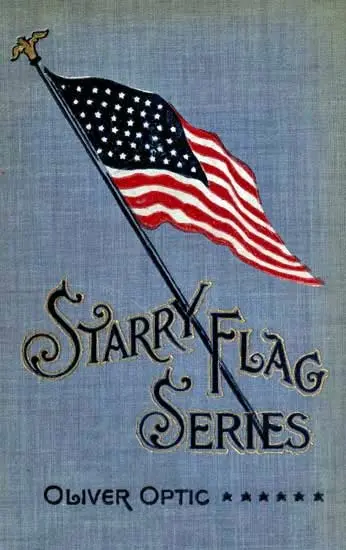
THE CLASSIC COLLECTION · 1896
"Make or Break; or, The Rich Man's Daughter" by Oliver Optic is a novel written in the late 19th century. This story unfolds in Boston and centers around young characters, particularly Leo Maggimore, the adopted son of a barber named André, and Fitzherbert Wittleworth, a conceited young clerk in a banking firm. As Leo navigates his burgeoning responsibilities after an unfortunate incident involving his foster father's health, themes of ambition, adversity, and the bonds of chosen family begin to emerge. The opening of the novel introduces readers to various characters and establishes their relationships and struggles. The scene begins in a barber shop where Fitz Wittleworth is ridiculed for his pretentiousness while receiving a shave, setting a comedic yet critical tone for the social dynamics at play. As tensions escalate, Fitz finds himself in conflict with his employer, Mr. Checkynshaw, while simultaneously, Leo grapples with the impending burden of his family responsibilities as André suffers a stroke. The narrative hints at Leo's determination to support those he loves despite the challenges—suggesting a careful exploration of resilience and moral duty throughout the unfolding story.
Introduction adapted from the source catalogue; source summaries may be automatically generated.
Free to read · English · 57,005 words · No account needed
MAKE TIME FOR A GOOD BOOK
On by default. Untick to stop anonymous reading totals. Each page counts after 10 seconds in view. How this works.
Anonymous counting is on unless you have switched it off.
"Good evening, Leo. Is your sister at home?" asked Fitz, in his usual
patronizing tones.
"She is," replied Leo, rather coldly, for he could not see what Fitz
wanted with his sister.
"I should like to see her," added Fitz, loftily, as though his presence at the house of the barber was a condescension which Leo ought to appreciate.
"My father is sick, and Maggie is busy taking care of him," replied Leo, who felt that he was now the guardian of his sister, and he did not want any young men "hanging round," especially such young men as Mr. Wittleworth.
"I wish to see her on business," persisted Fitz, annoyed at Leo's answers, and the evident want of appreciation of the honor of his visit which the young mechanic exhibited.
"I'll speak to her. Won't you come in?"
Fitz would come in, and he did. He was shown to the rear room, where Maggie was clearing off the supper table. Fitz was a young "man of the world," and as imitative as a monkey. He had once moved in what he called "good society," and was familiar with all the little courtesies of life. He expressed his regret at the illness of Andre in the most courtly terms, and his sympathy with Maggie. Leo wanted to go to work, but he felt obliged to remain, and witness the interview.
"You will excuse me for calling at such a time; but I will not detain you long, Miss Maggimore. I understand that you are a French scholar. Am I rightly informed?"
"Yes, sir, I speak French," replied Maggie, beginning to expect another
job in translating.
"And I suppose you read French."
"Yes, sir."
"I have really forgotten all the French I ever knew," continued Mr. Wittleworth, apologetically; and one would have supposed, from his manner, that the French language was the only thing in the world he did not know, and that it was intensely humiliating to acknowledge that he did not know that. "I have a letter from France, written in French, which it is of the utmost importance that I should read. I have taken the liberty to call upon you to beg the favor of a translation of the letter."
Mr. Wittleworth took from his pocket the letter which the banker had
given to his mother.
"I shall be very happy to assist you," added Maggie, kindly.
"Thank you, Miss Maggimore. If you will give me the English of the letter, I will write down the important part of it," continued Fitz, taking a pencil and paper from his pocket, seating himself at the table, and handing her the letter.
Your reading position is saved on this browser. Take it to another device with a library code. Reading pages adapt to text, rather than matching a printed edition.
BEHIND THE BOOK
This eBook is for the use of anyone anywhere in the United States and most other parts of the world at no cost and with almost no restrictions whatsoever. You may copy it, give it away or re-use it under the terms of the Project Gutenberg License included with this eBook or online at www.gutenberg.org. If you are not located in the United States, you will have to check the laws of the country where you are located before using this eBook. Read the source licence.
The original source file, including credits and licence, is retained by this library. Request an original-format copy at no charge. Please include the book title and Project Gutenberg identifier #26695.
KEEP YOUR CURIOSITY GOING
Coulson Kernahan

Maurice Baring
Frances Wright
Cécile Tormay

Frederic Jesup Stimson

W. H. P. (William Henry Pope) Jarvis
