
Switch off
Oliver Optic
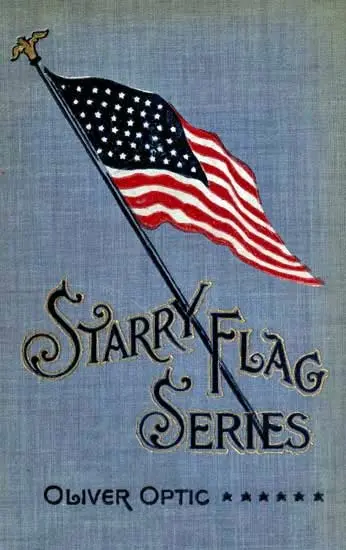
THE CLASSIC COLLECTION · 1896
"Make or Break; or, The Rich Man's Daughter" by Oliver Optic is a novel written in the late 19th century. This story unfolds in Boston and centers around young characters, particularly Leo Maggimore, the adopted son of a barber named André, and Fitzherbert Wittleworth, a conceited young clerk in a banking firm. As Leo navigates his burgeoning responsibilities after an unfortunate incident involving his foster father's health, themes of ambition, adversity, and the bonds of chosen family begin to emerge. The opening of the novel introduces readers to various characters and establishes their relationships and struggles. The scene begins in a barber shop where Fitz Wittleworth is ridiculed for his pretentiousness while receiving a shave, setting a comedic yet critical tone for the social dynamics at play. As tensions escalate, Fitz finds himself in conflict with his employer, Mr. Checkynshaw, while simultaneously, Leo grapples with the impending burden of his family responsibilities as André suffers a stroke. The narrative hints at Leo's determination to support those he loves despite the challenges—suggesting a careful exploration of resilience and moral duty throughout the unfolding story.
Introduction adapted from the source catalogue; source summaries may be automatically generated.
Free to read · English · 57,005 words · No account needed
MAKE TIME FOR A GOOD BOOK
On by default. Untick to stop anonymous reading totals. Each page counts after 10 seconds in view. How this works.
Anonymous counting is on unless you have switched it off.
The banker tried the safe door, and then felt in all his pockets. The safe was locked, but he had not the key. He went to the vault himself, but with no better success than the clerk had had.
"The puppy!" muttered the banker. "He has stolen that key!"
Mr. Checkynshaw's lips were compressed, and his teeth were set tight together. He paced the room more rapidly than before.
"Fudge!" exclaimed he, after he had worked himself into a state of partial frenzy, as the hard muscles of his face suddenly relaxed, and something like a smile rested upon his lips. "He couldn't have done it."
Certainly not. The banker had not opened the safe till after his return from the barber's shop, where he had reproved his clerk, and Fitz did not go near the safe during the sharp interview in the office.
"Burnet," said the banker, going to the open window.
This time the elderly man, to whom Leo Maggimore had applied, presented
himself.
"Have you seen the key of my safe?" demanded Mr. Checkynshaw.
"No, sir."
"Where is it, then?"
"I do not know, sir," replied Burnet, whose communications were always
"yea, yea; nay, nay."
"I have discharged Fitz."
Burnet bowed.
"He was saucy."
Burnet bowed again.
"I kicked him out for his impudence."
Burnet bowed a third time.
"My key is gone."
Burnet waited.
"But the safe is locked."
Burnet glanced at the safe.
"Who has been in my office?"
"A boy, sir."
"Who?"
"I don't know, sir; he asked for you. I sent him to your office."
"That was the barber's boy."
Burnet bowed: he never wasted words; never left his desk to see a row or a military company, and would not have done so if an earthquake had torn up the pavement of State Street, so long as the banking-house of Checkynshaw, Hart, & Co. was undisturbed.
"Who else?" asked the banker.
"A man, sir."
"Who?"
"I don't know; he entered by your private door; the boy and the man
went out together."
"Send for the safe people."
Burnet bowed, and retired. In half an hour two men from the safe manufactory appeared. They opened the iron door, and the banker turned pale when he found that his valuable papers had been abstracted. The three hundred and fifty dollars which "Mr. Hart" had taken was of no consequence, compared with the documents that were missing; for they were his private papers, on which other eyes than his own must not look.
Your reading position is saved on this browser. Take it to another device with a library code. Reading pages adapt to text, rather than matching a printed edition.
BEHIND THE BOOK
This eBook is for the use of anyone anywhere in the United States and most other parts of the world at no cost and with almost no restrictions whatsoever. You may copy it, give it away or re-use it under the terms of the Project Gutenberg License included with this eBook or online at www.gutenberg.org. If you are not located in the United States, you will have to check the laws of the country where you are located before using this eBook. Read the source licence.
The original source file, including credits and licence, is retained by this library. Request an original-format copy at no charge. Please include the book title and Project Gutenberg identifier #26695.
KEEP YOUR CURIOSITY GOING
Coulson Kernahan

Maurice Baring
Frances Wright
Cécile Tormay

Frederic Jesup Stimson

W. H. P. (William Henry Pope) Jarvis
