THE CLASSIC COLLECTION✦The Red Record Tabulated Statistics and Alleged Causes of Lynching in the United StatesCLASSIC FREE BOOKS
The Red Record Tabulated Statistics and Alleged Causes of Lynching in the United States
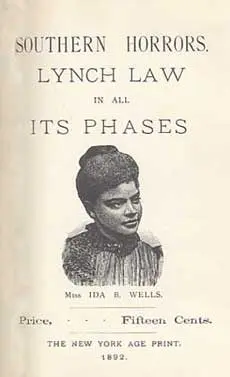
Ida B. Wells-Barnett
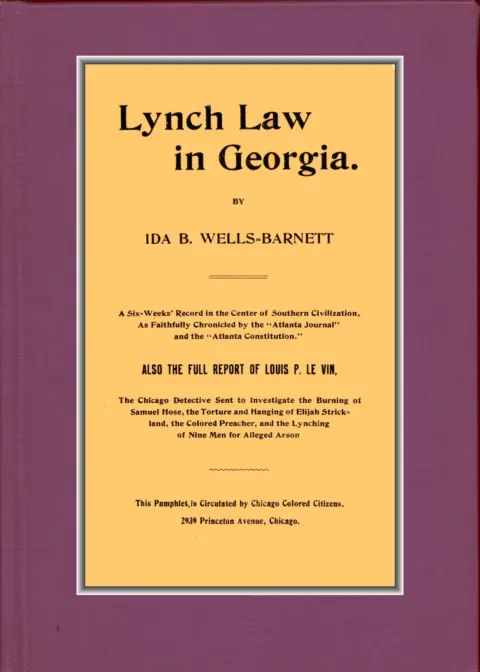
THE CLASSIC COLLECTION · 1899
"Lynch Law in Georgia" by Ida B. Wells-Barnett is a historical account written in the late 19th century that documents the brutal realities of lynching in the Southern United States, particularly in Georgia. The book focuses on the violent lynching incidents involving black men in the backdrop of racial tensions and injustices, providing a stark critique of the societal norms that allowed such atrocities to persist. In this pamphlet, Wells-Barnett recounts specific case studies, including the torture and burning of Samuel Hose, as well as the lynching of Elijah Strickland, a preacher falsely accused of complicity in a murder. Through detailed narratives, she illustrates the mob mentality that justified these horrific acts under the guise of law and order. The work highlights the complicity of local press and community leaders in inciting violence against African Americans, while also revealing the profound injustices faced by these victims, who were denied any semblance of a fair trial. Wells-Barnett's investigation serves as a powerful call for accountability and justice, challenging the systemic racism prevalent in that era.
Introduction adapted from the source catalogue; source summaries may be automatically generated.
Free to read · English · 7,871 words · No account needed
MAKE TIME FOR A GOOD BOOK
On by default. Untick to stop anonymous reading totals. Each page counts after 10 seconds in view. How this works.
Anonymous counting is on unless you have switched it off.
“Now, before you leave, load and get ready for trouble,” came the captain’s order, and then men loaded their guns and got ready to leave the bloody room.
The guard was not relieved, however, until every man had left the building and all was safe for their hasty flight.
“I wonder if they are all dead,” said one of the mob, when the order was given to leave the building.
“I reckon so,” said one of the mob.
“But we had better see,” said the captain coolly and assuming an
air of business.
A detail of probably a half dozen men, probably a dozen and maybe more, the guard does not remember just how many, was sent forward into the blood and brains and into the twisting mass of dying men to examine if all were dead. They were given orders to finish those who were not dead.
The detail rushed forward.
The men jerked the fallen, twisting and writhing and bleeding
bodies about.
The first man they reached was not dead. He was still groaning, and the breath was coming in great, quick gasps.
A pistol was placed at his breast and every chamber was emptied.
“He’s dead now,” laughed one of the crowd.
Other men, wounded, bleeding, moaning and begging, were caught, turned over and pistols emptied into their bodies.
But the shooting had made so much noise that the mob concluded its
safety lay in flight.
The Negroes were quickly examined and with a parting shot and a volley of oaths of warning the mob left the warehouse and rushed to their horses.
The men ran from the warehouse to the little spot in the center of the town, where horses are tied by countrymen and merchants.
They mounted quickly and began their ride for life.
With a sweeping of falling and echoing hoofs the cavalrymen dashed down the principal street at breakneck speed.
Mr. Henry Beckman, who lives a few hundred yards beyond the scene of the murders, heard the firing and ran from his house to the railroad tracks.
The horsemen, using the lash and urging their horses to their highest speed, dashed into view.
“Hello,” said Beckman, “what does all that firing mean?”
Beckman was answered with an oath and told to get into his hole as quickly as possible. “If you don’t, we’ll kill you on the spot,” was the warning.
Beckman flew for life, ran through the yard and entered the house
as quickly as possible.
Dr. Hal L. Johnson saw a crowd of men on foot running down the
sidewalk.
He hailed them, but there was no response.
Your reading position is saved on this browser. Take it to another device with a library code. Reading pages adapt to text, rather than matching a printed edition.
Ida B. Wells-Barnett
Ida B. Wells-Barnett
Ida B. Wells-Barnett
BEHIND THE BOOK
This eBook is for the use of anyone anywhere in the United States and most other parts of the world at no cost and with almost no restrictions whatsoever. You may copy it, give it away or re-use it under the terms of the Project Gutenberg License included with this eBook or online at www.gutenberg.org. If you are not located in the United States, you will have to check the laws of the country where you are located before using this eBook. Read the source licence.
The original source file, including credits and licence, is retained by this library. Request an original-format copy at no charge. Please include the book title and Project Gutenberg identifier #64426.
KEEP YOUR CURIOSITY GOING
Cécile Tormay

Moritz Busch
John L. Ransom
Frances Wright
Cécile Tormay

Mabel Potter Daggett