THE CLASSIC COLLECTION✦The Red Record Tabulated Statistics and Alleged Causes of Lynching in the United StatesCLASSIC FREE BOOKS
The Red Record Tabulated Statistics and Alleged Causes of Lynching in the United States
Ida B. Wells-Barnett
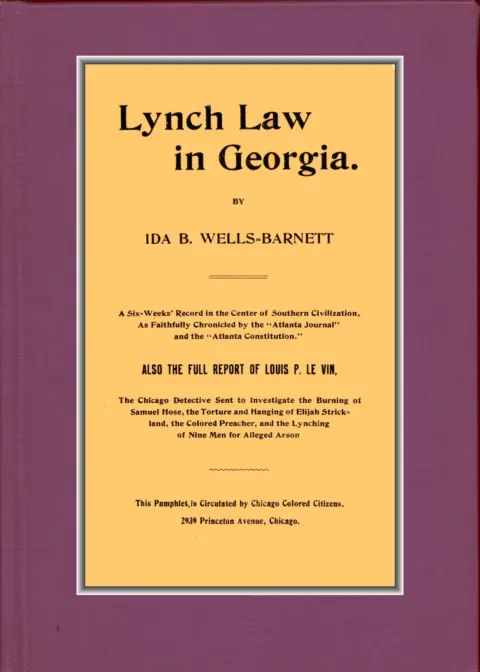
THE CLASSIC COLLECTION · 1899
"Lynch Law in Georgia" by Ida B. Wells-Barnett is a historical account written in the late 19th century that documents the brutal realities of lynching in the Southern United States, particularly in Georgia. The book focuses on the violent lynching incidents involving black men in the backdrop of racial tensions and injustices, providing a stark critique of the societal norms that allowed such atrocities to persist. In this pamphlet, Wells-Barnett recounts specific case studies, including the torture and burning of Samuel Hose, as well as the lynching of Elijah Strickland, a preacher falsely accused of complicity in a murder. Through detailed narratives, she illustrates the mob mentality that justified these horrific acts under the guise of law and order. The work highlights the complicity of local press and community leaders in inciting violence against African Americans, while also revealing the profound injustices faced by these victims, who were denied any semblance of a fair trial. Wells-Barnett's investigation serves as a powerful call for accountability and justice, challenging the systemic racism prevalent in that era.
Introduction adapted from the source catalogue; source summaries may be automatically generated.
Free to read · English · 7,871 words · No account needed
MAKE TIME FOR A GOOD BOOK
On by default. Untick to stop anonymous reading totals. Each page counts after 10 seconds in view. How this works.
Anonymous counting is on unless you have switched it off.
The men then walked around where they could get a good look at the trembling, pleading, terror-stricken Negroes, begging for life and declaring that they were innocent.
There was a moment’s pause of deliberation. The Negroes thought it meant that the assassins hesitated in their bloody deed, but the men hesitated only because they wanted deliberate action and a clear range for their bullets.
The Negroes, helpless, tied together with ropes, begged for mercy, for they saw the cold gun barrels, the angry and determined faces of the men, and they knew it meant death--instant death to them.
“Oh, God, have mercy!” cried one of the men in his agony. “Oh, give me a minute to live.”
The cry for mercy and the prayer for life brought an oath from the leader and derisive laughter from the mob.
“Stand up in a line,” said the man in command. “Stand up and we will see if we can’t kill you out; if we can’t, we’ll turn out.”
The Negroes faltered.
“Burn the devils,” came a suggestion from the crowd.
“No, we’ll shoot ’em like dogs,” said the mob’s leader.
“Stand up, every one of you and get up quick and march to the end
of the room.”
The Negroes slowly stood up. The mob came closer and pressed about the stacks of furniture that had been stored in the room.
The leader asked if everybody’s gun was loaded and the men answered
in the affirmative.
The Negroes pleaded and prayed for mercy.
They stood, trembling wretches, jerking at the long ropes that held them by the waist and about the wrists.
“Oh, give me a minute longer!” implored Bud Cotton.
“My men, are you ready?” asked the captain, still cool and composed and fearfully determined to execute the bloodiest deed that has ever stained Campbell County.
“Ready,” came the unanimous response.
“One, two, three--fire!” was the command, given orderly, but
hurriedly.
Every man in the room, and the number is estimated at from seventy-five to one hundred and fifty, fired point blank at the line of trembling and terror-stricken bound wretches.
The volley came as the fire from a gatling gun.
It filled the warehouse with smoke and flame and death and brought a wail of horror that chilled the helpless guard.
The volley awakened the peaceful town of Palmetto and from every house the excited citizens ran.
“Load and fire again,” shouted the captain of the mob, and his voice was heard above the screaming and death cries of the wounded and dead.
The men rapidly loaded their guns, then fired at the given command.
Your reading position is saved on this browser. Take it to another device with a library code. Reading pages adapt to text, rather than matching a printed edition.
Ida B. Wells-Barnett
Ida B. Wells-Barnett
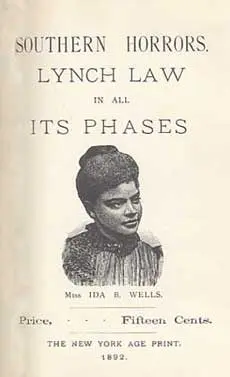
Ida B. Wells-Barnett
BEHIND THE BOOK
This eBook is for the use of anyone anywhere in the United States and most other parts of the world at no cost and with almost no restrictions whatsoever. You may copy it, give it away or re-use it under the terms of the Project Gutenberg License included with this eBook or online at www.gutenberg.org. If you are not located in the United States, you will have to check the laws of the country where you are located before using this eBook. Read the source licence.
The original source file, including credits and licence, is retained by this library. Request an original-format copy at no charge. Please include the book title and Project Gutenberg identifier #64426.
KEEP YOUR CURIOSITY GOING
Cécile Tormay

Moritz Busch
John L. Ransom
Frances Wright
Cécile Tormay

Mabel Potter Daggett