THE CLASSIC COLLECTION✦The art of fictionCLASSIC FREE BOOKS
The art of fiction
Walter Besant
THE CLASSIC COLLECTION · 1892
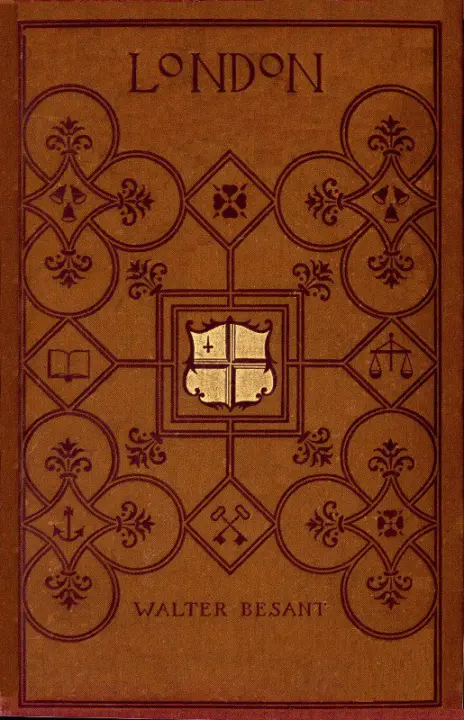
"London" by Walter Besant is a historical account, written in the late 19th century. The work aims to depict the city of London through vivid snapshots that reflect its streets, buildings, and especially its citizens engaging in various aspects of daily life, from trade to celebrations. Besant intends to delve into the lives of ordinary Londoners across different periods, offering readers a unique perspective on the social fabric of the city. The beginning of "London" introduces the author's intention to create a comprehensive portrayal of the city, highlighting the need to capture the essence of its history and the lives of its people. Besant references historical authorities such as Gildas and the Anglo-Saxon Chronicle to explain the context of London's evolution following the departure of the Romans. He elaborates on the city's topographical significance and its dramatic changes, indicating continuity in life despite conquests and societal shifts. Overall, the opening sets the stage for an in-depth exploration of London's transformation through various historical phases and its impact on the everyday lives of its inhabitants.
Introduction adapted from the source catalogue; source summaries may be automatically generated.
Free to read · English · 119,737 words · No account needed
MAKE TIME FOR A GOOD BOOK
On by default. Untick to stop anonymous reading totals. Each page counts after 10 seconds in view. How this works.
Anonymous counting is on unless you have switched it off.
Bradford-on-Avon, description of Church of St. Laurence at, 71
Bread a luxury in time of Charles II., 421
Brewer, Dr., and his estimate of mediæval London, 155
Breweries along the river, 50
Bridewell Palace, 83
Briset, Jordan, and Muriel, his wife, 65, 128
Buildings small and mean until long after the Norman conquest, 47
Bull-baiting, 356, 361, 408
"Bully," the, in the Georgian period, 489
Burghley House, 286
Butcher Row, 446
Calleva Atrebatum destroyed, 29
Card-makers' Company, 454
Card-playing temp. Elizabeth, 310
Carmelites, the, 119
Carpenter, John, founder of the City of London School, 193
Carthusians, House of the, 120
Castellan and standard-bearer to the City of London, 164
Cedd, Bishop, 53
Champneys, Sir John, 311
Charing Cross, 141
Charles, King, deplorable morals of Court of, 371
Charter House, 128, 266
-- -- School, 303
Chaucer, 149
Chepe, 334, 337
-- East, butchers in, 217
-- of mediæval London, 185
-- the chief market of the City, 50
-- West, mercers and haberdashers in, 217
Chester, battle of, in 607, 111
Chichele, Sir Robert, 194
Christ Church, built by Wren, 115
Christian symbols and emblems found on site of Roman towns, 5
Christ's Hospital, 115
Church of England in time of George II., 436
Churches, the thirteen large conventual, 54
-- penalties for absence from, 442
Cistercian Order, 123
City companies, formation of, 208
-- foreign trade of, 190
-- holidays, 236
-- of London School founded by John Carpenter, 193
-- residences of the nobility, 174
-- wall, 81, 111
-- water supply of, 83
-- wealth of, 184
-- worthies, 194
"Clapperdozen," the, 416
Cloth Fair, 63
Clubs, 477
Cnut, 85
Coals, duty on, to rebuild public buildings after the Great Fire, 400
Cock-fighting on Shrove Tuesday, 224
Cockpit Theatre, 308
Coffee-houses, business carried on at, 477
-- first started temp. Charles II., 411
Cold Harborough, house built by Sir John Poultney, 166, 289
Companies, City, formation of, 208
Congreve's "Way of the World," 410
Cordwainer Street, shoemakers in, 217
Cornhill, drapers in, 217
Court of Judicature created after the Great Fire, 399
Craftsmen of London, 215
Cranmer and Waltham Abbey, 139
Cromwell House, 265
-- Lord, 325
Crosby Hall, 170, 289
-- Sir John, 169
Crutched Friars' Church turned into a carpenter's shop and
tennis court, 265
-- -- Priory of, 111
Cuneglass, King, 3
Curfew bell, the, 243
Curtain Theatre, Shoreditch, 307
Daily Life, Elizabethan, 303
Dances in time of Elizabeth, 310
Danes, the, 47
Debtors' prison in the Georgian era, 496
Debts, like property, destroyed by the Great Fire, 402
Defoe, Daniel, and his account of the Plague, 377
-- trades enumerated by, 380
Derby House, 163, 289
Dick's Coffee-house, 411
Dominicans, first settlement of, in Chancery Lane, 118
"Dommerer," the, 416
Dover, St. Mary's Church at, 75
Dress of the time of George II., 458
Drinking and fires the pests of London, 52
-- habits in the time of George II., 475
-- in time of Charles II., 407
Dryden, John, on the Great Fire, 404
D'Urfey, Tom, songs of, 412
Durovernum destroyed, 29
East India Company, the, 297
Eastland Company, the, 297
Eastminster, 133
-- pulled down, 263
Edmund, Earl of Lancaster, founds Holywell Nunnery, 132
Education of girls, thorough, temp. Elizabeth, 314
Edward II. and the City, 205
Edward IV. and Baynard's Castle, 164
Elbing, merchants of, 296
Your reading position is saved on this browser. Take it to another device with a library code. Reading pages adapt to text, rather than matching a printed edition.
Walter Besant
Walter Besant

Walter Besant

Walter Besant
BEHIND THE BOOK
This eBook is for the use of anyone anywhere in the United States and most other parts of the world at no cost and with almost no restrictions whatsoever. You may copy it, give it away or re-use it under the terms of the Project Gutenberg License included with this eBook or online at www.gutenberg.org. If you are not located in the United States, you will have to check the laws of the country where you are located before using this eBook. Read the source licence.
The original source file, including credits and licence, is retained by this library. Request an original-format copy at no charge. Please include the book title and Project Gutenberg identifier #45752.
KEEP YOUR CURIOSITY GOING
Cécile Tormay

Moritz Busch
John L. Ransom
Frances Wright
Cécile Tormay

Mabel Potter Daggett