THE CLASSIC COLLECTION✦The art of fictionCLASSIC FREE BOOKS
The art of fiction
Walter Besant
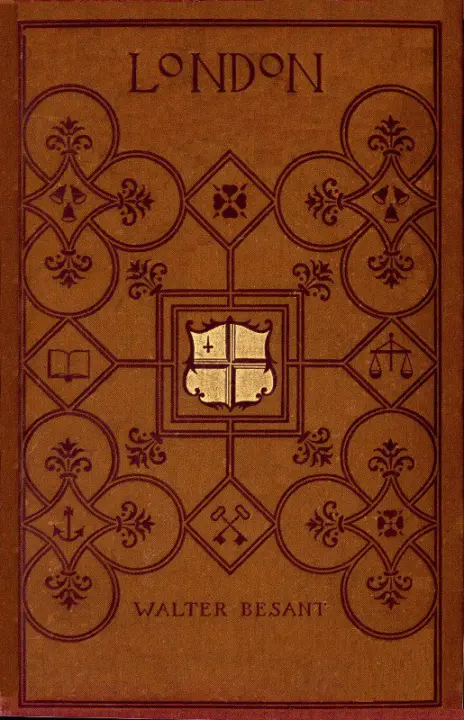
THE CLASSIC COLLECTION · 1892
"London" by Walter Besant is a historical account, written in the late 19th century. The work aims to depict the city of London through vivid snapshots that reflect its streets, buildings, and especially its citizens engaging in various aspects of daily life, from trade to celebrations. Besant intends to delve into the lives of ordinary Londoners across different periods, offering readers a unique perspective on the social fabric of the city. The beginning of "London" introduces the author's intention to create a comprehensive portrayal of the city, highlighting the need to capture the essence of its history and the lives of its people. Besant references historical authorities such as Gildas and the Anglo-Saxon Chronicle to explain the context of London's evolution following the departure of the Romans. He elaborates on the city's topographical significance and its dramatic changes, indicating continuity in life despite conquests and societal shifts. Overall, the opening sets the stage for an in-depth exploration of London's transformation through various historical phases and its impact on the everyday lives of its inhabitants.
Introduction adapted from the source catalogue; source summaries may be automatically generated.
Free to read · English · 119,737 words · No account needed
MAKE TIME FOR A GOOD BOOK
On by default. Untick to stop anonymous reading totals. Each page counts after 10 seconds in view. How this works.
Anonymous counting is on unless you have switched it off.
These notes--these chapters--to conclude, make no pretence to show more than the City life; which was decorous at all times, and especially during the last century. Of the wickedness, goodness, vice, and virtue that went on at the court, and among the aristocracy from age to age, nothing has been said. The moralist has plenty to say on this subject. Unfortunately, the moralist always picks out the worst cases, and wants us to believe that they are average specimens. A good deal might be said, I am of opinion, on the other side, in considering the many virtues; the courage, loyalty, moderation, and the sense of honor which has always distinguished the better sort among the nobility.
We have seen London from age to age. It has changed indeed. Yet in one thing it has shown no change. London has always been a city looking forward, pressing forward, fighting for the future, using up the present ruthlessly for the sake of the future, trampling on the past. As it has been, so it is. The City may have reached its highest point; it may be about to decline; but as yet it shows no sign, it has sounded no note of decay, or of decline, or of growing age. The City, which began with the East Saxon settlement among the forsaken streets thirteen hundred years ago, is still in the full strength and lustihood of manhood--perhaps as yet it is only early manhood. For which, as in private duty bound, let us laud, praise, and magnify the Providence which has so guided the steps of the citizens, and so filled their hearts, from generation to generation, with the spirit of self-reliance, hope, and courage.
Abergavenny House, 177
"Abram Man," the, 416
Agas, Ralph, map of, 274
Ale-houses, number of, in 1736, 476
Alfune, founder of Church of St. Giles, Cripplegate, 63
Alien priories suppressed, 240
Alleyn, 364
All Hallows the Great, Church of, Thames Street, 441
Almshouses in the City, 238
Alphege, Archbishop of Canterbury, 85
Alsatia, 120
Amusements in Saxon and Norman times, 90
Anderida destroyed, 29
"Angler," the, 416
Angliæ Metropolis, or, The Present State of London, 1690, quoted, 400
Anglo-Saxon Chronicle, 1, 8, 13;
London not mentioned in, 13
Antwerp at commencement of Elizabeth's reign, 293
Apothecaries, 474
Apprentices, London, 334
Assessment of London in 1397, 184
Augusta, fate of, after the Romans left, 8
Aulaf and Swegen, 85
Austin Friars Monastery, 112;
distinguished persons buried there, 264
Bagnigge Wells, 492
Baltic Coffee-house, 477
Bank Side, 356
Barber-surgeons, 474
Barnard's Castle, 288
Bartholomew's Fair, 457
Bassing Hall, 83
Bath, ruins of Roman temples at, 6
Baynard's Castle, history of, 163
Bean tansy, 476
Bede's Ecclesiastical History, 1
Beer-drinking, 419
Beer the national drink, 83, 481
Bermondsey, Abbey of, 134, 267
-- Spa Gardens, 496
Bethlehem Hospital, 131
Black Friars Church destroyed, 267
Blackfriars Theatre, 308
Blackwell Hall, 83
Blakeney, William, story of, 249
Blue-coat School, 115, 303
Bonvici, Antonio, 170
Bow Church, Mile End Road, 135
Bowyers' Company, 454
Your reading position is saved on this browser. Take it to another device with a library code. Reading pages adapt to text, rather than matching a printed edition.
Walter Besant
Walter Besant

Walter Besant

Walter Besant
BEHIND THE BOOK
This eBook is for the use of anyone anywhere in the United States and most other parts of the world at no cost and with almost no restrictions whatsoever. You may copy it, give it away or re-use it under the terms of the Project Gutenberg License included with this eBook or online at www.gutenberg.org. If you are not located in the United States, you will have to check the laws of the country where you are located before using this eBook. Read the source licence.
The original source file, including credits and licence, is retained by this library. Request an original-format copy at no charge. Please include the book title and Project Gutenberg identifier #45752.
KEEP YOUR CURIOSITY GOING
Cécile Tormay

Moritz Busch
John L. Ransom
Frances Wright
Cécile Tormay

Mabel Potter Daggett