
The Writing of News A Handbook with Chapters on Newspaper Correspondence and Copy Reading
Charles G. (Charles Griffith) Ross
THE CLASSIC COLLECTION · 1884
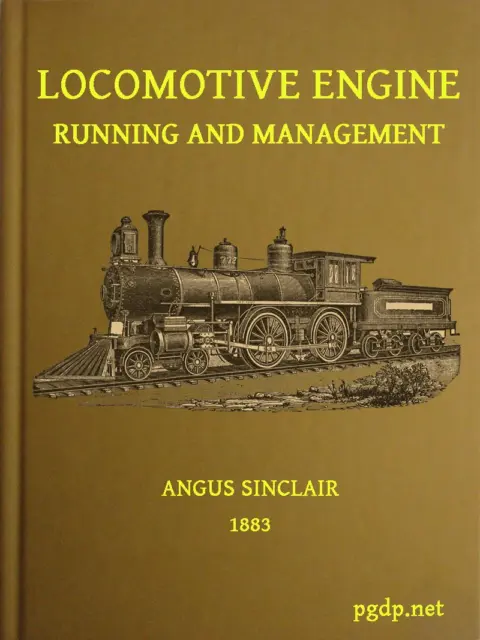
"Locomotive Engine Running and Management" by Angus Sinclair is a technical treatise focused on the operation and maintenance of locomotive engines, written in the late 19th century. The book serves as a comprehensive guide for locomotive engineers, detailing the principles of efficient engine management, care, repair, and the technical intricacies involved in locomotive operation. It aims to provide clear and practical insights into the responsibilities and skills required for ensuring smooth and economical train operations. The opening of the book sets the stage by introducing the author's personal experience as a locomotive engineer. Sinclair outlines his motivation to document observations and issues encountered while operating engines, which ultimately formed the basis for this publication. He discusses the importance of understanding mechanical principles, the rigorous self-improvement needed by engineers, and the value of practical knowledge gained through experience. The introductory chapters highlight the attributes of successful locomotive engineers, emphasize the necessity of systematic inspections, and provide guidance on preparing engines for service, laying the groundwork for the detailed operational techniques and practices covered in subsequent sections.
Introduction adapted from the source catalogue; source summaries may be automatically generated.
Free to read · English · 98,654 words · No account needed
MAKE TIME FOR A GOOD BOOK
On by default. Untick to stop anonymous reading totals. Each page counts after 10 seconds in view. How this works.
Anonymous counting is on unless you have switched it off.
A.--If but a short distance to run, and no stopping or shifting to do, would run in without disconnecting, after cautioning the crew to keep the train under good control, and stop promptly when signaled to do so. But, if a long distance to run, would disconnect, as in case of broken cylinder-head.
Q.--In what way would you have lost control of your engine with
broken link-hanger?
A.--Would only be able to reverse one side of the engine.
Q.--Should you break an eccentric-strap, how would you disconnect?
A.--Take off both eccentric-straps on that side, and disconnect as in case of broken cylinder-head.
Q.--Should you break the back section of a side rod on a six-wheel connected engine, what would you do?
A.--Would take off both back sections, and run in with main and forward wheels connected, with about two-thirds of train.
Q.--Should you break a forward section, how would you disconnect?
A.--Would take off all side rods, and run in without train.
Q.--Should you break a main crank-pin close up to the wheel, how
would you disconnect?
A.--Would take off all side rods and the main rod on disabled side,
and run in without train.
Q.--Should you be running an engine which had a slide throttle-valve, and it would strip or disconnect inside the boiler partly open, how would you manage?
A.--Would reduce the steam-pressure within easy control, and state the trouble to the crew, and caution them to act promptly when called upon to do so. Would work the train, if freight, to the nearest siding, and back it off; if passenger, would keep the pressure within easy handling, and work the train to the nearest telegraph office, report, and ask for orders.
Q.--Should one of the forward tires on a ten-wheel engine break, how
would you manage?
A.--Would jack the wheel up the thickness of the tire, take out the oil-cellar, and cut a block to fit the bottom of the box and journal sufficiently thick to hold the axle up in its place when resting on the pedestal-brace; would then run in without disconnecting, provided the rod had not been bent or damaged by the broken tire. Would take in full train.
Q.--Should you break a main tire, how would you manage?
A.--Would first send messenger to nearest telegraph office, and ask for assistance. Would then block up the axle and wheel the thickness of the tire, slack off the side-rod keys, and run in carefully without train.
Q.--Should the back tire break, how would you manage?
Your reading position is saved on this browser. Take it to another device with a library code. Reading pages adapt to text, rather than matching a printed edition.
BEHIND THE BOOK
This eBook is for the use of anyone anywhere in the United States and most other parts of the world at no cost and with almost no restrictions whatsoever. You may copy it, give it away or re-use it under the terms of the Project Gutenberg License included with this eBook or online at www.gutenberg.org. If you are not located in the United States, you will have to check the laws of the country where you are located before using this eBook. Read the source licence.
The original source file, including credits and licence, is retained by this library. Request an original-format copy at no charge. Please include the book title and Project Gutenberg identifier #62609.
KEEP YOUR CURIOSITY GOING
Charles G. (Charles Griffith) Ross
Hannah Webster Foster

Emily Lawless
Edwin Hamlin Carr

Charles De Lano Hine
Andrew Ure