
The Writing of News A Handbook with Chapters on Newspaper Correspondence and Copy Reading
Charles G. (Charles Griffith) Ross
THE CLASSIC COLLECTION · 1884
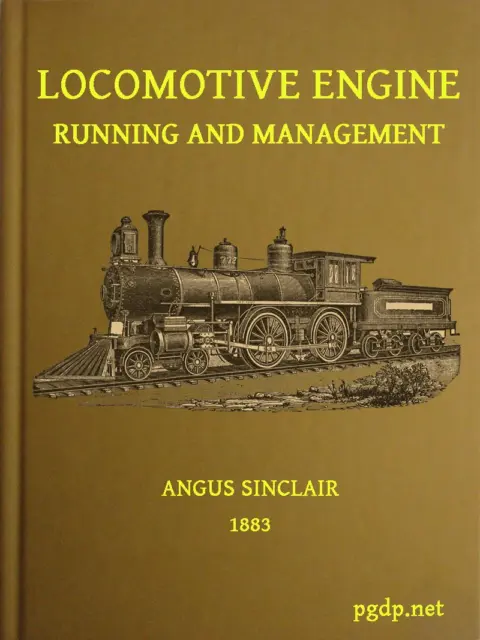
"Locomotive Engine Running and Management" by Angus Sinclair is a technical treatise focused on the operation and maintenance of locomotive engines, written in the late 19th century. The book serves as a comprehensive guide for locomotive engineers, detailing the principles of efficient engine management, care, repair, and the technical intricacies involved in locomotive operation. It aims to provide clear and practical insights into the responsibilities and skills required for ensuring smooth and economical train operations. The opening of the book sets the stage by introducing the author's personal experience as a locomotive engineer. Sinclair outlines his motivation to document observations and issues encountered while operating engines, which ultimately formed the basis for this publication. He discusses the importance of understanding mechanical principles, the rigorous self-improvement needed by engineers, and the value of practical knowledge gained through experience. The introductory chapters highlight the attributes of successful locomotive engineers, emphasize the necessity of systematic inspections, and provide guidance on preparing engines for service, laying the groundwork for the detailed operational techniques and practices covered in subsequent sections.
Introduction adapted from the source catalogue; source summaries may be automatically generated.
Free to read · English · 98,654 words · No account needed
MAKE TIME FOR A GOOD BOOK
On by default. Untick to stop anonymous reading totals. Each page counts after 10 seconds in view. How this works.
Anonymous counting is on unless you have switched it off.
The following is the form of questions put to firemen on one of the most prominent railroads in this country before they are admitted as competent for promotion, and the kind of answers expected from those who are considered eligible for the higher position. The form questions are not adhered to strictly, and care is taken that a candidate for promotion does not commit the answers to memory without properly understanding the subject. No fireman is promoted who does not satisfy the examiner that he understands the practical questions asked.
Q.--What are the principal duties of an engineer before attaching his
engine to train?
A.--To examine the engine carefully, to see that all set-screws are in place, and rod-keys secure; that the engine is equipped with all necessary signals, firing, and hand-tools; the necessary supply of water, fuel, and stores. Also, to take a look at the flues and crown-sheet.
Q.--What is important, in carrying water in the boiler, as to height
and regularity?
A.--To carry water and steam in the top gauge-cocks when working steam, and as uniformly as possible.
Q.--What is important in carrying water on grades, and approaching a
summit?
A.--To carry the water sufficiently high to be sure that the front ends of the tubes are not exposed, and, in pitching over a summit, to have sufficient water to cover and protect the crown-sheet, after finding its level from the front or low end of the boiler.
Q.--Should it be necessary, after pitching over a summit, to pump up a gauge or more of water, what should be the condition of the fire?
A.--The fire should be kept bright, and burning freely.
Q.--Why is this important?
A.--To prevent chilling the flues, causing them to leak.
Q.--Should you have ample water after pitching over, what should be
the condition of the fire?
A.--It should be leveled and settled down, and covered over sufficiently to prevent unnecessary waste of steam or fuel.
Q.--Should the pump or injectors fail on the road, what would you do?
A.--First, smother down the fire, stop promptly, take off the hose, and raise the tank-valves to ascertain that they are connected; also see that the strainers are clear. If all is found clear, then try the injectors again; and, if the engine has a pump, take it down, and see that the valves are free, and would also run water through the feed-pipes. When all is open and free, put them up, and try them again.
Q.--Should the water in the boiler get too low to allow you time for the examination, what would you do?
Your reading position is saved on this browser. Take it to another device with a library code. Reading pages adapt to text, rather than matching a printed edition.
BEHIND THE BOOK
This eBook is for the use of anyone anywhere in the United States and most other parts of the world at no cost and with almost no restrictions whatsoever. You may copy it, give it away or re-use it under the terms of the Project Gutenberg License included with this eBook or online at www.gutenberg.org. If you are not located in the United States, you will have to check the laws of the country where you are located before using this eBook. Read the source licence.
The original source file, including credits and licence, is retained by this library. Request an original-format copy at no charge. Please include the book title and Project Gutenberg identifier #62609.
KEEP YOUR CURIOSITY GOING
Charles G. (Charles Griffith) Ross
Hannah Webster Foster

Emily Lawless
Edwin Hamlin Carr

Charles De Lano Hine
Andrew Ure