
The Writing of News A Handbook with Chapters on Newspaper Correspondence and Copy Reading
Charles G. (Charles Griffith) Ross
THE CLASSIC COLLECTION · 1884
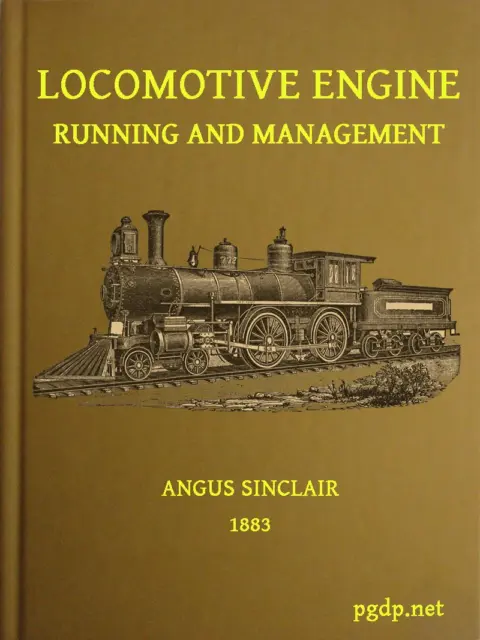
"Locomotive Engine Running and Management" by Angus Sinclair is a technical treatise focused on the operation and maintenance of locomotive engines, written in the late 19th century. The book serves as a comprehensive guide for locomotive engineers, detailing the principles of efficient engine management, care, repair, and the technical intricacies involved in locomotive operation. It aims to provide clear and practical insights into the responsibilities and skills required for ensuring smooth and economical train operations. The opening of the book sets the stage by introducing the author's personal experience as a locomotive engineer. Sinclair outlines his motivation to document observations and issues encountered while operating engines, which ultimately formed the basis for this publication. He discusses the importance of understanding mechanical principles, the rigorous self-improvement needed by engineers, and the value of practical knowledge gained through experience. The introductory chapters highlight the attributes of successful locomotive engineers, emphasize the necessity of systematic inspections, and provide guidance on preparing engines for service, laying the groundwork for the detailed operational techniques and practices covered in subsequent sections.
Introduction adapted from the source catalogue; source summaries may be automatically generated.
Free to read · English · 98,654 words · No account needed
MAKE TIME FOR A GOOD BOOK
On by default. Untick to stop anonymous reading totals. Each page counts after 10 seconds in view. How this works.
Anonymous counting is on unless you have switched it off.
Engineers interested in finding an approximation of the work done in taking a fast train over a railroad, can make a close estimate by studying out the figures given below by Professor Dudley. The table shows the performance of an ordinary locomotive upon a train composed of three eight-wheel and six twelve-wheel cars; weight 250 tons; working-weight of engine and tender, 126,000 pounds; cylinders of engine, 17 by 24 inches; diameter of drivers, 72 inches; weight on drivers, 48,000 pounds; blowing-pressure on boiler, 135 pounds.
In starting the train, the locomotive would record a tension of 11,000 to 12,000 pounds for one or two hundred feet of distance. After hooking up, the tension would decrease to about 2,800 or 3,000 pounds; and, with this pull, the speed of 50 miles an hour was attained in the fifth mile. As the speed increases, the resistance of the air against the locomotive becomes greater, and more of its own power is required to move itself. In starting a train, the working adhesion of the steel-tired drivers on dry steel rails is about 33 per cent of the weight upon them, and reduces as the speed increases.
Tabulation of Part of a Trip of the Dynagraph Car on a Fast Express
Train.
1 Numbers of Miles.
2 Time in Minutes and Seconds per Mile.
3 Speed in Miles per Hour.
4 Velocity of the Wind in Miles per Hour.
5 Approximate Grades.
6 Foot-Pounds of Work shown by Dynametrical Curve per Mile.
7 Foot-Pounds of Work per Minute expressed in Horse-Power.
8 Approximate calculated Foot-Pounds of Work required to move the
Locomotive in Horse-Power.
9 Sum of Columns 7 and 8.
===+======+=======+=====+================+============+=====+=====+==== 1 | 2 | 3 | 4 | 5 | 6 | 7 | 8 | 9 ---+------+-------+-----+----------------+------------+-----+-----+---- 1 | 2 54 | 20.68 | | Level | 24,116,233 | 252 | | 2 | 1 34 | 38.31 | 6.0 | Down 5 ft 3 in | 20,035,253 | 369 | 221 | 590 3 | 1 22 | 43.90 | 4.0 | Down 5 ft 3 in | 17,763,214 | 398 | 292 | 690 4 | 1 16 | 47.34 | 3.0 | Level | 15,904,273 | 383 | 418 | 791 5 | 1 11 | 50.70 | 4.5 | Level | 14,871,528 | 382 | 406 | 788 6 | 1 13 | 49.31 | 6.0 | Up 13 feet | 15,284,616 | 383 | 406 | 789 7 | 1 11 | 50.70 | 6.0 | Down 18 feet | 14,458,430 | 369 | 426 | 795 8 | 1 08 | 52.89 | 5.0 | Down 13 feet | 13,219,136 | 354 | 451 | 805 9 | 1 07 | 53.70 | 5.0 | Down 8 feet | 11,566,744 | 319 | 483 | 802 10 | 1 09 | 52.10 | 5.0 | Down 5 feet | 11,773,293 | 310 | 441 | 751 11 | 1 08 | 52.89 | 4.2 | Level | 11,773,293 | 316 | 447 | 763 12 | 1 09 | 52.10 | 5.2 | Down 8 feet | 12,806,038 | 337 | 456 | 793 13 | 1 10 | 51.43 | 6.0 | Level | 12,392,940 | 324 | 443 | 767 14 | 1 10 | 51.43 | 4.5 | Level | 12,806,038 | 339 | 426 | 765 15 | 1 10 | 51.43 | 4.0 | Level | 13,425,685 | 351 | 420 | 771 16 | 1 10 | 51.43 | 3.5 | Level | 13,299,136 | 345 | 415 | 760 17 | 1 08 | 52.89 | 3.0 | Level | 13,838,783 | 371 | 443 | 814 18 | 1 08 | 52.89 | 5.0 | Down 6 feet | 13,219,136 | 354 | 464 | 818 19 | 1 08 | 52.89 | 3.0 | Down 2 feet | 13,219,136 | 354 | 443 | 797 20 | 1 11 | 50.70 | 3.5 | Up 10 feet | 14,838,783 | 379 | 406 | 785 21 | 1 13 | 49.31 | 3.0 | Up 10 feet | 14,458,430 | 362 | 384 | 746 22 | 1 08 | 52.89 | 3.1 | Level | 12,392,940 | 332 | 443 | 775 23 | 1 07 | 53.70 | 3.1 | Down 10 feet | 12,186,391 | 333 | 462 | 797 ===+======+=======+=====+================+============+=====+=====+====
The following calculations have been made, to indicate the trains that various locomotives ought to pull.
Weights of Train which Locomotives can haul at a Speed
of 20 Miles an Hour under Ordinary Conditions, in Tons
of 2,000 Pounds (not including the Weight of Engine and
Tender).
=========================+============================= | TYPE OF LOCOMOTIVE. +---------+---------+--------- |Type “A.”|Type “B.”|Type “C.” -------------------------+---------+---------+--------- On straight track: | | | Level | 1,096 |1,664 | 2,226 Grade 20 feet per mile | 547 | 840½ | 1,128 ” 40 ” ” | 350 | 545 | 734 ” 60 ” ” | 249 | 390½ | 522 ” 80 ” ” | 188 | 302 | 410 ” 100 ” ” | 148 | 242 | 330 | | | On 5-degree curves: | | | Level | 921 |1,401½ | 1,876 Grade 20 feet per mile | 464 | 716 | 962 ” 40 ” ” | 310 | 485 | 654 ” 60 ” ” | 227 | 360½ | 488 ” 80 ” ” | 173 | 279½ | 380 ” 100 ” ” | 137 | 225½ | 308 | | | On 10-degree curves: | | | Level | 662 |1,013 | 1,358 Grade 20 feet per mile | 401 | 621½ | 836 ” 40 ” ” | 278 | 477 | 590 ” 60 ” ” | 207 | 330½ | 448 ” 80 ” ” | 160 | 260 | 354 ” 100 ” ” | 128 | 212 | 290 =========================+=========+=========+========= Under the most favorable conditions, loads about fifty per cent greater than those given above may be hauled.
The calculations are for three types of engine, designated in the column titles as Type “A,” Type “B,” and Type “C;” these being as follows:--
Your reading position is saved on this browser. Take it to another device with a library code. Reading pages adapt to text, rather than matching a printed edition.
BEHIND THE BOOK
This eBook is for the use of anyone anywhere in the United States and most other parts of the world at no cost and with almost no restrictions whatsoever. You may copy it, give it away or re-use it under the terms of the Project Gutenberg License included with this eBook or online at www.gutenberg.org. If you are not located in the United States, you will have to check the laws of the country where you are located before using this eBook. Read the source licence.
The original source file, including credits and licence, is retained by this library. Request an original-format copy at no charge. Please include the book title and Project Gutenberg identifier #62609.
KEEP YOUR CURIOSITY GOING
Charles G. (Charles Griffith) Ross
Hannah Webster Foster

Emily Lawless
Edwin Hamlin Carr

Charles De Lano Hine
Andrew Ure