THE CLASSIC COLLECTION✦Little Prudy’s Cousin GraceCLASSIC FREE BOOKS
Little Prudy’s Cousin Grace
Sophie May
THE CLASSIC COLLECTION · 1892
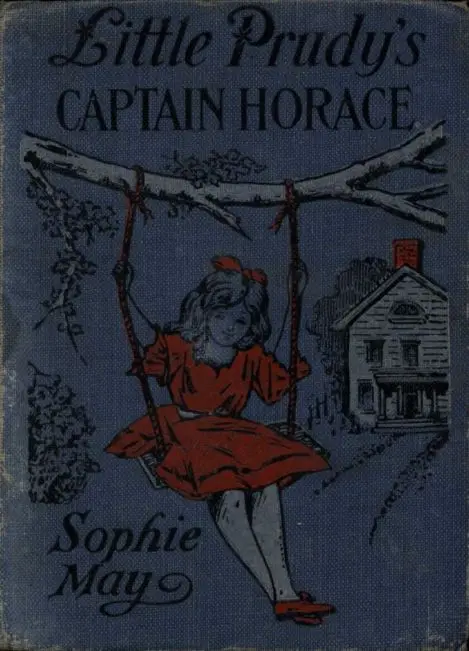
"Little Prudy's Captain Horace" by Sophie May is a children's novel written in the early 20th century. The book revolves around young Horace and his sister Grace Clifford, who navigate the joys and challenges of childhood, such as making candy, camping adventures, and the longing for their father's return from the war. The narrative captures the innocence and mischief of childhood while exploring themes of family, obedience, and growing up. The opening of the story introduces the Clifford family's warm domestic life and sets the stage for Horace's vibrant personality. Known as a boy with a strong imagination, Horace delights in playful banter with Grace as they watch the stars and eagerly anticipate making candy. The interactions between Horace and Grace reveal their sibling dynamics—particularly Horace's spirited nature and Grace's sensible demeanor. As they venture into the kitchen, their excitement about the candy-making process showcases their youthful enthusiasm, hinting at the delightful escapades that are to come throughout the book.
Introduction adapted from the source catalogue; source summaries may be automatically generated.
Free to read · English · 23,847 words · No account needed
MAKE TIME FOR A GOOD BOOK
On by default. Untick to stop anonymous reading totals. Each page counts after 10 seconds in view. How this works.
Anonymous counting is on unless you have switched it off.
"Hold up your head," said Grace, with dignity, and looking as much as possible like tall Miss Allen, her teacher. "Please repeat your verse."
The first sentence read, "They consider Moses and Christ as true prophets, but Mohammed as the greatest and last."
"I'll tell you," said Horace: "they think that Christ and Moses was good enough prophets, but Mohammed was a heap better."
"Why, Horace, it doesn't say any such thing in the book! it begins,
'They consider.'"
"I don't care," said the boy, "Miss Jordan tells us to get the sense of it. Ma, mustn't I get the sense of it?" he added, as Mrs. Clifford entered the kitchen.
"But, mamma," broke in Grace, eagerly, "our teacher wants us to commit the verses: she says a great deal about committing the verses."
"If you would give me time to answer," said Mrs. Clifford, smiling, "I should say both your teachers are quite right. You should 'get the sense of it,' as Horace says, and after that commit the verses."
"But, ma, do you think Horace should say 'heap,' and 'no account,' and
such words?"
"It would certainly please me," said Mrs. Clifford "if he would try to speak more correctly. My little boy knows how much I dislike some of his expressions."
"There, Horace," cried Grace, triumphantly, "I always said you talked just like the Dutch boys; and it's very, very improper!"
But just then it became evident that the molasses was boiled enough, for Barbara poured it into a large buttered platter, and set it out of doors to cool. After this, the children could do nothing but watch the candy till it was ready to pull.
Then there was quite a bustle to find an apron for Horace, and to make sure that his little stained hands were "spandy clean," and "fluffed" all over with flour, from his wrists to the tips of his fingers. Grace said she wished it wasn't so much trouble to attend to boys; and, after all, Horace only pulled a small piece of the candy, and dropped half of that on the nice white floor.
Barbara did the most of the pulling. She was quite a sculptor when she had plastic candy in her hands. Some of it she cut into sticks, and some she twisted into curious images, supposed to be boys and girls, horses and sheep.
After Grace and Horace had eaten several of the "boys and girls," to say nothing of "handled baskets," and "gentlemen's slippers," Barbara thought it high time they were "sound abed and asleep."
So now, as they go upstairs, we will wish them a good night and pleasant
dreams.
Your reading position is saved on this browser. Take it to another device with a library code. Reading pages adapt to text, rather than matching a printed edition.
Sophie May
Sophie May
Sophie May
Sophie May
BEHIND THE BOOK
This eBook is for the use of anyone anywhere in the United States and most other parts of the world at no cost and with almost no restrictions whatsoever. You may copy it, give it away or re-use it under the terms of the Project Gutenberg License included with this eBook or online at www.gutenberg.org. If you are not located in the United States, you will have to check the laws of the country where you are located before using this eBook. Read the source licence.
The original source file, including credits and licence, is retained by this library. Request an original-format copy at no charge. Please include the book title and Project Gutenberg identifier #53306.
KEEP YOUR CURIOSITY GOING
Cécile Tormay

Moritz Busch
Coulson Kernahan
John L. Ransom

Maurice Baring
Frances Wright