THE CLASSIC COLLECTION✦Little Prudy’s Cousin GraceCLASSIC FREE BOOKS
Little Prudy’s Cousin Grace
Sophie May
THE CLASSIC COLLECTION · 1892
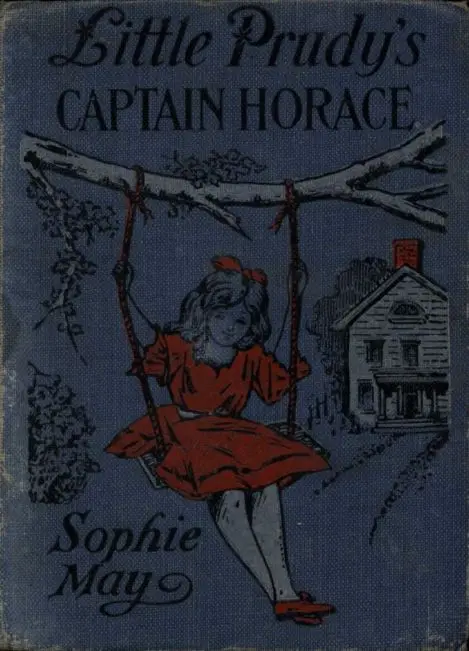
"Little Prudy's Captain Horace" by Sophie May is a children's novel written in the early 20th century. The book revolves around young Horace and his sister Grace Clifford, who navigate the joys and challenges of childhood, such as making candy, camping adventures, and the longing for their father's return from the war. The narrative captures the innocence and mischief of childhood while exploring themes of family, obedience, and growing up. The opening of the story introduces the Clifford family's warm domestic life and sets the stage for Horace's vibrant personality. Known as a boy with a strong imagination, Horace delights in playful banter with Grace as they watch the stars and eagerly anticipate making candy. The interactions between Horace and Grace reveal their sibling dynamics—particularly Horace's spirited nature and Grace's sensible demeanor. As they venture into the kitchen, their excitement about the candy-making process showcases their youthful enthusiasm, hinting at the delightful escapades that are to come throughout the book.
Introduction adapted from the source catalogue; source summaries may be automatically generated.
Free to read · English · 23,847 words · No account needed
MAKE TIME FOR A GOOD BOOK
On by default. Untick to stop anonymous reading totals. Each page counts after 10 seconds in view. How this works.
Anonymous counting is on unless you have switched it off.
"O, Horace, you'd ought to rather be an angel! Besides, you're too
little for a soldier!"
"But I grow. Just look at my hands; they're bigger than yours, this
minute!"
"Why, Horace Clifford, what makes them so black?"
"O, that's no account! I did it climbin' trees. Barby tried to scour it off, but it sticks. I don't care--soldiers' hands ain't white, are they, Pincher?"
The pretty dog at Horace's feet shook his ears, meaning to say,--
"I should think not, little master; soldiers have very dirty hands, if
you say so."
"Come," said Grace, who was tired of gazing at the far-off star-land; "let's go down and see if Barbara hasn't made that candy: she said she'd be ready in half an hour."
They went into the library, which opened upon the balcony, through the passage, down the front stairs, and into the kitchen, Pincher following close at their heels.
It was a very tidy kitchen, whose white floor was scoured every day with a scrubbing-brush. Bright tin pans were shining upon the walls, and in one corner stood a highly polished cooking-stove, over which Barbara Kinckle, a rosy-cheeked German girl, was stooping to watch a kettle of boiling molasses. Every now and then she raised the spoon with which she was stirring it, and let the half-made candy drip back into the kettle in ropy streams. It looked very tempting, and gave out a delicious odor. Perhaps it was not strange that the children thought they were kept waiting a long while.
"Look here, Grace," muttered Horace, loud enough for Barbara to hear; "don't you think she's just the slowest kind?"
"It'll sugar off," said Grace, calmly, as if she had made up her mind for the worst; "don't you know how it sugared off once when ma was making it, and let the fire go 'most out'?"
"Now just hear them childers," said good-natured Barbara; "where's the little boy and girl that wasn't to speak to me one word, if I biled 'em some candies?"
"There, now, Barby, I wasn't speaking to you," said Horace; "I mean I wasn't talking to her, Grace. Look here: I've heard you spell, but you didn't ask me my Joggerphy."
"Geography, you mean, Horace."
"Well, Geography, then. Here's the book: we begin at the Mohammedan."
Horace could pronounce that long name very well, though he had no idea what it meant. He knew there was a book called the Koran, and would have told you Mr. Mohammed wrote it; but so had Mr. Colburn written an Arithmetic, and whether both these gentlemen were alive, or both dead, was more than he could say.
Your reading position is saved on this browser. Take it to another device with a library code. Reading pages adapt to text, rather than matching a printed edition.
Sophie May
Sophie May
Sophie May
Sophie May
BEHIND THE BOOK
This eBook is for the use of anyone anywhere in the United States and most other parts of the world at no cost and with almost no restrictions whatsoever. You may copy it, give it away or re-use it under the terms of the Project Gutenberg License included with this eBook or online at www.gutenberg.org. If you are not located in the United States, you will have to check the laws of the country where you are located before using this eBook. Read the source licence.
The original source file, including credits and licence, is retained by this library. Request an original-format copy at no charge. Please include the book title and Project Gutenberg identifier #53306.
KEEP YOUR CURIOSITY GOING
Cécile Tormay

Moritz Busch
Coulson Kernahan
John L. Ransom

Maurice Baring
Frances Wright