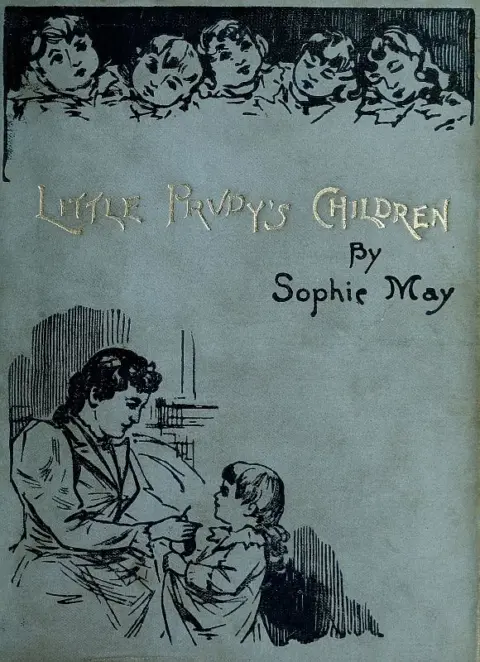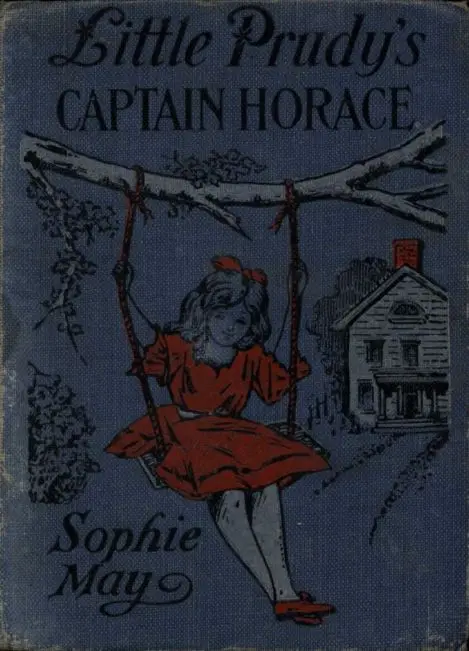
Little Prudy’s Captain Horace
Sophie May
THE CLASSIC COLLECTION · 1878
"Little Pitchers" by Sophie May is a children's novel written in the late 19th century. The story revolves around the charming and whimsical lives of young twins, Pollio and Posy Pitcher, as they navigate their early childhood experiences in a small town. The narrative captures their playful personalities and the loving dynamics within their family, highlighting themes of innocence, curiosity, and familial bonds. The opening of the book introduces Pollio and Posy, who at the beginning are four years old and full of life and imagination. The narrative provides a colorful description of their home in Rosewood and presents their contrasting characters: Pollio, who is amusingly homely and comical, and Posy, who is beautiful and sweet-natured. As the twins venture into their daily lives, readers witness their innocence and playful mischief intertwined with life lessons about obedience and kindness. The opening chapters set the stage for the twins' adventures and the heartwarming interactions with their family members, offering a glimpse into a bygone era's simplicity and charm.
Introduction adapted from the source catalogue; source summaries may be automatically generated.
Free to read · English · 26,453 words · No account needed
MAKE TIME FOR A GOOD BOOK
On by default. Untick to stop anonymous reading totals. Each page counts after 10 seconds in view. How this works.
Anonymous counting is on unless you have switched it off.
“Why don’t you say thee and thou?” asked Pollio, who had been watching the girl’s speech.
“Because I’m not a Quaker.”
“Don’t you like the Quakers?”
“Oh, yes! I love them dearly. I’ve lived with Mrs. Littlefield ever since I was twelve years old. She took me when I didn’t know much, and hadn’t any home or any parents, and she has been a mother to me ever since. The Littlefields like folks all the better for being poor, or sick, or in trouble, I believe,” said Dorothy, with another smile at Hop-clover.
“Why, that’s just like”—began Posy.
“Like Jesus Christ,” said Pollio.
“To be sure it is: they try to be like Him.”
“Dorothy,” said Hop-clover, drawing near the girl, and speaking low, “did you know my mother?”
“No: she went away just before I came; but I’ve always heard about her.”
“They say she was awful good,” said Pollio, spattering dough rather spitefully: “what did she do that was so nice?”
“Well, she went to meeting pretty steady, I guess, for one thing.”
“Poh, so does my mother: she goes every Sunday.”
“Quakers go oftener than that: they go every Thursday. They call Sunday First Day, and Thursday Fifth Day.”
“I’d like to go to Quaker meeting, ’cause my mother used to,” said Hop-clover thoughtfully.
“Well, perhaps you can: there will be meeting to-day, and all our folks will go but the hired men,” said Dorothy, going into the house with her empty bowl.
When Mrs. Littlefield heard of Hop-clover’s wish, she seemed pleased; and Pollio said at once that he and Posy wished to go too. He knew he could sit as still in church as anybody, not even excepting “Lucy-vindy’s” mother.
So they all went off together,—the eight good Quakers in drab, and the three little children in pink and blue. Hop-clover had the place of honor; for she walked between Mr. and Mrs. Littlefield, holding a hand of each. She looked too gay for a Quaker maiden; and so did Posy, for Posy wore a pink frock and pink stockings, and swung a pink parasol. She knew she was looking well, and that Pollio’s hat and jacket were nice; and I fear she tossed her head a little, as she whispered,—
“Don’t take hold of my hand, Pollio: it isn’t stylish!”
Posy was a dear little girl; but Nanty and Nunky had asked each other lately if she wasn’t growing just the least bit vain.
Your reading position is saved on this browser. Take it to another device with a library code. Reading pages adapt to text, rather than matching a printed edition.
BEHIND THE BOOK
This eBook is for the use of anyone anywhere in the United States and most other parts of the world at no cost and with almost no restrictions whatsoever. You may copy it, give it away or re-use it under the terms of the Project Gutenberg License included with this eBook or online at www.gutenberg.org. If you are not located in the United States, you will have to check the laws of the country where you are located before using this eBook. Read the source licence.
The original source file, including credits and licence, is retained by this library. Request an original-format copy at no charge. Please include the book title and Project Gutenberg identifier #48862.
KEEP YOUR CURIOSITY GOING
Coulson Kernahan

Maurice Baring
Frances Wright
Cécile Tormay

Frederic Jesup Stimson

W. H. P. (William Henry Pope) Jarvis