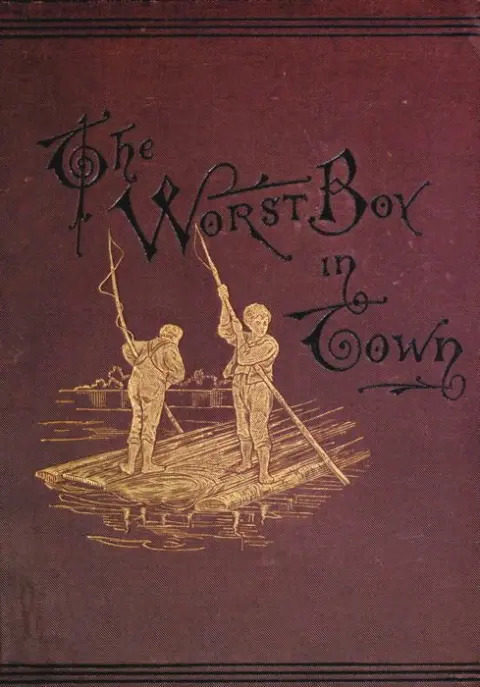
The Worst Boy in Town
John Habberton
THE CLASSIC COLLECTION · 1878
"Little Guzzy" by John Habberton is a collection of short stories written in the late 19th century. The stories range across various themes, capturing humorous, grave, and poignant moments in life. The book likely appeals to readers who enjoy light-hearted narratives with engaging characters, as suggested by its connection to Habberton's previous work, "Helen’s Babies." The opening of "Little Guzzy" introduces the setting of a mining camp called Bottle Flat, where the arrival of a new schoolteacher stirs discontent among local miners who are vehemently opposed to formal education. The miners plot to confront the teacher, but their plans shift when they discover that the incoming educator is a charming young woman named Miss Brown. Her pleasant demeanor leads to unexpectedly warm interactions, challenging the men’s initial resistance and igniting a change in their attitudes towards education and women in their community. The narrative captures the dynamics of small-town life, infusing humor and character depth throughout its opening chapter.
Introduction adapted from the source catalogue; source summaries may be automatically generated.
Free to read · English · 114,349 words · No account needed
MAKE TIME FOR A GOOD BOOK
On by default. Untick to stop anonymous reading totals. Each page counts after 10 seconds in view. How this works.
Anonymous counting is on unless you have switched it off.
Perhaps she would burst into tears in the court-room, and thank him effusively and publicly! Guzzy’s soul swelled at the thought, and he rapidly composed a reply appropriate to such an occasion. Suddenly Guzzy heard footsteps approaching, and voices in earnest altercation.
Guzzy hastened into the squire’s office, and struck an attitude befitting the importance of a principal witness.
An instant later the constable entered, followed by two smart-looking men, who had between them a third man, securely handcuffed.
The prisoner was a very handsome, intelligent-looking young man, except for a pair of restless, over-bright eyes.
“There’s a difference of opinion ’bout who the prisoner belongs to,” said the constable, addressing the squire; “and we agreed to leave the matter to you. When I reached the house, these gentlemen already had him in hand, and they claim he’s an escaped convict, and that they’ve tracked him from the prison right straight to Bowerton.”
The prisoner gave the officers a very wicked look, while these officials produced their warrants and handed them to the justice for inspection.
Guzzy seemed to himself to grow big with accumulating importance.
“The officers seem to be duly authorized,” said the squire, after a long and minute examination of their papers; “but they should identify the prisoner as the escaped convict for whom they are searching.”
“Here’s a description,” said one of the officers, “in an advertisement: ‘Escaped from the Penitentiary, on the —th instant, William Beigh, alias Bay Billy, alias Handsome; age, twenty-eight; height, five feet ten; complexion dark, hair black, eyes dark brown, mole on left cheek; general appearance handsome, manly, and intelligent. A skillful and dangerous burglar. Sentenced in 1866 to five years’ imprisonment—two years yet to serve.’ That,” continued the officer, “describes him to a dot; and, if there’s any further doubt, look here!”
As he spoke, he unclasped a cloak which the prisoner wore, and disclosed the striped uniform of the prison.
“There seems no reasonable doubt in this case; and the prisoner will have to go back to prison,” said the justice. “But I must detain him until I ascertain whether he has stolen anything from Mrs. Wyett’s residence. In case he has done so, we can prosecute at the expiration of his term.”
The prisoner seemed almost convulsed with rage, though of a sort which
one of the officers whispered to the other he did not exactly
understand.
Guzzy eyed him resentfully, and glared at the officers with considerable
disfavor.
Guzzy was a law-abiding man, but to have an expected triumph belittled and postponed because of foreign interference was enough to blind almost any man’s judicial eyesight.
Your reading position is saved on this browser. Take it to another device with a library code. Reading pages adapt to text, rather than matching a printed edition.
John Habberton
John Habberton
John Habberton
John Habberton
BEHIND THE BOOK
This eBook is for the use of anyone anywhere in the United States and most other parts of the world at no cost and with almost no restrictions whatsoever. You may copy it, give it away or re-use it under the terms of the Project Gutenberg License included with this eBook or online at www.gutenberg.org. If you are not located in the United States, you will have to check the laws of the country where you are located before using this eBook. Read the source licence.
The original source file, including credits and licence, is retained by this library. Request an original-format copy at no charge. Please include the book title and Project Gutenberg identifier #67985.
KEEP YOUR CURIOSITY GOING
Coulson Kernahan

Maurice Baring
Frances Wright
Cécile Tormay

Frederic Jesup Stimson

W. H. P. (William Henry Pope) Jarvis