THE CLASSIC COLLECTION✦The claims of decorative artCLASSIC FREE BOOKS
The claims of decorative art
Walter Crane
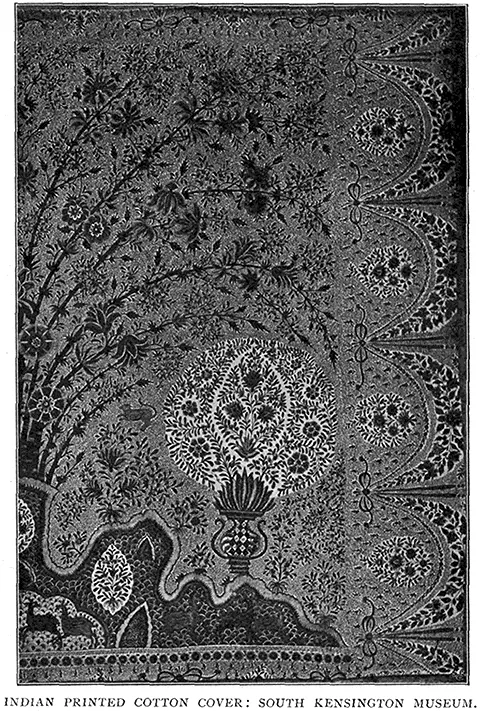
THE CLASSIC COLLECTION · 1900
"Line and Form" by Walter Crane is a treatise on art and design written in the late 19th century. This work centers around the principles of line and form in artistic creation, exploring their historical significance and practical applications in drawing and design. The author presents a variety of methods and approaches for students and practitioners in the arts, aiming to enhance their understanding and capacity for artistic expression. The opening of the book establishes its academic foundation, indicating that it comprises a series of lectures originally delivered at an art school. Crane emphasizes the importance of outline as a fundamental aspect of art, discussing its origins and functions. He introduces various drawing methods, such as the progressive method and the calligraphic method, while also touching on the emotional and textural qualities conveyed through line. The text sets the stage for a deeper exploration of these concepts, framing the subsequent chapters on the language of line and the relationship between line and form in artistic endeavors.
Introduction adapted from the source catalogue; source summaries may be automatically generated.
Free to read · English · 45,455 words · No account needed
MAKE TIME FOR A GOOD BOOK
On by default. Untick to stop anonymous reading totals. Each page counts after 10 seconds in view. How this works.
Anonymous counting is on unless you have switched it off.
Animal forms, use of in design, 106;
governed by inclosing boundaries, 104-106, 110-112.
Architectural mouldings, relief in, 190.
Architecture, spaces for sculpture in, 113-116.
Ardebil, holy carpet of the mosque of, f126.
Athens, the Tower of the Winds, 115-116.
Bari, 10;
the "Hundred Birds" of, f044.
Birds, Japanese drawing of, 68, f044;
decorative treatment of, f115.
Blake's Book of Job, "The Morning Stars," 19, f014, 152.
Border motives, recurrence in, f031, f032, f062.
Book decoration, 58, 59, 62;
example of page treatment, f041.
Botticelli, frescoes in the Sistine Chapel, 226;
rendering of the "Primavera" in tapestry, 240;
his "Nativity," 272-275;
"Madonna and Child," 275-276.
Boundaries, definition of, 2, 3;
use of in designing sprays, 38, f027;
in designing animal forms, f063a;
influence of, 108;
relation of design to, f064;
decorative spacing of figures in geometric, f063b, 152-156.
Brush-work, 65-68.
Canterbury, St. Margaret Street, f086.
Ceiling decoration, 136.
Charcoal drawing, 68, 70.
Chartres, carving on the Cathedral, 197, f108, f109.
Chiaroscuro, 267-269.
Chinese porcelain, 101.
Colour, effect of texture on, 244;
in stained glass, 252;
expression of relief in line and form by, 256, 258;
radiation of, 258;
complements in, 260;
harmony in, 261;
colour sense, 261, 262;
colour proportions, 262;
importance of pure colour, 263.
Composition, formal, 152-156;
informal, 157-164.
Constantine, Arch of, sketch of, f069.
Contrast in design, 101;
use of, in pattern design, 166, et seq.;
principles of, in black and white, f111a.
Corinthian order, Roman treatment of, 192, f105.
Counterbalance, 43, 44, 95, f057, f058, 130.
Counterchange, in heraldry, 171-174.
Crivelli, "The Annunciation," 276-278.
Cube, the, 73;
use of in architecture, f045b, 77, f048a;
in nature, 76.
Dado, use of the, 234.
De Hooghe, Peter, 267.
Desiderio di Settignano, relief work of, 202; "Madonna and Child," at South Kensington, by, 202.
Design, linear basis of, 35;
technical influence on, 58, 59, 62;
beauty in, 62, 63;
influence of material on, 64;
quantities in, 96-101;
contrast in, 101;
living tradition in, 126;
adaptability in, 124-126;
extension in, 126-131;
geometric structural plans in, 130;
essentials of, 138-139.
De Wint, brush-work of, 68.
Diaper, use of in Middle Ages, 171, 174-175.
Donatello, relief work of, 202.
Drapery, treatment of by the old masters, f099-186.
Drawing in line, methods of, 6, 7;
calligraphic method, 8;
tentative method, 9;
Japanese method, 10;
oval and rectangular methods, f008, 12.
Durer, Albert, his "Geometrica," 5;
roofs in his engravings, 148;
"The Prodigal Son," f083;
"St. Anthony," f084;
principle in the treatment of drapery, f099, f100.
Egyptian sculpture, 192, 194-196.
Emotion, linear expression of, 18-21.
Emphasis, 54;
value of, 56;
effects of different emphasis, f038, f039, f040;
in relief of form, 180.
Equivalents in form, value of, 95, f057.
Extension in design, 126-131.
Figure composition, 160;
expression of repose and action in, f090.
Figure design, relief in, 204-207;
graphic and decorative treatment of, f114.
Figure designs, controlled by geometric boundaries, 152-156.
Flaxman's Homer, designs from, f015.
Flowers,
lines of characterization in design of, 12, 13;
forms controlled by inclosing boundaries, 110-112.
Foliage, principles of structure in, 143-146.
Your reading position is saved on this browser. Take it to another device with a library code. Reading pages adapt to text, rather than matching a printed edition.
Walter Crane
Walter Crane
Walter Crane

Walter Crane
BEHIND THE BOOK
This eBook is for the use of anyone anywhere in the United States and most other parts of the world at no cost and with almost no restrictions whatsoever. You may copy it, give it away or re-use it under the terms of the Project Gutenberg License included with this eBook or online at www.gutenberg.org. If you are not located in the United States, you will have to check the laws of the country where you are located before using this eBook. Read the source licence.
The original source file, including credits and licence, is retained by this library. Request an original-format copy at no charge. Please include the book title and Project Gutenberg identifier #25290.
KEEP YOUR CURIOSITY GOING

Charles G. (Charles Griffith) Ross
Hannah Webster Foster

Emily Lawless
Edwin Hamlin Carr

Charles De Lano Hine
Andrew Ure