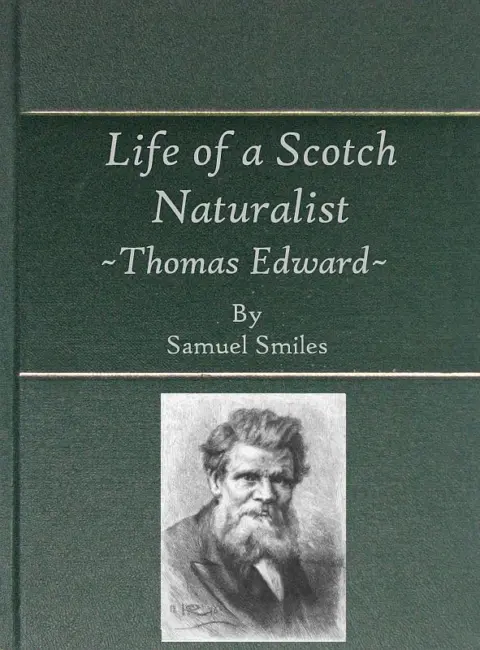
Life of a Scotch Naturalist: Thomas Edward, Associate of the Linnean Society. Fourth Edition
I have seen but one of these birds, in the avenue of
Duff House. It was alone and in song at the time—May
27, 1850.
EMBERIZA NIVALIS [The Snow Bunting].
Seen in large flocks during winter, and exhibiting a motley mixture of pure white, jet black, dull tawny, and deep chestnut,—a beautiful band across the wings being conspicuous only in flight. They arrive about the beginning of November, and depart about the first of April. They sing beautifully, in a sweet low lilt.
EMBERIZA MILIARIA [The Corn Bunting].
This bird is not very numerous with us.
EMBERIZA SCHŒNICLUS [The Black-headed Bunting or Ring Fowl].
It frequents the mosses. I have found their nests in bushes, amongst reeds, or on the ground. It is called the “Moss Sparrow” by the country people. I once saw a black variety of this bird, and another almost yellow.
EMBERIZA CITRINELLA [The Yellowhammer].
More numerous than either of the two last. The common name here is “Skite.” It is not particular as to the place where it builds its nest. I have seen one built in a rut on a cart-track, close by the wayside. On passing afterwards, I found the nest had been destroyed by a cart-wheel passing over it.
EMBERIZA CIRLUS [The Cirl Bunting].
Very rarely found in this quarter.
FRINGILLA CŒLEBS [The Chaffinch]. Abundant.
FRINGILLA MONTIFRINGILLA [The Brambling].
A winter visitor. A few may be met with every season.
FRINGILLA MONTANA [The Tree Sparrow].
To be found in several localities throughout the county.
FRINGILLA DOMESTICA [The House Sparrow]. Numerous.
FRINGILLA CHLORIS [The Green Finch].
Pretty generally distributed throughout the country,
and especially in woody places. The bird is easily
tamed.
FRINGILLA COCCOTHRAUSTES [The Hawfinch].
A rare bird with us.
FRINGILLA CIRIS [The Painted Finch].
A migratory species. Only one specimen has been seen.
FRINGILLA CARDUELIS [The Goldfinch].
These birds have in a great measure been captured by
the bird-catchers. (See p. 270.)
FRINGILLA SPINUS [The Siskin].
Fewer than before. They have been thinned by the
bird-catchers. A tamable bird.
FRINGILLA CANNABINA [The Linnet].
There is no house bird that possesses so many names as this one. It is the rose lintie so long as it retains its red breast; but when that is gone or wanting, it is then the gray lintie, the whin lintie, the brown lintie, and so on. Cultivation is driving the linties away, by tearing down every whin, knoll, and brae, where it is possible for the plough and spade to work their way.
FRINGILLA LINARIA [The Lesser Redpole].
This is found most plentifully in the higher districts of the county; but in severe winters, large flocks of them descend to the lower grounds.