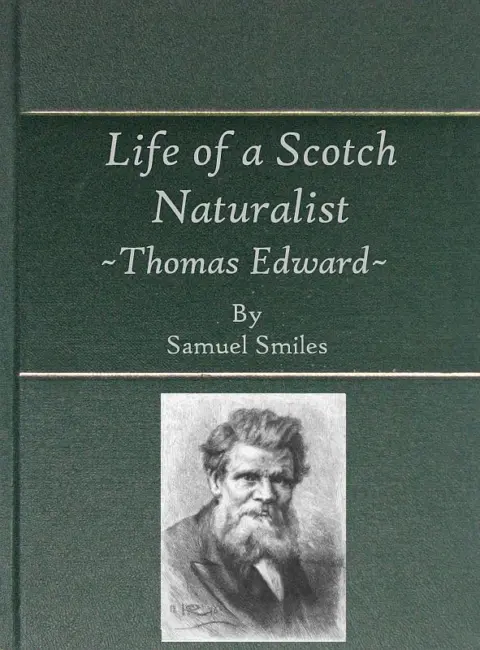
Life of a Scotch Naturalist: Thomas Edward, Associate of the Linnean Society. Fourth Edition
These birds all exist in the county in about equal numbers. It is rather an interesting and pleasant sight, and one which I have often witnessed, to see small bands of these lively, active little birds, together with the goldcrests and creepers, all in company, foraging about amongst the leafy trees in winter; the tits on the branches, the creepers on the trunk, and, if there is no snow on the ground, the goldcrests generally lower down, near about the roots. All is life, bustle, and animation, each cheering the other with its tiny note. See p. 69.
PARUS PALUSTRIS [The Marsh Titmouse].
This bird is very seldom seen among us.
PARUS CRISTATUS [The Crested Titmouse].
This rare British Tit is an inhabitant of the higher
and middle districts of the county, where it breeds
occasionally.
BOMBYCILLA GARRULA [The Waxwing].
This bird is an occasional winter visitor. Some
seasons large flocks appear, then only a few; then,
again, perhaps none; and this may be the case for many
succeeding seasons.
MOTACILLA YARRELLI [Pied Wagtail].
Wherever there is a stream or a quarry, you will meet, in summer, with a pair or two of these active little insect-eaters. During winter, they are invariably to be seen on lawns, or about mills and farm-steadings. They remain with us all the year round.
MOTACILLA BOARULA [The Gray Wagtail].
This is our yellow wagtail, being known by no other name. Though generally distributed throughout the country, it is not nearly so abundant. It sometimes breeds in company with the sand martin.
MOTACILLA CAMPESTRIS [Ray’s Wagtail].
Only an occasional visitor with us. They breed plentifully amongst the hillocks which stretch along the line of coast between the Don (Aberdeenshire) and Newburgh,—then again from Peterhead to Fraserburgh.
ANTHUS ARBOREUS [The Tree Pipit].
This bird is frequently seen; it breeds near
Inverkeithnay, Rothiemay, and Inveraven.
ANTHUS PRATENSIS [The Meadow Pipit].
Plentiful throughout the whole county.
ANTHUS OBSCURUS [The Rock Pipit].
Known all along our coast.
ANTHUS RICARDI [Richard’s Pipit].
I have only seen this bird once, at the foot of the
Knock Hill.
ALAUDA ARVENSIS [The Skylark or Laverock].
Universally distributed along the whole length and breadth of the county. It is, I think, the most numerous bird we have. Towards the months of October and November a great diminution of its numbers takes place. But a little after New Year’s Day they again begin to make their appearance. Where they have been in the meantime, I have never been able to ascertain; one thing is certain, however, that I have seen them returning from the east and from the north, in immense numbers. (See pp. 127, 269.)
ALAUDA ARBOREA [The Wood Lark].