THE CLASSIC COLLECTION✦Poetical Works of William Cullen Bryant Household EditionCLASSIC FREE BOOKS
Poetical Works of William Cullen Bryant Household Edition
William Cullen Bryant
THE CLASSIC COLLECTION · 1850
"Letters of a Traveller; Or, Notes of Things Seen in Europe and America" by William Cullen Bryant is a collection of travel essays written in the mid-19th century. The work captures the author's thoughts and observations from various journeys in Europe and America, presenting a personal and reflective narrative rather than a structured account of tourism. The likely topic revolves around the cultural, historical, and natural landscapes encountered, as well as the author's impressions of the people and customs. At the start of the book, the author introduces his experiences as an American traveler in Europe, beginning with his first impressions of France. He vividly describes the antiquity and charm of French architecture, customs, and landscapes, noting the contrast between the old world and his American upbringing. The opening letters capture the essence of his journey through France, highlighting significant historical landmarks and the vibrancy of Parisian life. He presents detailed observations on regional differences, historical significance, and cultural nuances, laying the groundwork for a travelogue rich in personal reflections and nuanced interpretations of the places and people encountered along the way.
Introduction adapted from the source catalogue; source summaries may be automatically generated.
Free to read · English · 106,255 words · No account needed
MAKE TIME FOR A GOOD BOOK
On by default. Untick to stop anonymous reading totals. Each page counts after 10 seconds in view. How this works.
Anonymous counting is on unless you have switched it off.
From Landro we descended gradually into the beautiful valleys of the Tyrol, leaving the snow behind, though the white peaks of the mountains were continually in sight. At Bruneck, in an inn resplendent with neatness—so at least it seemed to our eyes accustomed to the negligence and dirt of Italian housekeeping—we had the first specimen of a German bed. It is narrow and short, and made so high at the head, by a number of huge square bolsters and pillows, that you rather sit than lie. The principal covering is a bag of down, very properly denominated the upper bed, and between this and the feather-bed below, the traveller is expected to pass the night. An asthmatic patient on a cold winter night might perhaps find such a couch tolerably comfortable, if he could prevent the narrow covering from slipping off on one side or the other. The next day we were afforded an opportunity of observing more closely the inhabitants of this singular region, by a festival, or holiday of some sort, which brought them into the roads in great numbers, arrayed in their best dresses—the men in short jackets and small-clothes, with broad gay-colored suspenders over their waistcoats, and leathern belts ornamented with gold or silver leaf—the women in short petticoats composed of horizontal bands of different colors—and both sexes, for the most part, wearing broad-brimmed hats with hemispherical crowns, though there was a sugar-loaf variety much affected by the men, adorned with a band of lace and sometimes a knot of flowers. They are a robust, healthy-looking race, though they have an awkward stoop in the shoulders. But what struck me most forcibly was the devotional habits of the people. The Tyrolese might be cited as an illustration of the remark, that mountaineers are more habitually and profoundly religious than others. Persons of all sexes, young and old, whom we meet in the road, were repeating their prayers audibly. We passed a troop of old women, all in broad-brimmed hats and short gray petticoats, carrying long staves, one of whom held a bead-roll and gave out the prayers, to which the others made the responses in chorus. They looked at us so solemnly from under their broad brims, and marched along with so grave and deliberate a pace, that I could hardly help fancying that the wicked Austrians had caught a dozen elders of the respectable society of Friends, and put them in petticoats to punish them for their heresy. We afterward saw persons going to the labors of the day, or returning, telling their rosaries and saying their prayers as they went, as if their devotions had been their favorite amusement. At regular intervals of about half a mile, we saw wooden crucifixes erected by the way-side, covered from the weather with little sheds, bearing the image of the Saviour, crowned with thorns and frightfully dashed with streaks and drops of red paint, to represent the blood that flowed from his wounds. The outer walls of the better kind of houses were ornamented with paintings in fresco, and the subjects of these were mostly sacred, such as the Virgin and Child, the Crucifixion, and the Ascension. The number of houses of worship was surprising; I do not mean spacious or stately churches such as we meet with in Italy, but most commonly little chapels dispersed so as best to accommodate the population. Of these the smallest neighborhood has one for the morning devotions of its inhabitants, and even the solitary inn has its little consecrated building with its miniature spire, for the convenience of pious wayfarers. At Sterzing, a little village beautifully situated at the base of the mountain called the Brenner, and containing, as I should judge, not more than two or three thousand inhabitants, we counted seven churches and chapels within the compass of a square mile. The observances of the Roman Catholic church are nowhere more rigidly complied with than in the Tyrol. When we stopped at Bruneck on Friday evening, I happened to drop a word about a little meat for dinner in a conversation with the spruce-looking landlady, who appeared so shocked that I gave up the point, on the promise of some excellent and remarkably well-flavored trout from the stream that flowed through the village—a promise that was literally fulfilled. At the post-house on the Brenner, where we stopped on Saturday evening, we were absolutely refused any thing but soup-maigre and fish; the postmaster telling us that the priest had positively forbidden meat to be given to travellers. Think of that!—that we who had eaten wild-boar and pheasants on Good Friday, at Rome, under the very nostrils of the Pope himself and his whole conclave of Cardinals, should be refused a morsel of flesh on an ordinary Saturday, at a tavern on a lonely mountain in the Tyrol, by the orders of a parish priest! Before getting our soup-maigre, we witnessed another example of Tyrolese devotion. Eight or ten travellers, apparently laboring men, took possession of the entrance hall of the inn, and kneeling, poured forth their orisons in the German language for half an hour with no small appearance of fervency. In the morning when we were ready to set out, we inquired for our coachman, an Italian, and found that he too, although not remarkably religious, had caught something of the spirit of the place, and was at the Gotteshaus, as the waiter called the tavern chapel, offering his morning prayers.
Your reading position is saved on this browser. Take it to another device with a library code. Reading pages adapt to text, rather than matching a printed edition.
William Cullen Bryant
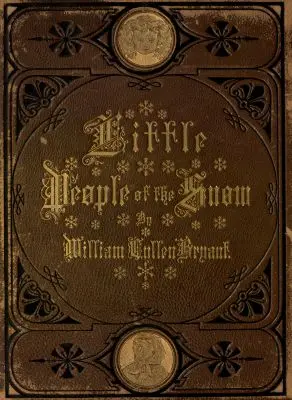
William Cullen Bryant
William Cullen Bryant
William Cullen Bryant
BEHIND THE BOOK
This eBook is for the use of anyone anywhere in the United States and most other parts of the world at no cost and with almost no restrictions whatsoever. You may copy it, give it away or re-use it under the terms of the Project Gutenberg License included with this eBook or online at www.gutenberg.org. If you are not located in the United States, you will have to check the laws of the country where you are located before using this eBook. Read the source licence.
The original source file, including credits and licence, is retained by this library. Request an original-format copy at no charge. Please include the book title and Project Gutenberg identifier #11013.
KEEP YOUR CURIOSITY GOING
Wilfrid Scawen Blunt
Wilfrid Scawen Blunt

E. W. (Edgar Watson) Howe

David Patterson (Spirit) Hatch

David Patterson (Spirit) Hatch

David Patterson (Spirit) Hatch