THE CLASSIC COLLECTION✦Poetical Works of William Cullen Bryant Household EditionCLASSIC FREE BOOKS
Poetical Works of William Cullen Bryant Household Edition
William Cullen Bryant
THE CLASSIC COLLECTION · 1850
"Letters of a Traveller; Or, Notes of Things Seen in Europe and America" by William Cullen Bryant is a collection of travel essays written in the mid-19th century. The work captures the author's thoughts and observations from various journeys in Europe and America, presenting a personal and reflective narrative rather than a structured account of tourism. The likely topic revolves around the cultural, historical, and natural landscapes encountered, as well as the author's impressions of the people and customs. At the start of the book, the author introduces his experiences as an American traveler in Europe, beginning with his first impressions of France. He vividly describes the antiquity and charm of French architecture, customs, and landscapes, noting the contrast between the old world and his American upbringing. The opening letters capture the essence of his journey through France, highlighting significant historical landmarks and the vibrancy of Parisian life. He presents detailed observations on regional differences, historical significance, and cultural nuances, laying the groundwork for a travelogue rich in personal reflections and nuanced interpretations of the places and people encountered along the way.
Introduction adapted from the source catalogue; source summaries may be automatically generated.
Free to read · English · 106,255 words · No account needed
MAKE TIME FOR A GOOD BOOK
On by default. Untick to stop anonymous reading totals. Each page counts after 10 seconds in view. How this works.
Anonymous counting is on unless you have switched it off.
I left this most pleasing of the Italian cities which I had seen, on the 24th of June, and took the road for the Tyrol. We passed through a level fertile country, formerly the territory of Venice, watered by the Piave, which ran blood in one of Bonaparte's battles. At evening we arrived at Ceneda, where our Italian poet Da Ponte was born, situated just at the base of the Alps, the rocky peaks and irregular spires of which, beautifully green with the showery season, rose in the background. Ceneda seems to have something of German cleanliness about it, and the floors of a very comfortable inn at which we stopped were of wood, the first we had seen in Italy, though common throughout the Tyrol and the rest of Germany. A troop of barelegged boys, just broke loose from school, whooping and swinging their books and slates in the air, passed under my window. Such a sight you will not see in southern Italy. The education of the people is neglected, except in those provinces which are under the government of Austria. It is a government severe and despotic enough in all conscience, but by providing the means of education for all classes, it is doing more than it is aware of to prepare them for the enjoyment of free institutions. In the Lombardo-Venetian kingdom, as it is called, there are few children who do not attend the public schools.
On leaving Ceneda, we entered a pass in the mountains, the gorge of which was occupied by the ancient town of Serravalle, resting on arcades, the architecture of which denoted that it was built during the middle ages. Near it I remarked an old castle, which formerly commanded the pass, one of the finest ruins of the kind I had ever seen. It had a considerable extent of battlemented wall in perfect preservation, and both that and its circular tower were so luxuriantly loaded with ivy that they seemed almost to have been cut out of the living verdure. As we proceeded we became aware how worthy this region was to be the birthplace of a poet. A rapid stream, a branch of the Piave, tinged of a light and somewhat turbid blue by the soil of the mountains, came tumbling and roaring down the narrow valley; perpendicular precipices rose on each side; and beyond, the gigantic brotherhood of the Alps, in two long files of steep pointed summits, divided by deep ravines, stretched away in the sunshine to the northeast. In the face of one the precipices by the way-side, a marble slab is fixed, informing the traveller that the road was opened by the late Emperor of Germany in the year 1830. We followed this romantic valley for a considerable distance, passing several little blue lakes lying in their granite basins, one of which is called the Lago morto or Dead Lake, from having no outlet for its waters. At length we began to ascend, by a winding road, the steep sides of the Alps—the prospect enlarging as we went, the mountain summits rising to sight around us, one behind another, some of them white with snow, over which the wind blew with a wintery keenness—deep valleys opening below us, and gulfs yawning between rocks over which old bridges were thrown—and solemn fir forests clothing the broad declivities. The farm-houses placed on these heights, instead of being of brick or stone, as in the plains and valleys below, were principally built of wood; the second story, which served for a barn, being encircled by a long gallery, and covered with a projecting roof of plank held down with large stones. We stopped at Venas, a wretched place with a wretched inn, the hostess of which showed us a chin swollen with the goitre, and ushered us into dirty comfortless rooms where we passed the night. When we awoke the rain was beating against the windows, and, on looking out, the forest and sides of the neighboring mountains, at a little height above us, appeared hoary with snow. We set out in the rain, but had not proceeded far before we heard the sleet striking against the windows of the carriage, and soon came to where the snow covered the ground to the depth of one or two inches. Continuing to ascend, we passed out of Italy and entered the Tyrol. The storm had ceased before we went through the first Tyrolese village, and we could not help being struck with the change in the appearance of the inhabitants—the different costume, the less erect figures, the awkward gait, the lighter complexions, the neatly-kept habitations, and the absence of beggars. As we advanced, the clouds began to roll off from the landscape, disclosing here and there, through openings in their broad skirts as they swept along, glimpses of the profound valleys below us, and of the white sides and summits of mountains in the mid-sky above. At length the sun appeared, and revealed a prospect of such wildness, grandeur, and splendor as I had never before seen. Lofty peaks of the most fantastic shapes, with deep clefts between, sharp needles of rocks, and overhanging crags, infinite in multitude, shot up everywhere around us, glistening in the new-fallen snow, with thin wreaths of mist creeping along their sides. At intervals, swollen torrents, looking at a distance like long trains of foam, came thundering down the mountains, and crossing the road, plunged into the verdant valleys which winded beneath. Beside the highway were fields of young grain, pressed to the ground with the snow; and in the meadows, ranunculuses of the size of roses, large yellow violets, and a thousand other Alpine flowers of the most brilliant hues, were peeping through their white covering. We stopped to breakfast at a place called Landro, a solitary inn, in the midst of this grand scenery, with a little chapel beside it. The water from the dissolving snow was dropping merrily from the roof in a bright June sun. We needed not to be told that we were in Germany, for we saw it plainly enough in the nicely-washed floor of the apartment into which we were shown, in the neat cupboard with the old prayer-book lying upon it, and in the general appearance of housewifery, a quality unknown in Italy; to say nothing of the evidence we had in the beer and tobacco-smoke of the travellers' room, and the guttural dialect and quiet tones of the guests.
Your reading position is saved on this browser. Take it to another device with a library code. Reading pages adapt to text, rather than matching a printed edition.
William Cullen Bryant
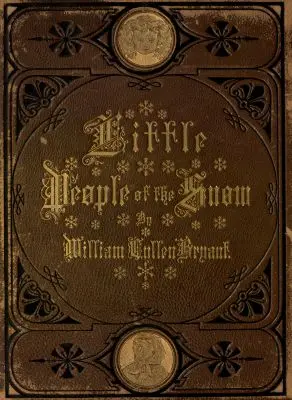
William Cullen Bryant
William Cullen Bryant
William Cullen Bryant
BEHIND THE BOOK
This eBook is for the use of anyone anywhere in the United States and most other parts of the world at no cost and with almost no restrictions whatsoever. You may copy it, give it away or re-use it under the terms of the Project Gutenberg License included with this eBook or online at www.gutenberg.org. If you are not located in the United States, you will have to check the laws of the country where you are located before using this eBook. Read the source licence.
The original source file, including credits and licence, is retained by this library. Request an original-format copy at no charge. Please include the book title and Project Gutenberg identifier #11013.
KEEP YOUR CURIOSITY GOING
Wilfrid Scawen Blunt
Wilfrid Scawen Blunt

E. W. (Edgar Watson) Howe

David Patterson (Spirit) Hatch

David Patterson (Spirit) Hatch

David Patterson (Spirit) Hatch