THE CLASSIC COLLECTION✦Thorns of regretCLASSIC FREE BOOKS
Thorns of regret
Alex. McVeigh, Mrs. Miller
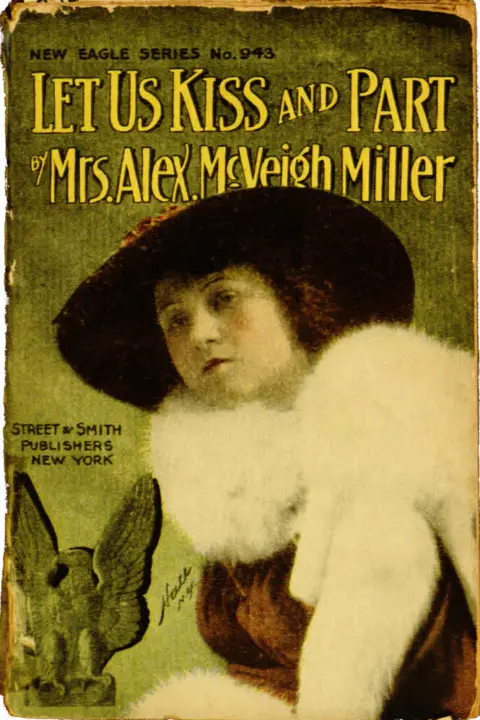
THE CLASSIC COLLECTION · 1897
"Let Us Kiss and Part; or, A Shattered Tie" by Mrs. Alex. McVeigh Miller is a romance novel written in the late 19th century. The story revolves around Leon and Verna Dalrymple, a young couple whose marriage, clouded by pride and the harsh realities of poverty, leads to their bitter separation. Their tumultuous relationship serves as the backdrop for the development of a deeper narrative, which ultimately centers around their daughter, Jessie, as she navigates a world filled with love, loss, and the search for her true identity. At the start of the story, the couple is depicted on the verge of a heartbreaking separation due to escalating tensions fueled by their dire financial situation. Verna, driven by desperation, threatens to return to her wealthy family and seek a divorce, leading to a pivotal moment where both characters feel the weight of their unresolved feelings. The narrative then shifts sixteen years later, introducing Jessie, who is left to fend for herself and her younger brothers after their parents' tragic choices. The opening sections create a rich context of love's complexities, the impacts of societal status, and the themes of longing and familial obligation, setting the stage for Jessie’s future encounters and the entanglements that will define her life.
Introduction adapted from the source catalogue; source summaries may be automatically generated.
Free to read · English · 78,286 words · No account needed
MAKE TIME FOR A GOOD BOOK
On by default. Untick to stop anonymous reading totals. Each page counts after 10 seconds in view. How this works.
Anonymous counting is on unless you have switched it off.
The sweet voice died away in lingering echoes over the waters, the mandolin ceased its plaintive chords, and Jessie sat down with a low sigh by her father’s side, and leaned her head against his shoulder in pathetic silence, while the listeners stole away, leaving Laurier alone in the seat he had taken, gazing absently over the moonlit waters while ocean’s tone seemed to echo over and over:
“Love, I will love you ever,
Love, I will leave you never!”
He had sat down very suddenly because he had staggered from emotion
over a shock.
It had come to him all at once why the girl’s face and voice had seemed so familiar that it had awakened subtle pain blent with keenest pleasure.
The fair, exquisite face was like one that had been lying long beneath the coffinlid, the voice was one whose sweet, reproachful tones had once pierced his heart like an avenging sword. She brought back to him the irrevocable past.
“So like, so like, she might be Jessie Lyndon’s sister,” he mused. “But no, that could not be. Mrs. Dalrymple had but one daughter. It is only a chance likeness.”
He began to wonder what their names could be, the father and daughter, and when one of his friends came back to his side he whispered the question:
“What did you say their names were?”
He was astounded when the young man answered calmly:
“His name is Lyndon, and he calls his daughter Jessie.”
“Heavens!” and Laurier started violently.
“What is it?” cried his friend.
“Nothing! Yes, that wretched sickness is coming on again. Will you assist me to my stateroom?”
He lay wakeful and wretched all night, tortured by a name and a semblance, thinking that surely she must have been related to the dead girl by some close tie, and wishing to know her just for the sake of the past.
The next morning, in spite of his bad night, he was on deck early,
determined, if possible, to make the acquaintance of the new Jessie
Lyndon.
But our heroine had not been on shipboard three days without finding out the name of this important fellow passenger.
Her father had discovered it early and communicated it briefly, saying:
“Do not recognize him when he comes on deck. If he addresses you, pretend perfect forgetfulness of him and the past.”
“You may be sure I will do so,” with a lightning gleam of pride in the soft, dark eyes, and a swift rush of color to the round cheek.
But a moment later she asked, almost inaudibly:
“His wife--does she accompany him?”
“No, he is alone.”
Your reading position is saved on this browser. Take it to another device with a library code. Reading pages adapt to text, rather than matching a printed edition.
Alex. McVeigh, Mrs. Miller
Alex. McVeigh, Mrs. Miller

Alex. McVeigh, Mrs. Miller

Alex. McVeigh, Mrs. Miller
BEHIND THE BOOK
This eBook is for the use of anyone anywhere in the United States and most other parts of the world at no cost and with almost no restrictions whatsoever. You may copy it, give it away or re-use it under the terms of the Project Gutenberg License included with this eBook or online at www.gutenberg.org. If you are not located in the United States, you will have to check the laws of the country where you are located before using this eBook. Read the source licence.
The original source file, including credits and licence, is retained by this library. Request an original-format copy at no charge. Please include the book title and Project Gutenberg identifier #66774.
KEEP YOUR CURIOSITY GOING
Coulson Kernahan

Maurice Baring
Frances Wright
Cécile Tormay

Frederic Jesup Stimson

W. H. P. (William Henry Pope) Jarvis