
Through the Desert
Henryk Sienkiewicz
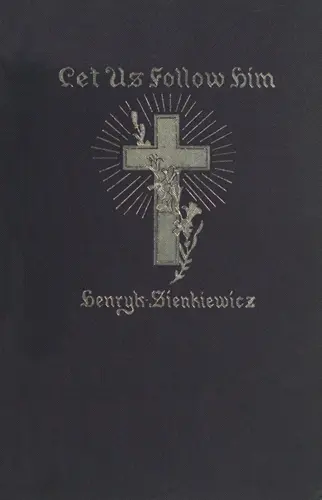
THE CLASSIC COLLECTION · 1902
"Let Us Follow Him" by Henryk Sienkiewicz is a historical novella set during the time surrounding the death of Christ, written in the late 19th century. This story reflects on the profound impact of the teachings of Jesus as experienced by the characters, primarily focusing on Antea, the wife of a Roman patrician. The key themes encompass love, hope, and the search for truth, with an insightful exploration of human experience juxtaposed against the backdrop of historical events. The narrative follows Caius Septimius Cinna and his wife Antea, who, suffering from mysterious visions, travels to Jerusalem in hopes of finding relief. They encounter the figure of Jesus and are witnesses to his crucifixion. Antea, profoundly moved by the teachings and calm demeanor of the Nazarene, finds a sense of connection between her suffering and the promise of resurrection that he exemplifies. As she grapples with her impending death, she experiences a transformation inspired by Jesus's message of love and hope. Ultimately, the novella culminates in a poignant moment where Antea, seeing Jesus's spirit, expresses a desire to follow him, signifying a shift from despair to faith. This story poignantly captures the essence of Sienkiewicz's exploration of faith and the human condition, inviting readers to reflect on the enduring power of love and belief.
Introduction adapted from the source catalogue; source summaries may be automatically generated.
Free to read · English · 11,168 words · No account needed
MAKE TIME FOR A GOOD BOOK
On by default. Untick to stop anonymous reading totals. Each page counts after 10 seconds in view. How this works.
Anonymous counting is on unless you have switched it off.
A certain evening, after animated discussions about the transmigration of souls, they remained alone on the terrace, from which the view was toward the sea. Cinna, taking Timon's hand, declared openly what the great torment of his life was, and why he had striven to approach the scholars and philosophers of the Serapeum.
"I have gained this much at least," said he; "I have learned to know you, O Timon, and I understand now that if you cannot solve my life's riddle, no other man can."
Timon gazed for a time at the smooth surface of the sea, in which the new moon was reflected; then he said,--
"Hast thou seen those flocks of birds, Cinna, which fly past here in winter from northern glooms? Dost thou know what they seek in Egypt?"
"I do. Warmth and light."
"Souls of men also seek warmth, which is love, and light, which means truth. The birds know whither they are flying for their good; but souls are flying over roadless places, in wandering, in sadness, and disquiet."
"Why can they not find the road, noble Timon?"
"Once man's repose was in the gods; to-day, faith in the gods is burnt out, like oil in a lamp. Men thought that to souls philosophy would be the light of truth; to-day, as thou knowest best of all, on its ruins in Rome and in the Academy in Athens, and here, sit Sceptics, to whom it seemed that it was bringing in peace, but it brought in disquiet. For to renounce light and heat is to leave the soul in darkness, which is disquiet. Hence, stretching out our hands before us, we seek an exit in groping."
"Hast thou not found it?"
"I have sought, and I have not found it. Thou hast sought it in pleasure, I in thought; and the same mist encircles us. Know then that not thou alone art suffering, but in thee the soul of the world is tortured. Is it long since thou hast ceased to believe in the gods?"
"At Rome they are honored publicly yet, and even new ones are brought from Asia and Egypt; but no one believes in them sincerely, except dealers in vegetables, who come in the morning from the country to the city."
"And these are the only people who live in peace."
"They are like those who bow down here to cats and onions."
"Just like those, who, in the manner of beasts, ask for nothing beyond
sleep after eating."
"But is life worth the living in view of this?"
"Do I know what death will bring?"
"What is the difference, then, between thee and the Sceptics?"
Your reading position is saved on this browser. Take it to another device with a library code. Reading pages adapt to text, rather than matching a printed edition.
Henryk Sienkiewicz

Henryk Sienkiewicz

Henryk Sienkiewicz
Henryk Sienkiewicz
BEHIND THE BOOK
This eBook is for the use of anyone anywhere in the United States and most other parts of the world at no cost and with almost no restrictions whatsoever. You may copy it, give it away or re-use it under the terms of the Project Gutenberg License included with this eBook or online at www.gutenberg.org. If you are not located in the United States, you will have to check the laws of the country where you are located before using this eBook. Read the source licence.
The original source file, including credits and licence, is retained by this library. Request an original-format copy at no charge. Please include the book title and Project Gutenberg identifier #41988.
KEEP YOUR CURIOSITY GOING
Cécile Tormay

Moritz Busch
Coulson Kernahan
John L. Ransom

Maurice Baring
Frances Wright