THE CLASSIC COLLECTION✦An outlaw’s diary: the CommuneCLASSIC FREE BOOKS
An outlaw’s diary: the Commune
Cécile Tormay
THE CLASSIC COLLECTION · 1898
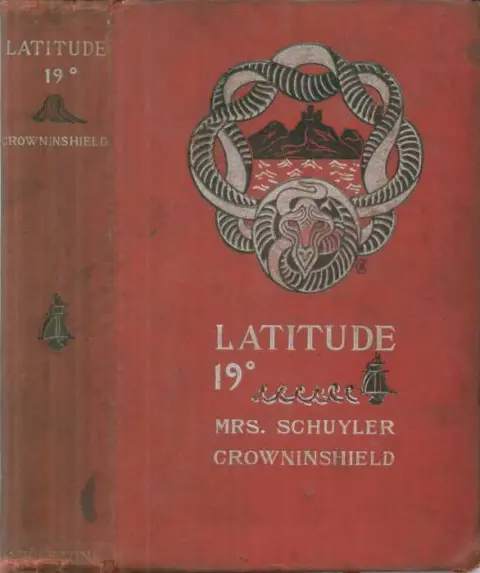
"Latitude 19°" by Mrs. Schuyler Crowninshield is a romantic adventure novel written in the late 19th century. The story follows the voyages and escapades of the protagonist Hiram Jones, his crewmates, and a young woman named Cynthia Archer as they encounter danger and excitement in the West Indies during the year 1820. The narrative promises to delve into themes of bravery, survival, and the complexities of human relationships amid challenging circumstances. At the start of the tale, Hiram Jones writes a letter to his son, recounting his youthful misadventures at sea. The narrative quickly shifts to a scene on the ship, the Yankee Blade, where Hiram interacts with Cynthia as they spot Christophe's Castle in the distance, igniting flirtatious banter. The tension mounts as they encounter problems at sea and potential threats, including pirates. The opening segment establishes character dynamics, particularly the budding relationship between Hiram and Cynthia, while foreshadowing the impending trials they will face together on their journey.
Introduction adapted from the source catalogue; source summaries may be automatically generated.
Free to read · English · 138,364 words · No account needed
MAKE TIME FOR A GOOD BOOK
On by default. Untick to stop anonymous reading totals. Each page counts after 10 seconds in view. How this works.
Anonymous counting is on unless you have switched it off.
I could not restrain a smile, even at this most solemn moment, as I heard the Skipper's ending. I sat looking at the water for a little--at the resting place of the men, which was marked for a short time by the bubbles which came to the surface; and then a light wind ruffled the water, and I closed my eyes, breathing a few words for the living as well as for the dead. When I opened them again, I had lost trace of those nameless graves for all time.
As I rowed the boat swiftly toward shore, away from that scene of sadness, I pondered upon the situation. It seemed to me that the others had not considered seriously enough our strangely exceptional fate. In most accounts of shipwreck and adventure the castaways are left upon a desolate island with savages more or less gentle, who help and care for them; or else the natives are bloodthirsty wretches, who, if they come in contact with the shipwrecked people, are outnumbered and overcome. Then a vessel heaves in sight at the right moment, and takes the unfortunates to home and happiness. There was the alternative of being shipwrecked upon an utterly desolate land, where provisions were few and enemies none. Our case was not any one of these three. We had not been obliged to seek refuge upon a desert island, far from home and friends. On the contrary, we were but twelve hundred miles at the most from Belleville, which was the centre of our world. The anxiety which filled my thoughts was caused by recent facts in our history, which followed each other rapidly through my mind, and which gave me reason to fear that if we could not quickly get safe passage away from the island something of a dangerous nature might befall us. That black monarch, "King Henry of the North," as he chose to style himself, was at this time reigning over the island of Haiti with resolute and powerful sway. No absolute monarch ever ruled a people with as decided and unbrooked a will as Henri Christophe. The French occupation, which had lasted about one hundred years, had been finally ended with the revolution of 1793. Toussaint l'Ouverture had instigated and led the most bloody rebellion of modern times. The slave of the Breda plantation, through insurrection, wars, and bloodshed, had become a great general, and so the dictator of the entire island known as Santo Domingo. It is an almost incredible fact that Toussaint was a gentle and humane man, even though he rose against and massacred the whites that his people with him might throw off the yoke of slavery. Had Toussaint been alive at this day, I knew that we should have had nothing to fear, but his mantle had fallen upon other shoulders, and those who had succeeded him had lost sight of the primary cause of the uprising. Like some other reformers, his path ran with blood, but it was either that or continued slavery for himself and his people. Toussaint was the grand figure of the Haitien revolution. The Marquis d'Hermonas said of him, "God in this terrestrial globe could not commune with a purer spirit." It was well known that Toussaint's enemies were treated with a gentleness and consideration which was abnormal in those days of bloodthirsty cruelty and excess. But at the time of which I write Toussaint had died in the Alps. The French, short-sighted as to a policy which should have urged upon them the recognition of Toussaint as the best governor which the island could procure, instead of treating with him, and forming an honourable peace, decoyed him on board one of their ships. He was sent to France, where he died in the Chateau de Joux. His death was caused by Alpine rigour, and it is hinted that it was aided by unnatural means. Toussaint was a courageous general, a keen legislator, an astute philosopher, a good citizen, a generous enemy, and a faithful friend. Had we but had such a man to turn to, I should have felt no fear, but there had been wars and bloodshed since Toussaint's time. His generals, Dessalines, Christophe, and Petion, had continued the war with the greatest bitterness. They had driven out the French, who, however, had left their various mixed progeny behind them. That progeny, the product of two races, who despised their black mothers and hated their white fathers, were always at war with the blacks and whites alike. Then Dessalines, following the example of Bonaparte, in 1804, crowned himself emperor, saying, "I am the only noble in Haiti." This would be laughable if the results had not been so disastrous and far reaching. Then came the downfall of Dessalines. Then Petion was elected president. There were more conspirings, more treachery, and more bloodshed, and finally Christophe crowned himself king. This was in 1811, about ten years before the last cruise of the Yankee Blade.
Your reading position is saved on this browser. Take it to another device with a library code. Reading pages adapt to text, rather than matching a printed edition.
BEHIND THE BOOK
This eBook is for the use of anyone anywhere in the United States and most other parts of the world at no cost and with almost no restrictions whatsoever. You may copy it, give it away or re-use it under the terms of the Project Gutenberg License included with this eBook or online at www.gutenberg.org. If you are not located in the United States, you will have to check the laws of the country where you are located before using this eBook. Read the source licence.
The original source file, including credits and licence, is retained by this library. Request an original-format copy at no charge. Please include the book title and Project Gutenberg identifier #36244.
KEEP YOUR CURIOSITY GOING
Cécile Tormay

Moritz Busch
Coulson Kernahan
John L. Ransom

Maurice Baring
Frances Wright