
Letters of Marque
Rudyard Kipling
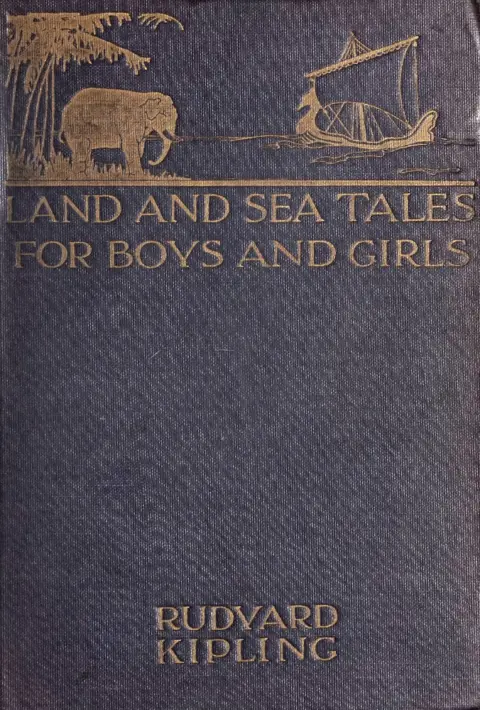
THE CLASSIC COLLECTION · 1893
"Land and Sea Tales for Boys and Girls" by Rudyard Kipling is a collection of short stories written in the late 19th century. This compilation features adventure tales that explore themes of bravery, character, and heroism, often drawing on Kipling's experiences with British colonial culture and the sea. The stories can be enjoyed by younger readers, making them a delightful read for both children and adults alike. The opening of the collection begins with a preface that sets the tone for the tales to follow, emphasizing the importance of being fit—both in mind and body. It introduces the idea that true valor comes in various forms, whether in quiet acts of courage or on the battlefield. The first story, "Winning the Victoria Cross," recounts the history and significance of the prestigious military honor awarded for acts of bravery, with examples illustrating the diverse ways in which heroism manifests. This establishes a framework for the subsequent tales, which promise to celebrate valor and the adventurous spirit of young and old alike against the backdrop of land and sea.
Introduction adapted from the source catalogue; source summaries may be automatically generated.
Free to read · English · 57,228 words · No account needed
MAKE TIME FOR A GOOD BOOK
On by default. Untick to stop anonymous reading totals. Each page counts after 10 seconds in view. How this works.
Anonymous counting is on unless you have switched it off.
“But it was because we went to change—we were rather wet, sir—that we were really late. After we’d reported ourselves to the Sergeant, sir, and he knew we were in Coll., we didn’t like to come to your study all dirty.” Sweeter than honey was the voice of Beetle.
“Very good. Don’t let it happen again.” Their housemaster learned to know them better in later years.
They entered—not to say swaggered—into Number Nine form-room, where De Vitré, Orrin, Parsons, and Howlett, before the fire, were still telling their adventures to admiring associates. The four rose as one boy.
“What happened to you? We just saved Call-over. Did you stay on? Tell
us! Tell us!”
The three smiled pensively. They were not distinguished for telling more
than was necessary.
“Oh, we stayed on a bit and then we came away,” said McTurk. “That’s
all.”
“You scab! You might tell a chap anyhow.”
“’Think so? Well, that’s awfully good of you, De Vitré. ’Pon my sainted Sam, that’s awfully good of you,” said Corkran, shouldering into the centre of the warmth and toasting one slippered foot before the blaze. “So you really think we might tell you?”
They stared at the coals and shook with deep, delicious chuckles.
“My Hat! We were stalky,” said McTurk. “I swear we were about as stalky as they make ’em. Weren’t we?”
“It was a frabjous Stalk,” said Beetle. “’Much too good to tell you
brutes, though.”
The form wriggled under the insult, but made no motion to avenge it. After all, on De Vitré’s showing, the three had saved the raiders from at least a public licking.
“It wasn’t half bad,” said Corkran. “Stalky is the word.”
“You were the really stalky one,” said McTurk, one contemptuous shoulder turned to a listening world. “By Gum! you were stalky.”
Corkran accepted the compliment and the name together. “Yes,” said he; “keep your eye on your Uncle Stalky an’ he’ll pull you through.”
“Well, you needn’t gloat so,” said De Vitré, viciously; “you look like a stuffed cat.”
Corkran, henceforth known as Stalky, took not the slightest notice, but
smiled dreamily.
“My Hat! Yes. Of course,” he murmured. “Your Uncle Stalky—a doocid good name. Your Uncle Stalky is no end of a stalker. He’s a Great Man. I swear he is. De Vitré, you’re an ass—a putrid ass.”
De Vitré would have denied this but for the assenting murmurs from
Parsons and Orrin.
“You needn’t rub it in, then.”
Your reading position is saved on this browser. Take it to another device with a library code. Reading pages adapt to text, rather than matching a printed edition.
Rudyard Kipling

Rudyard Kipling
Rudyard Kipling

Rudyard Kipling
BEHIND THE BOOK
This eBook is for the use of anyone anywhere in the United States and most other parts of the world at no cost and with almost no restrictions whatsoever. You may copy it, give it away or re-use it under the terms of the Project Gutenberg License included with this eBook or online at www.gutenberg.org. If you are not located in the United States, you will have to check the laws of the country where you are located before using this eBook. Read the source licence.
The original source file, including credits and licence, is retained by this library. Request an original-format copy at no charge. Please include the book title and Project Gutenberg identifier #63619.
KEEP YOUR CURIOSITY GOING
Coulson Kernahan

Maurice Baring
Frances Wright
Cécile Tormay

Frederic Jesup Stimson

W. H. P. (William Henry Pope) Jarvis