
Letters of Marque
Rudyard Kipling
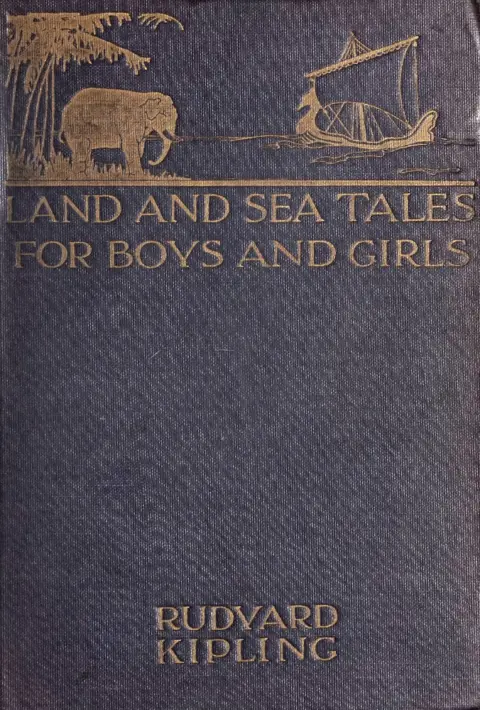
THE CLASSIC COLLECTION · 1893
"Land and Sea Tales for Boys and Girls" by Rudyard Kipling is a collection of short stories written in the late 19th century. This compilation features adventure tales that explore themes of bravery, character, and heroism, often drawing on Kipling's experiences with British colonial culture and the sea. The stories can be enjoyed by younger readers, making them a delightful read for both children and adults alike. The opening of the collection begins with a preface that sets the tone for the tales to follow, emphasizing the importance of being fit—both in mind and body. It introduces the idea that true valor comes in various forms, whether in quiet acts of courage or on the battlefield. The first story, "Winning the Victoria Cross," recounts the history and significance of the prestigious military honor awarded for acts of bravery, with examples illustrating the diverse ways in which heroism manifests. This establishes a framework for the subsequent tales, which promise to celebrate valor and the adventurous spirit of young and old alike against the backdrop of land and sea.
Introduction adapted from the source catalogue; source summaries may be automatically generated.
Free to read · English · 57,228 words · No account needed
MAKE TIME FOR A GOOD BOOK
On by default. Untick to stop anonymous reading totals. Each page counts after 10 seconds in view. How this works.
Anonymous counting is on unless you have switched it off.
“Well, go and look after your cows, then,” said McTurk. “Don’t stand there cursin’ us because we’ve been kind enough to help you out of a scrape. Why on earth weren’t your cows milked before? You’re no farmer. It’s long past milkin’. No wonder they’re half crazy. Disreputable old bog-trotter, you are. Brush your hair, sir.... I beg your pardon, Mister Toowey. ’Hope we’re not keeping you.”
They left Vidley dancing on the muck-heap, amid the cows, and devoted themselves to propitiating Mr. Toowey on their way to his house. Exercise had made them hungry; hunger is the mother of good manners; and they won golden opinions from Mrs. Toowey.
“Three-quarters of an hour late for Call-over, and fifteen minutes late for Lock-up,” said Foxy, the school Sergeant, crisply. He was waiting for them at the head of the corridor. “Report to your housemaster, please—an’ a nice mess you’re in, young gentlemen.”
“Quite right, Foxy. Strict attention to dooty does it,” said Corkran. “Now where, if we asked you, would you say that his honour Mister Prout might, at this moment of time, be found prouting—eh?”
“In ’is study—as usual, Mister Corkran. He took Call-over.”
“Hurrah! Luck’s with us all the way. Don’t blub, Foxy. I’m afraid you don’t catch us this time.”
“We went up to change, sir, before comin’ to you. That made us a little late, sir. We weren’t really very late. We were detained—by a——”
“An errand of mercy,” said Beetle, and they laid Mrs. Toowey’s laboriously written note before him. “We thought you’d prefer a letter, sir. Toowey got himself locked into a barn, and we heard him shouting—it’s Toowey who brings the Coll. milk, sir—and we went to let him out.”
“There were ever so many cows waiting to be milked,” said McTurk; “and of course, he couldn’t get at them, sir. They said the door had jammed. There’s his note, sir.”
Mr. Prout read it over thrice. It was perfectly unimpeachable; but it said nothing of a large tea supplied by Mrs. Toowey.
“Well, I don’t like your getting mixed up with farmers and potwallopers. Of course you will not pay any more—er—visits to the Tooweys,” said he.
“Of course not, sir. It was really on account of the cows, sir,” replied McTurk, glowing with philanthropy.
“And you came straight back?”
“We ran nearly all the way from the Cattle-gate,” said Corkran, carefully developing the unessential. “That’s one mile, sir. Of course, we had to get the note from Toowey first.”
Your reading position is saved on this browser. Take it to another device with a library code. Reading pages adapt to text, rather than matching a printed edition.
Rudyard Kipling

Rudyard Kipling
Rudyard Kipling

Rudyard Kipling
BEHIND THE BOOK
This eBook is for the use of anyone anywhere in the United States and most other parts of the world at no cost and with almost no restrictions whatsoever. You may copy it, give it away or re-use it under the terms of the Project Gutenberg License included with this eBook or online at www.gutenberg.org. If you are not located in the United States, you will have to check the laws of the country where you are located before using this eBook. Read the source licence.
The original source file, including credits and licence, is retained by this library. Request an original-format copy at no charge. Please include the book title and Project Gutenberg identifier #63619.
KEEP YOUR CURIOSITY GOING
Coulson Kernahan

Maurice Baring
Frances Wright
Cécile Tormay

Frederic Jesup Stimson

W. H. P. (William Henry Pope) Jarvis