THE CLASSIC COLLECTION✦A dead man’s diaryCLASSIC FREE BOOKS
A dead man’s diary
Coulson Kernahan
THE CLASSIC COLLECTION · 1891
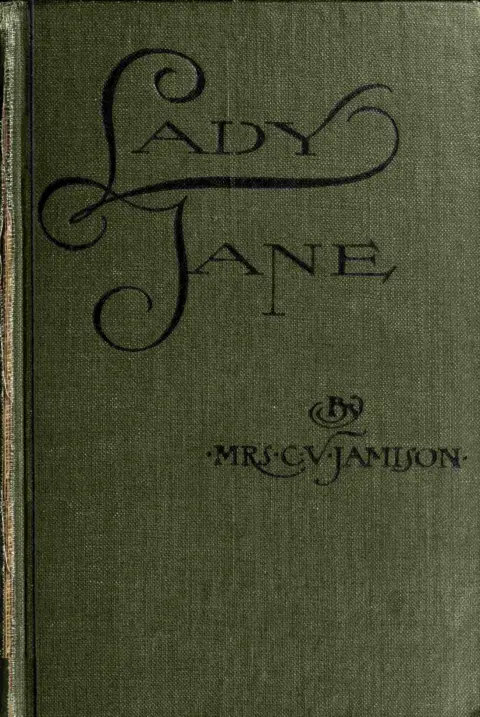
"Lady Jane" by C. V. Jamison is a novel written in the early 20th century. Set against a backdrop of Southern landscapes and rich characterizations, the story begins with the delicate and heartwarming journey of a young girl named Lady Jane and her ailing mother traveling to New Orleans. The narrative explores themes of loss, survival, and innocence as they navigate a world filled with both benevolence and hidden peril. The opening of the book depicts a vivid scene aboard a train as Lady Jane and her mother make their way through the beautiful Teche country. While the mother is physically weakened by illness and emotional sorrow, Lady Jane’s curiosity and innocence shine through as she bonds with a boy traveling on the train who offers her a blue heron named Tony. This chance encounter leads them to a series of events in New Orleans, where secretive and contrasting characters will intertwine their lives. The gentle depiction of Lady Jane’s child-like wonder and strong attachment to her mother sets a poignant tone for their unfolding story, hinting at the hardships and trials they will face in the unfamiliar city.
Introduction adapted from the source catalogue; source summaries may be automatically generated.
Free to read · English · 63,645 words · No account needed
MAKE TIME FOR A GOOD BOOK
On by default. Untick to stop anonymous reading totals. Each page counts after 10 seconds in view. How this works.
Anonymous counting is on unless you have switched it off.
Presently, Gex stopped before a neat little restaurant, whose window presented a very tempting appearance, and, looking at Lady Jane with a broad, inviting smile, said, “I should like to know if my leetle lady vas hungry. It is past four of the clock, and I should like to give my leetle lady von Mardi-gras dinner.”
“Oh, thank you, Mr. Gex,” cried Lady Jane, delightedly, for the smell of the savory food appealed to her empty stomach. “I’m so hungry that I can’t wait until I get home.”
“Vell, you sha’n’t; this is one nice place, vairy chic and fashionable, fit for one leetle lady, and you shall see that Gex can order one fine dinner, as vell as teach the dance.”
When the quaint little old man, in his antiquated black suit, a relic of other and better days, entered the room, with the beautiful child, rosy and bareheaded, her yellow hair flying out like spun silk, and her dainty though disordered dress plainly showing her superior position, every eye was turned upon him, and Gex felt the stirrings of old pride and ambition, as he placed a chair with great ceremony, and lifted Lady Jane into it. Then he drew out his spectacles with much dignity, and, taking the card the waiter handed him, waited, pencil poised, for the orders of the young lady.
“If you please,” he said, with a formal bow, and an inviting smile, “to tell me vhat you prefair.”
Lady Jane frowned and bit her lips at the responsibility of deciding so important a matter; at length she said, with sparkling eyes and a charming smile:
“If you please, Mr. Gex, I’ll take some—some ice cream.”
“But first, my leetle lady,—but first, one leetle plat of soup, and the fish with sauce verte, and one leetle bird,—just one leetle bird vith the petit pois—and one fine, good, leetle salad. How vould that suit my leetle lady?”
“And ice cream?” questioned Lady Jane, leaning forward with her little hands clasped primly in her lap.
“And after, yes, one crême à la glace, one cake, and one leetle bunch of raisin, grape you say,” repeated Gex, as he wrote laboriously with his old, stiff fingers. “Now ve vill have one fine leetle dinner, my leetle lady,” he said, with a beaming smile, when he had completed the order.
Lady Jane nodded an affirmative, and while they waited for their dinner her bright eyes traveled over everything; at length they rested on Mr. Gex with unbounded admiration, and she could not refrain from leaning forward and whispering:
Your reading position is saved on this browser. Take it to another device with a library code. Reading pages adapt to text, rather than matching a printed edition.
BEHIND THE BOOK
This eBook is for the use of anyone anywhere in the United States and most other parts of the world at no cost and with almost no restrictions whatsoever. You may copy it, give it away or re-use it under the terms of the Project Gutenberg License included with this eBook or online at www.gutenberg.org. If you are not located in the United States, you will have to check the laws of the country where you are located before using this eBook. Read the source licence.
The original source file, including credits and licence, is retained by this library. Request an original-format copy at no charge. Please include the book title and Project Gutenberg identifier #71709.
KEEP YOUR CURIOSITY GOING
Coulson Kernahan

Maurice Baring
Frances Wright
Cécile Tormay

Frederic Jesup Stimson

W. H. P. (William Henry Pope) Jarvis