THE CLASSIC COLLECTION✦A dead man’s diaryCLASSIC FREE BOOKS
A dead man’s diary
Coulson Kernahan
THE CLASSIC COLLECTION · 1891
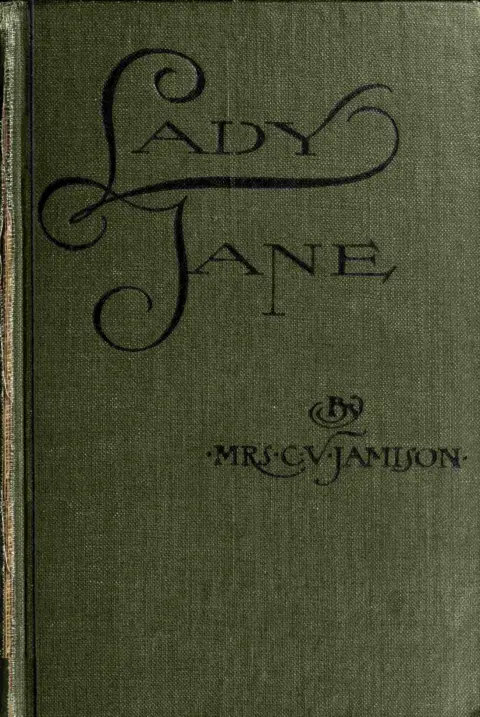
"Lady Jane" by C. V. Jamison is a novel written in the early 20th century. Set against a backdrop of Southern landscapes and rich characterizations, the story begins with the delicate and heartwarming journey of a young girl named Lady Jane and her ailing mother traveling to New Orleans. The narrative explores themes of loss, survival, and innocence as they navigate a world filled with both benevolence and hidden peril. The opening of the book depicts a vivid scene aboard a train as Lady Jane and her mother make their way through the beautiful Teche country. While the mother is physically weakened by illness and emotional sorrow, Lady Jane’s curiosity and innocence shine through as she bonds with a boy traveling on the train who offers her a blue heron named Tony. This chance encounter leads them to a series of events in New Orleans, where secretive and contrasting characters will intertwine their lives. The gentle depiction of Lady Jane’s child-like wonder and strong attachment to her mother sets a poignant tone for their unfolding story, hinting at the hardships and trials they will face in the unfamiliar city.
Introduction adapted from the source catalogue; source summaries may be automatically generated.
Free to read · English · 63,645 words · No account needed
MAKE TIME FOR A GOOD BOOK
On by default. Untick to stop anonymous reading totals. Each page counts after 10 seconds in view. How this works.
Anonymous counting is on unless you have switched it off.
One morning—it was the day before Mardi-Gras—when Lady Jane entered Pepsie’s room, instead of finding her friend engaged in her usual occupation, the table was cleared of all that pertained to business, and on it was spread a quantity of pink cambric, which Pepsie was measuring and snipping with great gravity.
“Oh, Pepsie, what are you making?” cried Lady Jane, greatly surprised at this display of finery.
“It’s a domino,” replied Pepsie curtly, her mouth full of pins.
“A domino, a domino,” repeated Lady Jane. “What’s a domino? I never saw
one.”
“Of course, you never saw one, because you never saw a Mardi-Gras,” said Pepsie, removing the pins, and smiling to herself as she smoothed the pattern on the cloth.
“Mardi-gras! Is it for Mardi-gras?” asked Lady Jane eagerly. “You might tell me all about it. I don’t know what it’s for,” she added, much puzzled, and somewhat annoyed at Pepsie’s air of secrecy.
“Well, it’s for some one to wear, Mardi-Gras,” replied Pepsie, still smiling serenely, and with an exasperating air of mystery.
“Oh, Pepsie—who, who is it for?” cried Lady Jane, pressing close, and putting both arms around her friend’s neck; “tell me, please, do! If it’s a secret I won’t tell.”
“Oh, it’s for a little girl I know,” said Pepsie, cutting and slashing the cambric with the greatest indifference, and evidently bent on keeping her own counsel.
Lady Jane stood still for a moment, letting her arms fall from Pepsie’s neck. Her face was downcast, and something like a tear shone on her lashes; then, a little slowly and thoughtfully, she climbed into her chair on the other side of the table, and, leaning on her elbows, watched the absorbed Pepsie silently.
Pepsie pinned, and snipped, and smoothed, all the while smiling with that little air of unconcern which so puzzled the child. Presently, without looking up, she said:
“Can’t you guess, Lady, who it’s for?”
“Isn’t it for Sophie Paichoux?” ventured Lady Jane.
“No, no,” said Pepsie decidedly; “the one I mean it for isn’t any
relation to me.”
“Then, I don’t know any other little girl. Oh, Pepsie, I can’t guess.”
“Why, you dear, stupid, little goose!” cried Pepsie, laughing aloud.
“Oh, Pepsie. It isn’t! is it?” and Lady Jane’s eyes shone like stars, and her face broke into a radiant smile. “Do you mean it for me? Really, do you, Pepsie?”
“Why, certainly. Who do you think I’d make it for, if not for you?”
Your reading position is saved on this browser. Take it to another device with a library code. Reading pages adapt to text, rather than matching a printed edition.
BEHIND THE BOOK
This eBook is for the use of anyone anywhere in the United States and most other parts of the world at no cost and with almost no restrictions whatsoever. You may copy it, give it away or re-use it under the terms of the Project Gutenberg License included with this eBook or online at www.gutenberg.org. If you are not located in the United States, you will have to check the laws of the country where you are located before using this eBook. Read the source licence.
The original source file, including credits and licence, is retained by this library. Request an original-format copy at no charge. Please include the book title and Project Gutenberg identifier #71709.
KEEP YOUR CURIOSITY GOING
Coulson Kernahan

Maurice Baring
Frances Wright
Cécile Tormay

Frederic Jesup Stimson

W. H. P. (William Henry Pope) Jarvis