THE CLASSIC COLLECTION✦A dead man’s diaryCLASSIC FREE BOOKS
A dead man’s diary
Coulson Kernahan
THE CLASSIC COLLECTION · 1891
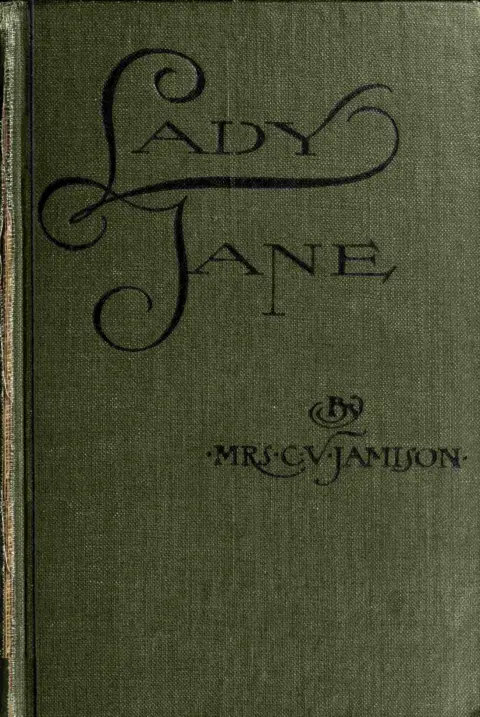
"Lady Jane" by C. V. Jamison is a novel written in the early 20th century. Set against a backdrop of Southern landscapes and rich characterizations, the story begins with the delicate and heartwarming journey of a young girl named Lady Jane and her ailing mother traveling to New Orleans. The narrative explores themes of loss, survival, and innocence as they navigate a world filled with both benevolence and hidden peril. The opening of the book depicts a vivid scene aboard a train as Lady Jane and her mother make their way through the beautiful Teche country. While the mother is physically weakened by illness and emotional sorrow, Lady Jane’s curiosity and innocence shine through as she bonds with a boy traveling on the train who offers her a blue heron named Tony. This chance encounter leads them to a series of events in New Orleans, where secretive and contrasting characters will intertwine their lives. The gentle depiction of Lady Jane’s child-like wonder and strong attachment to her mother sets a poignant tone for their unfolding story, hinting at the hardships and trials they will face in the unfamiliar city.
Introduction adapted from the source catalogue; source summaries may be automatically generated.
Free to read · English · 63,645 words · No account needed
MAKE TIME FOR A GOOD BOOK
On by default. Untick to stop anonymous reading totals. Each page counts after 10 seconds in view. How this works.
Anonymous counting is on unless you have switched it off.
She declined eating her orange, as she always shared it with Pepsie, but accepted the invitation to be seated. Placing Tony to forage on a basket of refuse vegetables, she climbed into the chair, placed her little heels on the topmost rung, smoothed down her short skirt, and, resting her elbows on her knees, leaned her rosy little cheeks on her palms, and set herself to studying Gex seriously and critically. At length, her curiosity overcoming her diffidence, she said in a very polite tone, but with a little hesitation: “Mr. Gex, are you a man or a woman?”
Gex, for the moment, was fairly startled out of himself, and, perhaps
for the first time in years, he threw back his head and laughed
heartily.
“Bon! bon! ’Tis good; ’tis vairy good. Vhy, my leetle lady, sometime I don’t know myself; ’cause, you see, I have to be both the man and the voman; but vhy in the vorld did you just ask me such a funny question?”
“Because, Mr. Gex,” replied Lady Jane, very gravely, “I’ve thought about it often. Because—men don’t sew, and wear aprons,—and—women don’t wear trousers; so, you see, I couldn’t tell which you were.”
“Oh, my foi!” and again Gex roared with laughter until a neighbor, who was passing, thought he had gone crazy, and stopped to look at him with wonder; but she only saw him leaning back, laughing with all his might, while Lady Jane sat looking at him with a frowning, flushed face, as if she was disgusted at his levity.
“I don’t know why you laugh so,” she said loftily, straightening up in her chair, and regarding Gex as if he had disappointed her. “I think it’s very bad for you to have no one to mend your clothes, and—and to have to sew like a woman, if—if you’re a man.”
“Vhy, bless your leetle heart, so it is; but you see I am just one poor, lonely creature, and it don’t make much difference vhether I’m one or t’ other; nobody cares now.”
“I do,” returned Lady Jane brightly; “and I’m glad I know, because, when Pepsie teaches me to sew, I’m going to mend your clothes, Mr. Gex.”
“Vell, you are one leetle angel,” exclaimed Gex, quite overcome. “Here, take another orange.”
“Oh, no; thank you. I’ve only bought one thing, and I can’t take two lagniappes; that would be wrong. But I must go now.”
Your reading position is saved on this browser. Take it to another device with a library code. Reading pages adapt to text, rather than matching a printed edition.
BEHIND THE BOOK
This eBook is for the use of anyone anywhere in the United States and most other parts of the world at no cost and with almost no restrictions whatsoever. You may copy it, give it away or re-use it under the terms of the Project Gutenberg License included with this eBook or online at www.gutenberg.org. If you are not located in the United States, you will have to check the laws of the country where you are located before using this eBook. Read the source licence.
The original source file, including credits and licence, is retained by this library. Request an original-format copy at no charge. Please include the book title and Project Gutenberg identifier #71709.
KEEP YOUR CURIOSITY GOING
Coulson Kernahan

Maurice Baring
Frances Wright
Cécile Tormay

Frederic Jesup Stimson

W. H. P. (William Henry Pope) Jarvis