THE CLASSIC COLLECTION✦A dead man’s diaryCLASSIC FREE BOOKS
A dead man’s diary
Coulson Kernahan
THE CLASSIC COLLECTION · 1891
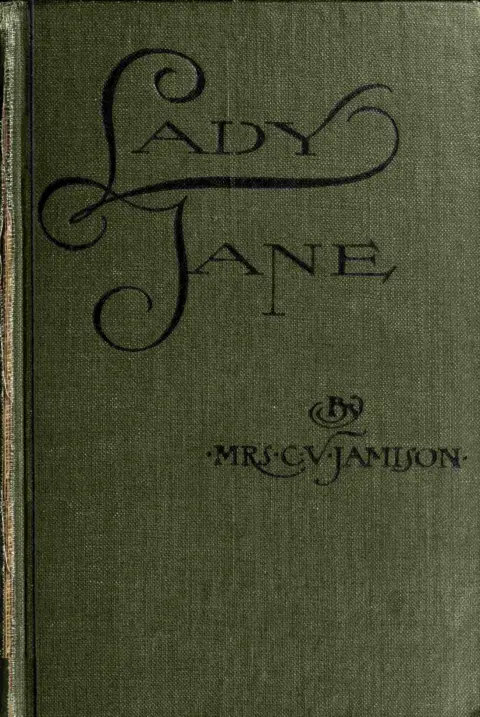
"Lady Jane" by C. V. Jamison is a novel written in the early 20th century. Set against a backdrop of Southern landscapes and rich characterizations, the story begins with the delicate and heartwarming journey of a young girl named Lady Jane and her ailing mother traveling to New Orleans. The narrative explores themes of loss, survival, and innocence as they navigate a world filled with both benevolence and hidden peril. The opening of the book depicts a vivid scene aboard a train as Lady Jane and her mother make their way through the beautiful Teche country. While the mother is physically weakened by illness and emotional sorrow, Lady Jane’s curiosity and innocence shine through as she bonds with a boy traveling on the train who offers her a blue heron named Tony. This chance encounter leads them to a series of events in New Orleans, where secretive and contrasting characters will intertwine their lives. The gentle depiction of Lady Jane’s child-like wonder and strong attachment to her mother sets a poignant tone for their unfolding story, hinting at the hardships and trials they will face in the unfamiliar city.
Introduction adapted from the source catalogue; source summaries may be automatically generated.
Free to read · English · 63,645 words · No account needed
MAKE TIME FOR A GOOD BOOK
On by default. Untick to stop anonymous reading totals. Each page counts after 10 seconds in view. How this works.
Anonymous counting is on unless you have switched it off.
“We can’t help it, child; selfishness is one of the results of poverty. It is self, self, constantly; but you are an exception, Diane. I will give you the credit of thinking more of others’ interest than of your own. You show it in everything. Now, about that bird. Madame Jourdain should have paid you for it, and not thrown it on your hands.”
“Oh, mama, she couldn’t sell it,” said Mam’selle Diane, rejectedly. “It wouldn’t be right to expect her to lose the price of it. She says it didn’t ‘take’ as well as the ducks.”
“Well, she might have thrown in the wool,” insisted Madame d’Hautreve, querulously, “she might have given the wool against your time.”
“But she didn’t ask me to experiment with a new model, mama dear. It wasn’t her fault if I didn’t succeed.”
“You did succeed, Diane. It was perfect; it was most life-like, only people haven’t the taste to recognize your talent.”
“Madame Jourdain said that her customers didn’t like the bird’s bill, and they thought the neck too long,” returned Mam’selle Diane, humbly.
“There, there; that shows how little the best educated people know of ornithology. It is a species of crane; the neck is not out of proportion.”
“They thought so, mama, and one can’t contend with people’s tastes and opinions. I shall not try anything new again. I shall stick to my ducks and canaries.”
“You know I advised you to do so in the first place. You were too ambitious, Diane, you were too ambitious!”
“Yes; you are right, mama, I was too ambitious!” sighed Mam’selle Diane.
One morning in August, about a year from the time that Madame Jozain moved into Good Children Street, Tante Modeste was in her dairy, deep in the mysteries of cream-cheese and butter, when Paichoux entered, and laying a small parcel twisted up in a piece of newspaper before her waited for her to open it.
“In a moment,” she said, smiling brightly; “let me fill these molds first, then I’ll wash my hands, and I’m done for to-day.”
Paichoux made no reply, but walked about the dairy, peering into the pans of rich milk, and whistling softly.
Suddenly, Tante Modeste uttered an exclamation of surprise. She had opened the paper, and was holding up a beautiful watch by its exquisitely wrought chain.
Your reading position is saved on this browser. Take it to another device with a library code. Reading pages adapt to text, rather than matching a printed edition.
BEHIND THE BOOK
This eBook is for the use of anyone anywhere in the United States and most other parts of the world at no cost and with almost no restrictions whatsoever. You may copy it, give it away or re-use it under the terms of the Project Gutenberg License included with this eBook or online at www.gutenberg.org. If you are not located in the United States, you will have to check the laws of the country where you are located before using this eBook. Read the source licence.
The original source file, including credits and licence, is retained by this library. Request an original-format copy at no charge. Please include the book title and Project Gutenberg identifier #71709.
KEEP YOUR CURIOSITY GOING
Coulson Kernahan

Maurice Baring
Frances Wright
Cécile Tormay

Frederic Jesup Stimson

W. H. P. (William Henry Pope) Jarvis