
Last letters from the living dead man
David Patterson (Spirit) Hatch
THE CLASSIC COLLECTION · 1900
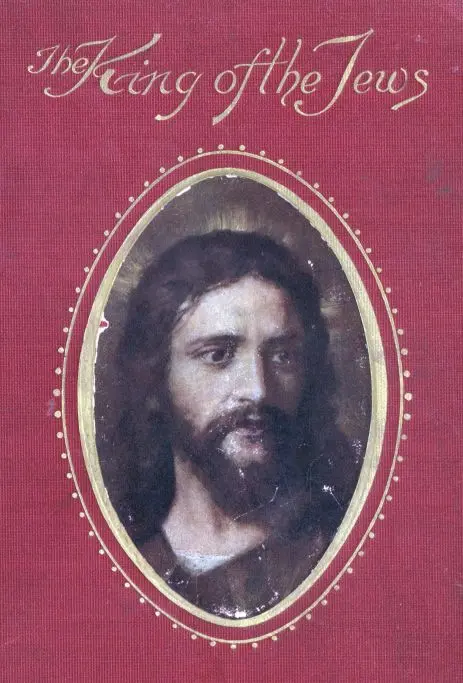
"King of the Jews: A Story of Christ's Last Days on Earth" by W. T. Stead is a narrative retelling of the final days of Jesus Christ, adapted from the Oberammergau Passion Play, likely written in the late 19th century. This work captures significant moments from Christ's life, including his triumphal entry into Jerusalem, the Last Supper, and the betrayal by Judas. Through the lens of biblical events, the author aims to illuminate the emotional and dramatic aspects surrounding the figure of Jesus and the context of his sacrifice. The opening of the story begins with Jesus' powerful act of driving out the money changers from the temple, displaying his commitment to restoring the sanctity of God's house. As Jesus rides into Jerusalem on a colt, he is met with a jubilant crowd shouting "Hosanna," reflecting the hopes and expectations of the people. The narrative quickly shifts to the hostile reactions of the religious leaders who conspire against him, feeling threatened by his influence and teachings. Jesus' actions and words provoke both admiration from the crowd and ire from the priests, establishing the tension that unfolds in the lead-up to his crucifixion. This section sets the stage for the conflicts and themes of loyalty, sacrifice, and betrayal that permeate the rest of Stead's adaptation.
Introduction adapted from the source catalogue; source summaries may be automatically generated.
Free to read · English · 45,750 words · No account needed
MAKE TIME FOR A GOOD BOOK
On by default. Untick to stop anonymous reading totals. Each page counts after 10 seconds in view. How this works.
Anonymous counting is on unless you have switched it off.
Then cried the people, "It is the duty of the governor to put him out
of the way."
Caiaphas seeing that Pilate answered not, pressed more vehemently upon him, saying, "We have done our duty as subjects of Caesar and delivered this rebel to thee. If thou payest no attention to our accusation and the desire of the people, then are we free from guilt. Thou alone, O Governor, art responsible to Caesar for the consequences."
And Annas said, "If on account of this man universal disorder and revolt ensues, then we know who must bear this guilt, and," he added significantly, "Caesar shall know it also."
Then cried the people again, "The matter must be brought before Caesar."
Then Ezekiel said to Pilate, "They will be astonished when they hear at Rome that Caesar's viceroy has taken under his protection a traitor whose death the whole people desired."
And the crowd cried, "Thou must execute him, or otherwise there would
be no peace in the land."
Then said Pilate, "Why, what evil hath he done? I cannot, I dare not, condemn the innocent to death."
Then said Caiaphas, "Permit me to ask one question. Why shouldst thou judge this man so carefully when quite recently thou hast allowed thy soldiers to massacre hundreds without judgment or sentence, merely on account of some rebellious outcries?"
As Pilate heard the question of Caiaphas he was dismayed, and the crowd shouted: "Thou canst not show favor to this man; if thou wilt be a faithful servant to Caesar."
Then Pilate's resolution forsook him, and turning to his servants he
said, "Bring water."
Caiaphas said unto him, "The people will not go away from this place until thou hast pronounced sentence of death upon the enemy of Caesar."
"Yes," cried the multitude, "we will not go from this place until
sentence is pronounced."
Then said Pilate sorrowfully, "Your violence compels me to yield to your desire. Take him hence and crucify him. But see," said he as he washed his hands in the basin which had been brought at his command. "I wash my hands; I am innocent of the blood of this just man. See ye to it."
Then arose from the excited multitude a great and awful cry, in which priests and people joined, speaking as with one voice, "We take it upon ourselves! His blood be upon us and upon our children!"
Then said Pilate, "Let Barabbas be set free at the demand of the people. Lead him outside the city gate and let him never tread this ground again." The soldiers then led Barabbas away.
The priests and people cried: "Now hast thou justly judged."
Your reading position is saved on this browser. Take it to another device with a library code. Reading pages adapt to text, rather than matching a printed edition.
BEHIND THE BOOK
This eBook is for the use of anyone anywhere in the United States and most other parts of the world at no cost and with almost no restrictions whatsoever. You may copy it, give it away or re-use it under the terms of the Project Gutenberg License included with this eBook or online at www.gutenberg.org. If you are not located in the United States, you will have to check the laws of the country where you are located before using this eBook. Read the source licence.
The original source file, including credits and licence, is retained by this library. Request an original-format copy at no charge. Please include the book title and Project Gutenberg identifier #22735.
KEEP YOUR CURIOSITY GOING
David Patterson (Spirit) Hatch

David Patterson (Spirit) Hatch

David Patterson (Spirit) Hatch

Edwin Abbott Abbott

Richard Watson
Maurice Baring