
Last letters from the living dead man
David Patterson (Spirit) Hatch
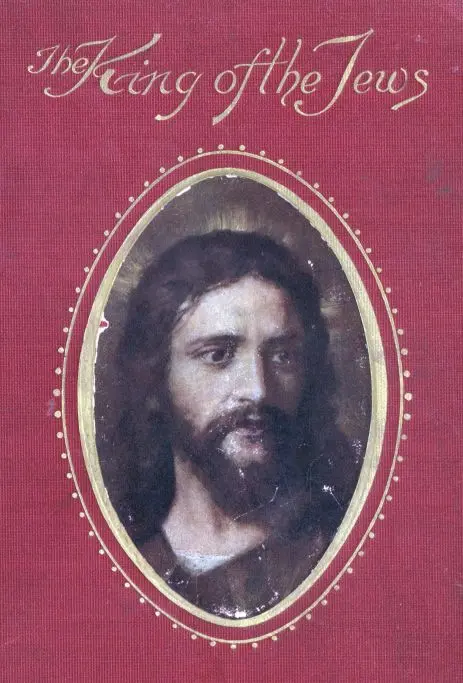
THE CLASSIC COLLECTION · 1900
"King of the Jews: A Story of Christ's Last Days on Earth" by W. T. Stead is a narrative retelling of the final days of Jesus Christ, adapted from the Oberammergau Passion Play, likely written in the late 19th century. This work captures significant moments from Christ's life, including his triumphal entry into Jerusalem, the Last Supper, and the betrayal by Judas. Through the lens of biblical events, the author aims to illuminate the emotional and dramatic aspects surrounding the figure of Jesus and the context of his sacrifice. The opening of the story begins with Jesus' powerful act of driving out the money changers from the temple, displaying his commitment to restoring the sanctity of God's house. As Jesus rides into Jerusalem on a colt, he is met with a jubilant crowd shouting "Hosanna," reflecting the hopes and expectations of the people. The narrative quickly shifts to the hostile reactions of the religious leaders who conspire against him, feeling threatened by his influence and teachings. Jesus' actions and words provoke both admiration from the crowd and ire from the priests, establishing the tension that unfolds in the lead-up to his crucifixion. This section sets the stage for the conflicts and themes of loyalty, sacrifice, and betrayal that permeate the rest of Stead's adaptation.
Introduction adapted from the source catalogue; source summaries may be automatically generated.
Free to read · English · 45,750 words · No account needed
MAKE TIME FOR A GOOD BOOK
On by default. Untick to stop anonymous reading totals. Each page counts after 10 seconds in view. How this works.
Anonymous counting is on unless you have switched it off.
Then said Pilate, "I do not understand this, people. Only a few days ago with rejoicing and joyful clamor you accompanied this man through the streets of Jerusalem. Is it possible that the same people this day call for death and destruction upon him? That is indeed contemptible fickleness."
"The good people," said Caiaphas, "have at last learned that they have been deceived by an adventurer who pretended to be the Messiah, the king of Israel!"
"And now," said Nathanael, "the eyes of this people are fully opened, and they see that he cannot help himself--he who promised to bring freedom and blessing to the nation."
"Israel," said Ezekiel, "will recognize no Messiah who allows himself to be taken and bound and treated with scorn."
"Let him die, the false Messiah, the deceiver," cried the crowd.
Then Pilate spoke unto the people and said: "Men of Judea, it is customary that I liberate to you a prisoner at the feast. Look upon these two. One with mild countenance and dignified demeanor, the ideal of a wise teacher, whom you have long honored as such, convicted of no single evil deed and already humiliated by the severest chastisement. The other, a vicious, savage man, convicted of robbery and murder, a horrible image of a perfect scoundrel. I appeal to your reason, to your human feelings--choose! Which will ye that I shall release unto you, Barabbas or Jesus, who is called the Christ?"
Then the priests and people cried out together, "Let Barabbas go free."
"Will ye not that I release unto you the king of the Jews?" asked
Pilate.
Then the priests and people cried, "Away with him, release unto us,
Barabbas."
Then said Caiaphas, "Thou hast promised to release him whom the people
demand."
Pilate answered shortly to Caiaphas, "I am accustomed to keep my promise without needing a reminder." Then said he to the people, "What shall I do with the king of the Jews?"
And the priests and the people cried, "Crucify him!"
"What," said Pilate, "shall I crucify your king?"
And the people cried, "We have no king but Caesar."
Pilate said, "I cannot condemn this man, for I find no fault in him. He has been sufficiently chastised; I will let him go free."
Then said the priests, "If thou let him go free thou art no friend of
Caesar's."
Caiaphas added, "He has proclaimed himself king"; and the priests said, "Who proclaims himself king is a rebel against Caesar."
And Nathanael said, "And is this rebel still to remain unpunished, still to scatter abroad the seed of revolt?"
Your reading position is saved on this browser. Take it to another device with a library code. Reading pages adapt to text, rather than matching a printed edition.
BEHIND THE BOOK
This eBook is for the use of anyone anywhere in the United States and most other parts of the world at no cost and with almost no restrictions whatsoever. You may copy it, give it away or re-use it under the terms of the Project Gutenberg License included with this eBook or online at www.gutenberg.org. If you are not located in the United States, you will have to check the laws of the country where you are located before using this eBook. Read the source licence.
The original source file, including credits and licence, is retained by this library. Request an original-format copy at no charge. Please include the book title and Project Gutenberg identifier #22735.
KEEP YOUR CURIOSITY GOING
David Patterson (Spirit) Hatch

David Patterson (Spirit) Hatch

David Patterson (Spirit) Hatch

Edwin Abbott Abbott

Richard Watson
Maurice Baring