THE CLASSIC COLLECTION✦An outlaw’s diary: the CommuneCLASSIC FREE BOOKS
An outlaw’s diary: the Commune
Cécile Tormay
THE CLASSIC COLLECTION · 1890
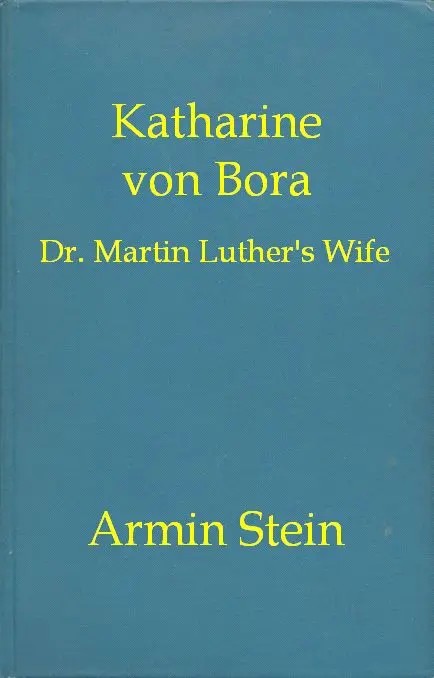
"Katharine von Bora: Dr. Martin Luther's Wife" by Armin Stein is a historical account written in the late 19th century. The book aims to illuminate the life of Katharine von Bora, the wife of the influential Reformer Martin Luther, depicting her as a figure of domestic virtue and a significant support to her husband during a pivotal time in religious history. The opening of the work introduces us to Katharine, a young nun in a convent, reflecting on her life and the constraints of her monastic existence. As she contemplates her unfulfilled ambitions and the spiritual awakening inspired by Luther's teachings, she confides in her friend Elizabeth about her longing for freedom. This initial chapter sets the stage for a narrative that not only explores Katharine's personal struggles and desires but also hints at the larger societal shifts occurring during the Reformation, ultimately leading to her and her fellow nuns' quest for liberation from the convent life. The narrative weaves in themes of faith, personal resolve, and the impact of Luther's revolutionary ideas on the lives of women during this transformative period.
Introduction adapted from the source catalogue; source summaries may be automatically generated.
Free to read · English · 58,115 words · No account needed
MAKE TIME FOR A GOOD BOOK
On by default. Untick to stop anonymous reading totals. Each page counts after 10 seconds in view. How this works.
Anonymous counting is on unless you have switched it off.
Wittenberg, in the 16th Century, was a wretched town. The houses, built of wood, were thatched with straw. The narrow, crooked streets were paved roughly, or not at all; and in rainy weather, or during the spring thaws, became almost impassable. A few prominent buildings,--the fine churches, the Elector's palace, the University, the Franciscan and Augustinian convents, and the dwellings of some wealthy citizens, alone raised it to the dignity of a town.
The surrounding country had been meagerly dealt with by nature. Luther was wont to say: "Land,--thou art nothing but sand!" In every direction stretched wastes of sand. In the immediate neighborhood of the town, however, especially toward the South, where rolled the yellow waters of the Elbe, occasional clumps of trees, and even vineyards were to be seen. Here many citizens of Wittenberg had planted charming gardens, whither they went to refresh themselves during the heat of summer.
One garden especially, which lay near the Elster-gate, gave evidence of artistic skill and careful culture. The shrubs and flower beds were tastefully arranged. A little pond, fed by a spring, lay hidden among rustling reeds; and in the midst of a large gravelled space rose a white summer house.
One bright day in the Summer of 1534, a merry little company was gathered here. A strong, active boy of nine, was the leader in their games, and their occasional excursions to the strawberry-beds. It was his birthday, and by reason of this circumstance, and of his seniority, he ruled over the younger ones,--a gentle little maiden of six, and two boys, of two and four.
Within the Summer-house sat the mother, holding a baby in her arms, and watching the play of her children,--now and then calling out a word of warning, when the merriment grew too boisterous, or when the eldest insisted too vigorously upon his rights.
It was Katharine, who after her day's work had come with her children to this favorite spot,--here, under the open sky, and among the flowers, she wished to celebrate the day on which, nine years ago, God's grace had given her her first-born son.
Luther might well say, with the Psalmist: "My wife is as a fruitful vine by the side of my house; my children like olive plants round about my table,"--five healthy, happy children they were; and the mother still fresh and blooming, as though sorrow could not touch her.
Suddenly a shout arose: "Aunt Lena! Aunt Lena is coming!" and the children sprang towards the old woman, as though she were a fortress, to be carried by assault.
Your reading position is saved on this browser. Take it to another device with a library code. Reading pages adapt to text, rather than matching a printed edition.
BEHIND THE BOOK
This eBook is for the use of anyone anywhere in the United States and most other parts of the world at no cost and with almost no restrictions whatsoever. You may copy it, give it away or re-use it under the terms of the Project Gutenberg License included with this eBook or online at www.gutenberg.org. If you are not located in the United States, you will have to check the laws of the country where you are located before using this eBook. Read the source licence.
The original source file, including credits and licence, is retained by this library. Request an original-format copy at no charge. Please include the book title and Project Gutenberg identifier #63985.
KEEP YOUR CURIOSITY GOING
Cécile Tormay

Moritz Busch
John L. Ransom
Frances Wright
Cécile Tormay

Mabel Potter Daggett