THE CLASSIC COLLECTION✦My diaries, being a personal narrative of events 1888-1914, Part 2 (1900-1914)CLASSIC FREE BOOKS
My diaries, being a personal narrative of events 1888-1914, Part 2 (1900-1914)
Wilfrid Scawen Blunt
THE CLASSIC COLLECTION · 1902
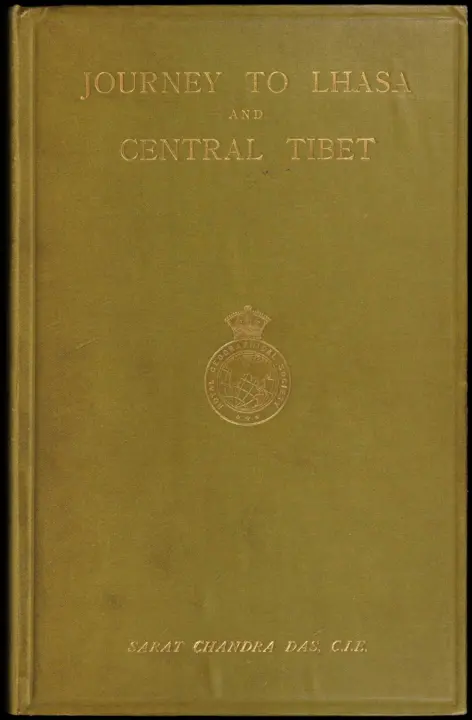
"Journey to Lhasa and Central Tibet" by Sarat Chandra Das is a travelogue published in 1902. The book chronicles Das's second expedition to Tibet in 1881, undertaken under British colonial orders. Das ventures into the forbidden Tibetan capital and central regions, documenting his observations as both explorer and covert agent. Contemporary reviews praised it as the most authentic account of Tibet available, highlighting Das's courage and keen insight into this mysterious land.
Introduction adapted from the source catalogue; source summaries may be automatically generated.
Free to read · English · 110,516 words · No account needed
MAKE TIME FOR A GOOD BOOK
On by default. Untick to stop anonymous reading totals. Each page counts after 10 seconds in view. How this works.
Anonymous counting is on unless you have switched it off.
[390] This legend is told in the thirty-fourth chapter of the ‘Mani kambum,’ and our author gives an abstract of it. I have translated the full original text in my ‘Land of the Lamas,’ p. 355 et sqq.—(W. R.)
[391] Called on the maps Zomba Lha khang (“Ancient Palace”). The name is variously written U-bu la-gang, Ombo lang-gang. See Emil Schlagintweit, ‘Die Könige von Tibet,’ p. 42. It is said to have been built by King Nya-kri tsanpo (IVth century, B.C.?), or by King Totori nyan-tsan (IIIrd century, A.D.). I. J. Schmidt, op. cit., p. 317 (quoting the Bodhimur), says it was called Ombre lang-ti.—(W. R.)
[392] Tag chhen Pomda on the maps.—(W. R.)
[393] The young monk was certainly misinformed. Potatoes were introduced into Bhutan by Warren Hastings, and spread from there into Tibet within the last hundred years. On the eastern border of Tibet potatoes have been introduced by the Chinese and the French missionaries.—(W. R.)
[394] Ras-chung Dorje gragspa, or “Dorje drapa of Rachung,” was born in 1083. This lamasery, which he founded, is also called Ras-chung phug gomba, “the lamasery of the cave of Ras-chung.”—(W. R.)
[395] Probably porphyry.—(W. R.)
[396] This is a common practice in the Nyingma sect. Explorer K. P. found at Thum Tsung (Lower Tsangpo valley) a monastery in which “both men and women are allowed to preach and live together.” He found the same practice in the adjacent village of Bhal gonpa and Marpung. ‘Report on Explor. from 1856 to 1886,’ pp. 9 and 12.—(W. R.)
[397] These blue tiles are certainly of Chinese manufacture.—(W. R.)
[398] For this legend see I. J. Schmidt, op. cit., pp. 21 and 316. Also Emil Schlagintweit, ‘Die Könige von Tibet,’ p. 39 et sqq. Ugyen-gyatso visited this spot in 1883, and refers to this legend, op. cit., p. 27.—(W. R.)
[399] Called Bya (pronounced Chya). It is called Cha Sa on the maps. A. K. speaks of it as “the temple of Chyasa (Cheuse) Lhakhang.”—(W. R.)
[400] Tong-shoi on the maps. A. K. mentions, 1½ miles west of this point, the Gerpa Duga ferry.—(W. R.)
[401] Or Tsong du ta-tsang, according to Ugyen-gyatso.—(W. R.)
[402] This lamasery shares with Dorje-tag, previously referred to, the honour of being the supreme one of this sect. Waddell, op. cit., 277.—(W. R.)
[403] Ugyen-gyatso says that should the married member of the Tertaling family die without issue, “the throne” Lama, in spite of his vows, is expected to marry the widow, and raise up his own heirs to govern. A total failure of heirs is attended by widespread calamities—war, famine, and general disaster. ‘Report of Explor. from 1856 to 1886,’ p. 29.
[404] A. K. says there are 600 houses in Gong-kha Jong and 200 around the Gongkha Chorten (i.e. Gong-kar chosde).—(W. R.)
Your reading position is saved on this browser. Take it to another device with a library code. Reading pages adapt to text, rather than matching a printed edition.
BEHIND THE BOOK
This eBook is for the use of anyone anywhere in the United States and most other parts of the world at no cost and with almost no restrictions whatsoever. You may copy it, give it away or re-use it under the terms of the Project Gutenberg License included with this eBook or online at www.gutenberg.org. If you are not located in the United States, you will have to check the laws of the country where you are located before using this eBook. Read the source licence.
The original source file, including credits and licence, is retained by this library. Request an original-format copy at no charge. Please include the book title and Project Gutenberg identifier #68898.
KEEP YOUR CURIOSITY GOING
Wilfrid Scawen Blunt
Wilfrid Scawen Blunt

E. W. (Edgar Watson) Howe
Francis Greenleaf Allinson & Anne C. E. (Anne Crosby Emery) Allinson
Cyrenus Cole

John Martineau