THE CLASSIC COLLECTION✦My diaries, being a personal narrative of events 1888-1914, Part 2 (1900-1914)CLASSIC FREE BOOKS
My diaries, being a personal narrative of events 1888-1914, Part 2 (1900-1914)
Wilfrid Scawen Blunt
THE CLASSIC COLLECTION · 1902
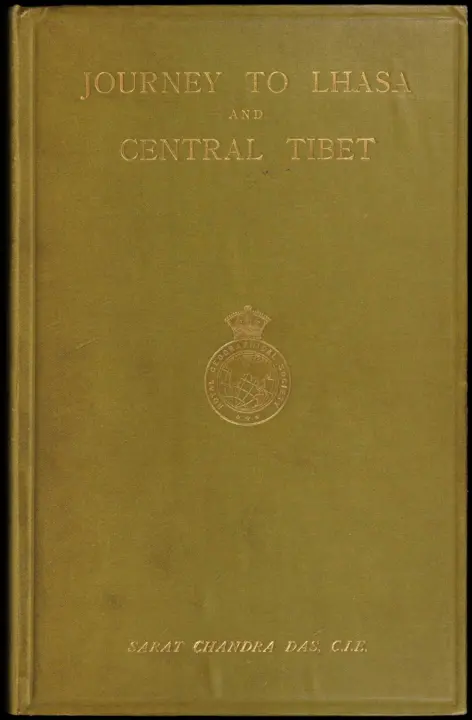
"Journey to Lhasa and Central Tibet" by Sarat Chandra Das is a travelogue published in 1902. The book chronicles Das's second expedition to Tibet in 1881, undertaken under British colonial orders. Das ventures into the forbidden Tibetan capital and central regions, documenting his observations as both explorer and covert agent. Contemporary reviews praised it as the most authentic account of Tibet available, highlighting Das's courage and keen insight into this mysterious land.
Introduction adapted from the source catalogue; source summaries may be automatically generated.
Free to read · English · 110,516 words · No account needed
MAKE TIME FOR A GOOD BOOK
On by default. Untick to stop anonymous reading totals. Each page counts after 10 seconds in view. How this works.
Anonymous counting is on unless you have switched it off.
Among the games played by the Tibetans, there are some such as mig-mang, or “many eyes,” resembling chess; srid-pai khorlo, or “the circle of life,” [447] and dice, which even the clergy are permitted to amuse themselves with. Others, as, for instance, wrestling, archery, polo, foot and pony races, are confined to the people; nor are the lamas allowed to amuse themselves with singing and dancing except at stated times, as, for example, during the New Year holidays.
At midsummer the people and nobility dress tents, and for several days amuse themselves under them, picnicking, dancing, and singing.
In the 8th moon the jon-gyu festival takes place, lasting for seven or fourteen or even twenty-one days. On this occasion the lamas and people amuse themselves with sports, games, dancing, and feasting. This festival is observed in all northern Buddhist countries. [448]
Again, in the latter part of the 12th moon, there is a lama dance in every monastery, after which the evil spirits are exorcised. [449] Sometimes the 4th of the 6th and the 22nd of the 9th moons are observed as feast days; the latter as the anniversary of the Buddha’s descent from the Tushita heaven. [450]
In the summer, commencing with the full moon in July and lasting for a period of forty-five days, all lamas make a retreat in their monasteries, during which time they are not allowed to go without the lamasery walls, or take part in any amusement. This is known as the yar-nas. [451]
The birthdays of the Dalai and Tashi lamas are also kept as holidays, and on their reaching the age of three, twenty-five, forty-nine, sixty-one, seventy-three, or eighty-five, there are also great festivities.
When eclipses of the sun or moon occur, the Tibetans hold religious ceremonies similar to those of the Hindus.
Of all feasts, that of the New Year is probably the most popular. At Lhasa the State makes arrangements for the celebrations, beginning them about a month beforehand.
The kitchen of the Grand Lama is in a large yellow building called the Phodang serpo, or Jag-ming khang (ljags-ming khang), situated to the east of the palace. The cooking-stoves are ornamented with gold, silver, and precious stones, estimated to be worth Rs. 20,000, and all the cooking utensils are of solid gold. All the butter and milk used here is obtained from the herd of five hundred jomos (half-breed yaks) belonging to the Dalai lama, which herd the people salute as it passes, taking off their hats or kotowing to the animals. Twenty Tse-dung (lama officials) herd these cattle, milk them, and churn the butter.
Your reading position is saved on this browser. Take it to another device with a library code. Reading pages adapt to text, rather than matching a printed edition.
BEHIND THE BOOK
This eBook is for the use of anyone anywhere in the United States and most other parts of the world at no cost and with almost no restrictions whatsoever. You may copy it, give it away or re-use it under the terms of the Project Gutenberg License included with this eBook or online at www.gutenberg.org. If you are not located in the United States, you will have to check the laws of the country where you are located before using this eBook. Read the source licence.
The original source file, including credits and licence, is retained by this library. Request an original-format copy at no charge. Please include the book title and Project Gutenberg identifier #68898.
KEEP YOUR CURIOSITY GOING
Wilfrid Scawen Blunt
Wilfrid Scawen Blunt

E. W. (Edgar Watson) Howe
Francis Greenleaf Allinson & Anne C. E. (Anne Crosby Emery) Allinson
Cyrenus Cole

John Martineau