THE CLASSIC COLLECTION✦An outlaw’s diary: the CommuneCLASSIC FREE BOOKS
An outlaw’s diary: the Commune
Cécile Tormay
THE CLASSIC COLLECTION · 1901
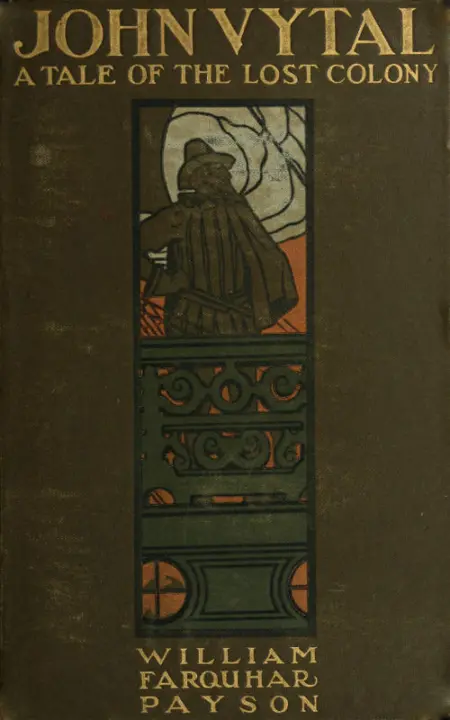
"John Vytal: A Tale of the Lost Colony" by William Farquhar Payson is a historical novel written in the early 20th century. The story explores the romantic and mysterious history of the Roanoke colony, focusing on the life and adventures of its main character, John Vytal. The narrative sets itself against the backdrop of 16th-century Virginia's tumultuous colonial endeavors, marked by adventure, enigma, and human connection. The opening of the tale introduces readers to a richly defined world of Elizabethan England, where the lively poet Christopher Marlowe and the formidable soldier Hugh Rouse encounter many colorful characters. The initial scenes depict the aftermath of a bear-baiting event where Vytal's heroic intervention creates ripples across the social fabric, drawing attention to his valor. As the story unfolds, Vytal prepares for his voyage to Virginia, mingling with both commoners and nobility, and hints of his future endeavors stir excitement. Through vibrant dialogues and intricate character interactions, the beginning offers a glimpse into the dynamics of human relationships in a historical context while setting the stage for a tale that intertwines fate, struggle, and the pursuit of personal destiny.
Introduction adapted from the source catalogue; source summaries may be automatically generated.
Free to read · English · 87,054 words · No account needed
MAKE TIME FOR A GOOD BOOK
On by default. Untick to stop anonymous reading totals. Each page counts after 10 seconds in view. How this works.
Anonymous counting is on unless you have switched it off.
“And you remembered even while your sword demanded so much attention?”
“It came to my mind.”
She smiled with a kind of wonder in her eyes, and then a hint of irony. “Of course the plan was not yours—it was clearly Wyatt’s.”
“Another rebel’s,” observed Vytal, for the first time looking off across the water with a trace of abstraction in his face.
“Rebel? How mean you rebel?”
“Naught, but that it seems my fate to be at odds with the world.”
“For instance, to rebel against bear-baiting,” she suggested, glancing at him sideways. “I heard of that, and recognized the rebel from description.”
“Readily, madam, I doubt not. They called me a long, lean wolf, a grizzled terror, with the usual flattery.”
“Yes,” she said, nodding her hooded head and pursing her lips, “they did.”
“And very truly,” he averred.
“Oh, fie, sir! You seek a contradictory opinion.”
“You know I do not.”
“Nay, then perhaps you are not sure of it.” His simplicity and directness vexed her. She seemed strangely distraught by nervousness, and her manner was unnatural.
“You wound me, Mistress Dare.”
“Hast so much vanity?” she queried.
“And the wound,” he went on, disregarding her uncontrollable banter, “is not from your words, but manner more. Somehow the mere being with you brings me pain.”
“Our interview is of your own seeking, Master Vytal.”
“I had not thought,” he declared, in a tone almost angry, “that one with such a face, such a voice, could be so unkind,” and once more he started as if to go.
But she put out her hand with a detaining gesture. Her manner again grew serious, more like the deep, far-reaching, silent sea than its near-by surface, flurried by the ship.
“Oh, forgive me again! It seems as though I must ever ask forgiveness from you—from you to whom I owe so much. Believe me, there is a woman’s heart beneath all this—I have not said that to any man—’tis my reward to you—and the woman’s heart knows pity—that, too, is a reward—make what you can of it.” She was speaking tremulously now. “Only—remember—that hope is cruel—that a little pain may avert a deeper suffering—this was my intention—believe me, I pray thee believe, John Vytal—I am deeply grateful underneath the mask. Fate brought us together in a moment. And then you followed—followed, I suppose—” she hesitated, her breast heaving and tears gathering in her eyes.
Your reading position is saved on this browser. Take it to another device with a library code. Reading pages adapt to text, rather than matching a printed edition.
BEHIND THE BOOK
This eBook is for the use of anyone anywhere in the United States and most other parts of the world at no cost and with almost no restrictions whatsoever. You may copy it, give it away or re-use it under the terms of the Project Gutenberg License included with this eBook or online at www.gutenberg.org. If you are not located in the United States, you will have to check the laws of the country where you are located before using this eBook. Read the source licence.
The original source file, including credits and licence, is retained by this library. Request an original-format copy at no charge. Please include the book title and Project Gutenberg identifier #58403.
KEEP YOUR CURIOSITY GOING
Cécile Tormay

Moritz Busch
Coulson Kernahan
John L. Ransom

Maurice Baring
Frances Wright